Conservatories offer the perfect setting for enjoying lush greenery and abundant blooms all year round. In this article, you’ll learn which plants are suitable for conservatories, what mistakes to avoid when planting, and get valuable tips from our editorial team.
Which plants are best suited for a sunroom?
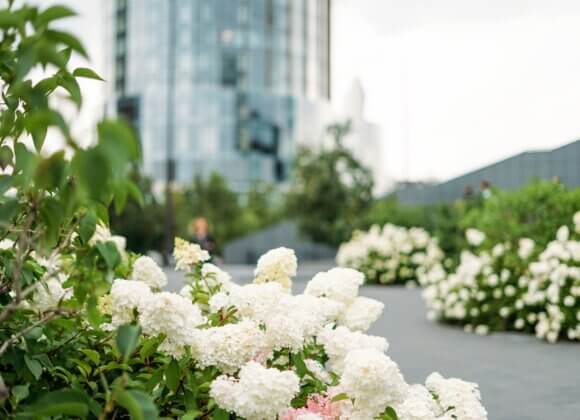
In general, a wide variety of plants—both flowering and evergreen—are suitable for transforming a sunroom into a green paradise. The former include orchids, camellias, strelitzias, lantanas, cylinder plants, hydrangeas, and climbing plants such as bougainvillea. Dipladenia or trumpet flowers. The second category includes, for example, various palm and fern species, snake plant, dieffenbachia, ivy, elephant ear, coffee bush, agaves, aloe vera, bay laurel, and bamboo. Citrus plants, fig trees, banana plants, guavas, and other fruit shrubs and trees, as well as succulents, also thrive in the sunroom.
However, the key to their growth and flourishing is finding the right plant for each specific sunroom. After all, not all sunrooms are the same—some are unheated in the winter, while others are comfortably heated. In this context, there’s one thing you mustn’t forget: Even in a cozy, warm sunroom, there can be warmer or slightly cooler zones, depending on how close they are to the heater. Light and space conditions must also be considered when selecting plants—not all plants like direct sunlight. Another factor is humidity: if it’s too high, the risk of fungal infections increases. If it’s too low, there’s a risk that pests will infest the plants.
Which plants are suitable for the sunroom year-round?
Whether a plant is suitable for a sunroom year-round depends primarily on the climatic conditions there. You’ll certainly have the widest selection if the sunroom maintains stable temperatures throughout the year. In this case, the only thing to consider is how much sunlight
Which plants are suitable for an unheated sunroom?
Since temperatures in an unheated sunroom—which is essentially similar to a greenhouse—can certainly drop below freezing during cold winters, hardy plants such as star jasmine, hardy bamboo, and hardy banana trees, acacias, frost-resistant silk trees, hemp palms, agaves, or rosemary are the best choice. If Mediterranean plants such as fig and olive trees, citrus plants, rockrose, or oleander—or other frost-sensitive plants like Cordyline australis, an Australian club lily—are also kept there, it makes sense to install a frost monitor.
When selecting plants, it’s also important to keep in mind that this type of sunroom heats up even in mild sunlight—and even more so in strong sunlight—so be sure to provide shade and ventilate regularly.
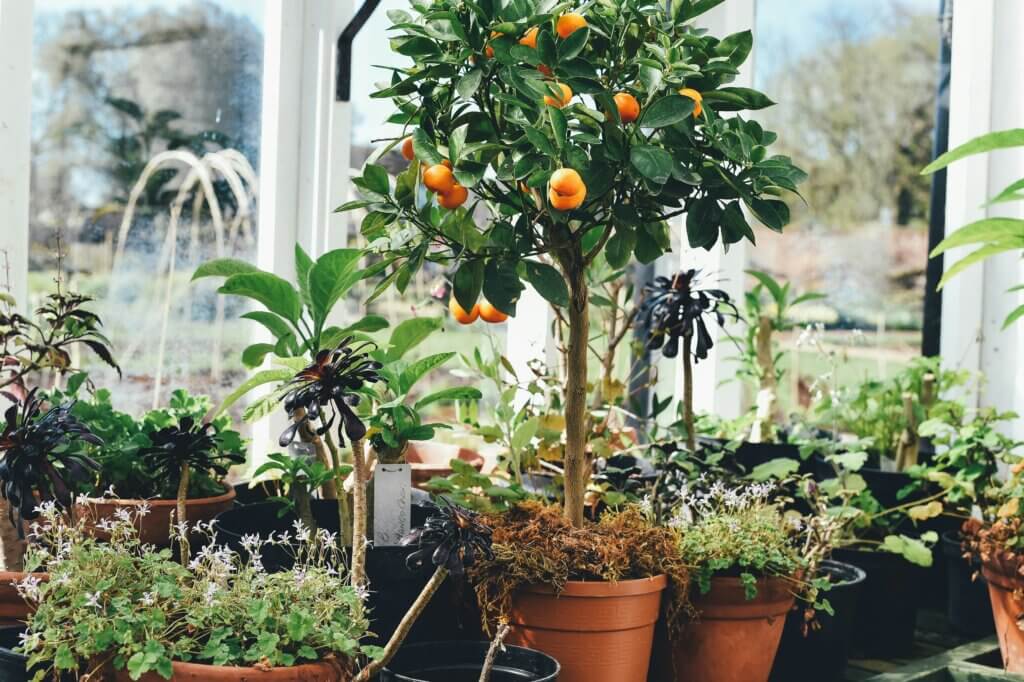
Plants for the Sunroom: Lemons particularly appreciate being kept in a sunroom that isn’t too warm, especially in winter.
How warm does a sunroom need to be for citrus plants?
Citrus plants are popular additions to sunrooms. But even though they love the sun, you should avoid extreme heat and low humidity in the summer. Since lemon trees and other citrus plants are sensitive even to light frost, they particularly appreciate a winter home in the sunroom. The ideal temperature ranges from 5 to 15 degrees Celsius. The following rule of thumb applies: The warmer the environment, the more light the plant needs. The colder the location, the less light the citrus plants need. Under certain circumstances, citrus plants can also be overwintered in warmer sunrooms. However, since they enter dormancy there, they still need to be watered and fertilized regularly.
Which potted plants are suitable for a sunroom?
The same rule applies here: Many plants that grow in pots—from citrus trees to palm trees—are suitable for the sunroom, provided that the plant in question is suited to the climate in the sunroom.
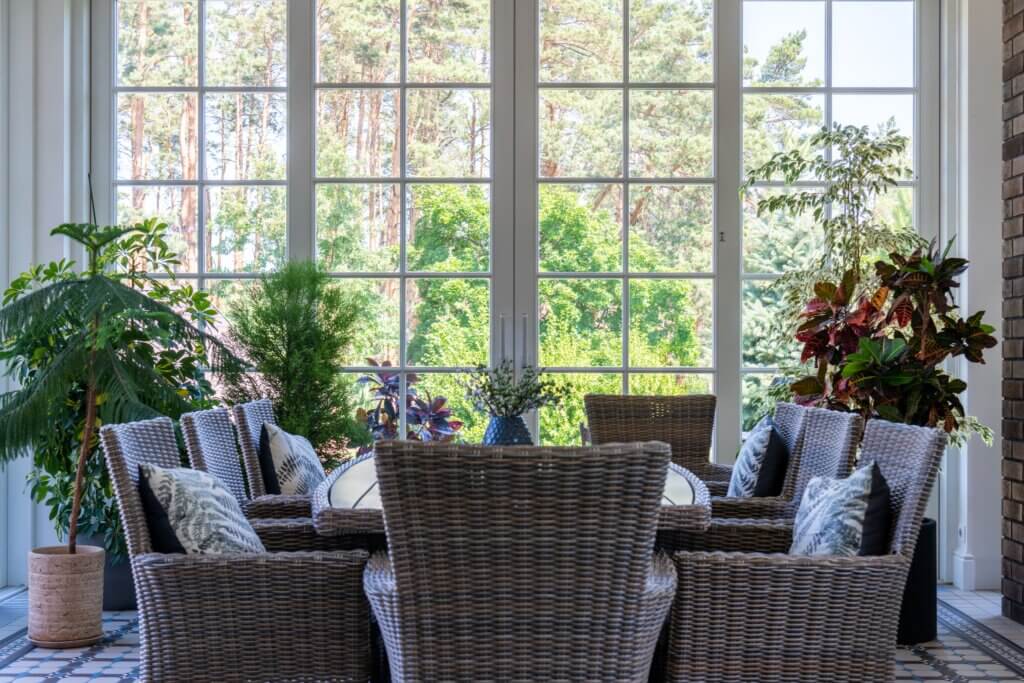
Plants for the sunroom; even just a few evergreen potted plants can create a cozy atmosphere.
Which plants help maintain good air quality in a sunroom?
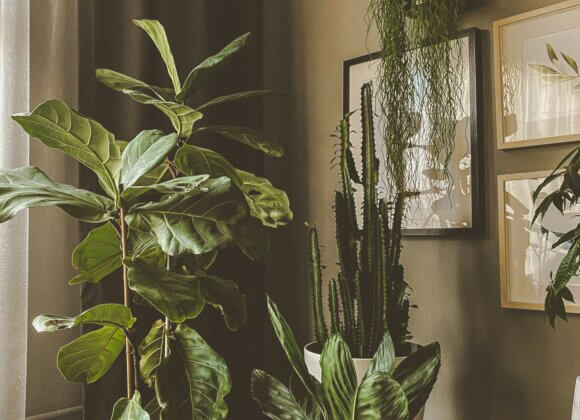
In general, all plants improve air quality because they remove carbon dioxide from the air and produce oxygen. But some plants can do even more: They also filter pollutants such as benzene, formaldehyde, and xylene from the air, thereby further improving the indoor climate. These include, for example, snake plant, dieffenbachia, English ivy, spider plant, and dragon tree—all plants that thrive in a sunroom.
What are the most common mistakes when planting a sunroom?
The most common mistake when planting a sunroom is not giving sufficient consideration to the plants’ specific needs regarding their location. However, if a plant is placed in the wrong spot, it will rarely thrive. Another common mistake is failing to ensure adequate ventilation.
3 Tips to Wrap Things Up:
#1: Plants of varying heights, colors, and blooming times add interest to your sunroom
#2: Make sure there’s a water connection near your sunroom—or possibly even inside it. If you want to enjoy a large number of plants there, hauling water for watering can become a hassle
#3: Don’t forget to air out your sunroom regularly—your plants will thank you for it!
After years of beige, greige, and subdued natural tones, it’s time to bring a little more depth back into interior design. Eggplant is one of the most exciting colors of the fall: elegant, warm, full of character—and surprisingly versatile. Interior design specialist Stefanie Winter explains how to pair aubergine effectively, where the color works particularly …
Not everyone is happy about the falling leaves; for some, they’re just a chore. Yet leaves in the garden are a real treasure that’s worth gathering in the fall. Why are leaves important? Leaves are definitely not waste; rather, they are extremely valuable. They provide nutrients that improve soil quality, protect the soil from temperature …
Perfectly furnished yet still personal: A home doesn’t have to be overdecorated or deliberately imperfect to show character. Interior designer Stefanie Winter explains why favorite pieces, materials, and bold choices are more important than trends—and why a well-designed home doesn’t have to be completely finished. Flawless sofa arrangements, perfectly arranged coffee-table books, and that lamp …
SIE WOLLENNICHTSMEHR VERPASSEN?
Unser kostenloser Newsletter liefert Ihnen wöchentlich die neuesten Artikel rund ums Wohnen & Leben.
SIE WOLLENNICHTSMEHR VERPASSEN?
Unser kostenloser Newsletter liefert Ihnen wöchentlich die neuesten Artikel rund ums Wohnen & Leben.
SIE WOLLEN
NICHTS MEHR VERPASSEN?
Unser kostenloser Newsletter liefert Ihnen wöchentlich die neuesten Artikel rund ums Wohnen & Leben.