White Garden Plants: Pantone Cloud Dancer in the Garden
23. July 2026
6 Mins read
White garden plants exude elegance, tranquility, and timelessness—and pair perfectly with Pantone’s 2026 trend color: Cloud Dancer. Whether hydrangeas, perennials, climbing plants, or shade-loving blooms, a white garden brings light, airiness, and elegant freshness into your home.
There’s something magical about white flowers. They glow at dusk, bring a sense of calm to colorful flower beds, and make small gardens appear larger. In 2026, they’ll be getting even more attention, as Pantone has named “Cloud Dancer”—a soft, airy white—its color of the year. The shade isn’t cool or sterile, but soft, natural, and almost cloudy—perfect for gardens, patios, and balconies.
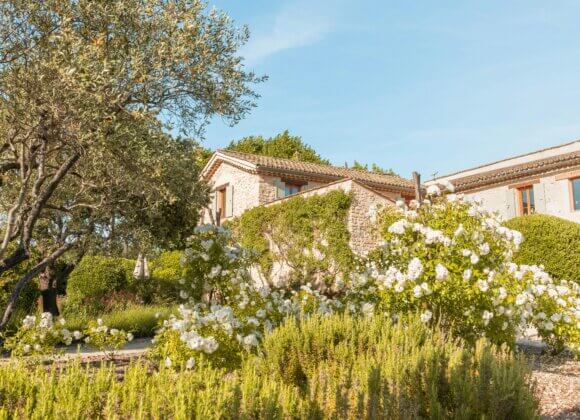
By skillfully combining white garden plants, you can create a flower bed that’s both modern and romantic: hydrangeas alongside delicate grasses, white perennials set against dark green foliage, climbing flowers along fences, and bright blooms for shady corners. This transforms the garden into a bright retreat—peaceful, fresh, and entirely in the style of Cloud Dancer.
Which white garden plants bloom all summer long?
The best way to create a summer garden with all-white blooms is to use a mix of annuals, perennials, and shrubs. Many plants do not bloom continuously from June through September, but if you combine varieties with different blooming periods, the flower bed will remain bright and lively all summer long.
White summer flowers such as cosmos, petunias, snowflake flowers, zinnias, and white summer jasmine are particularly well-suited for pots and balcony planters. With proper care, they often bloom well into the fall. It’s important to remove spent blooms regularly and water the plants evenly.
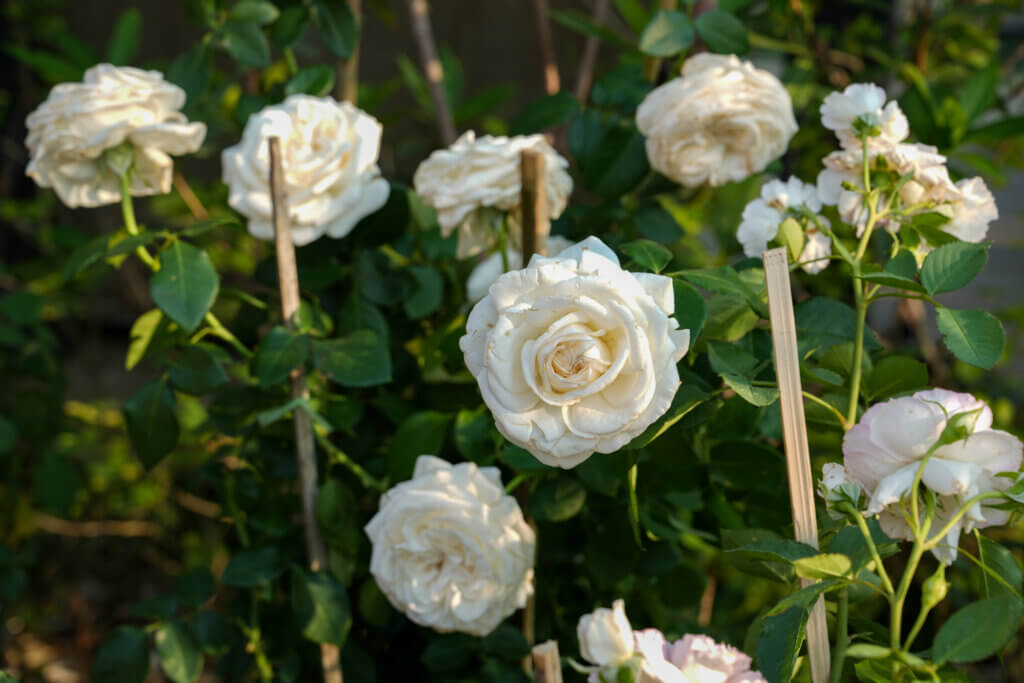
In the flower bed, daisies, white coneflowers, phlox, gladiolus, yarrow, and white roses ensure long blooming periods. Panicle hydrangeas such as ‘Limelight’ or ‘Little Lime’ are also standout summer stars: They start out greenish-white, become lighter in color as the season progresses, and often turn a delicate pink or cream color by the end of the season.
Which white perennials are low-maintenance and hardy?
Low-maintenance white perennials are ideal for anyone who wants an elegant flower bed but doesn’t want to be constantly replanting. Classics include daisies, white coneflowers, white phlox, yarrow, ribbon flowers, cranesbill, fall anemones, and Christmas roses.
Daisies, coneflowers, yarrow, and phlox are particularly well-suited for sunny locations. They thrive in well-drained, nutrient-rich soil and often respond to pruning after flowering by growing back with renewed vigor. Lace flower is particularly beautiful along the edges of flower beds or in rock gardens because it grows compactly and forms dense white clumps in the spring.
In partial shade, Christmas roses, autumn anemones, hostas, and astilbes thrive. They bring white blooms even to areas where many sun-loving perennials struggle. If you want to keep your flower bed understated and modern, combine white blooms with ornamental foliage plants in shades of green, silver, or cream.
How do I design a flower bed with white garden plants?
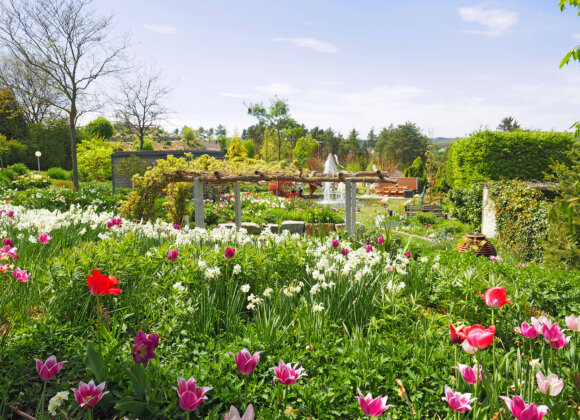
A white flower bed thrives on nuances. After all, not all whites are the same: Some flowers appear cool and crisp, while others are cream-colored, warm, or slightly greenish. It is precisely these subtle differences that make a Cloud Dancer-style flower bed so captivating.
It’s best to start with a clear structure. Tall plants such as hydrangeas, delphiniums, climbing roses, or grasses form the background. In front of them come medium-height perennials such as daisies, phlox, coneflowers, or astilbes. At the very front, low-growing plants such as ribbon flower, carpet phlox, cranesbill, or white horned violets add subtle accents.
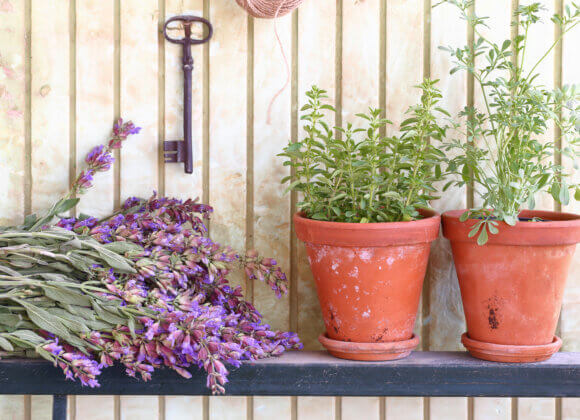
The foliage is also important: Dark green leaves make white flowers stand out especially vividly, while silvery plants like woolly stonecrop or holy herb lend a soft, Mediterranean feel. Grasses add movement to the flower bed and prevent the design from looking too austere.
To create a harmonious look, you should repeat plants in small groups rather than planting each variety just once. Three to five specimens of the same plant create a calmer, more refined look. A white flower bed looks especially beautiful near a patio, along a garden path, or in a spot where you can see it in the evening—because white flowers reflect the last light of the day.
Which white climbing flowers are suitable for fences and walls?
White climbing plants are perfect for brightening up fences, pergolas, trellises, and house walls. For sunny spots, white climbing roses, clematis varieties, white sweet peas, and white jasmine are especially beautiful. They need trellises, wires, or supports to help them grow securely.
For partially shaded to shaded walls, the climbing hydrangea is one of the best options. It grows slowly at first but eventually becomes vigorous and produces large, white flower heads in early summer. Especially on north- or east-facing walls, it brings light to darker areas of the garden.
If you like a romantic look, combine white climbing roses with a white clematis. The rose adds fragrance and fullness, while the clematis adds a sense of lightness. For fences, you can also use Lathyrus latifolius ‘White Pearl,’ a perennial white sweet pea, or annual sweet peas, which should be resown each year.
A Fragrant Eye-Catcher: White Roses in the Garden.
Which white garden plants also grow in the shade?
White plants are especially valuable in the shade because they brighten up dark corners. Good choices include astilbes, hostas, Christmas roses, woodruff, foamflower, silver-leaved lamium, white fall anemones, and climbing hydrangeas.
Astilbes prefer humus-rich, fairly moist soil and bloom with feathery white panicles. Hostas are especially prized for their foliage, but many varieties also produce light-colored to white flowers. Christmas roses kick off the gardening season particularly early, bringing bright flowers to the garden as early as winter or early spring.
Very dry, shaded areas under large trees require particularly hardy species. Woodruff, fairy flowers, lamium, or cranesbill can work well here. It’s important to enrich the soil with compost before planting and to water young plants regularly during their first few years.
What is the Pantone trend color “Cloud Dancer,” and why is it so popular in 2026?
Cloud Dancer, officially PANTONE 11-4201, is the Pantone Color of the Year for 2026. It is a soft, airy white that is meant to evoke a sense of calm, clarity, and expansiveness. Unlike harsh, pure white, Cloud Dancer appears softer, warmer, and more natural.
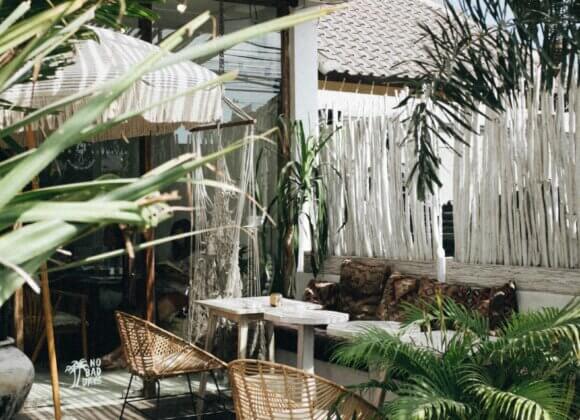
The color is popular because it perfectly aligns with the desire for simplicity, tranquility, and lightness. After years of bold colors, digital stimuli, and cluttered spaces, Cloud Dancer represents a conscious fresh start. In the living area, this shade serves as a calm backdrop for furniture, textiles, and walls. In the garden, it pairs particularly well with white flowers, light-colored natural materials, gravel, wood, linen, and soft greens.
White garden plants are, therefore, the natural outdoor version of Cloud Dancer. They don’t look flashy, but rather elegant. They create spaces that breathe. And they can be combined with almost any style—from a modern urban garden to a romantic country garden.
Which varieties of white hydrangeas are suitable for Austrian gardens?
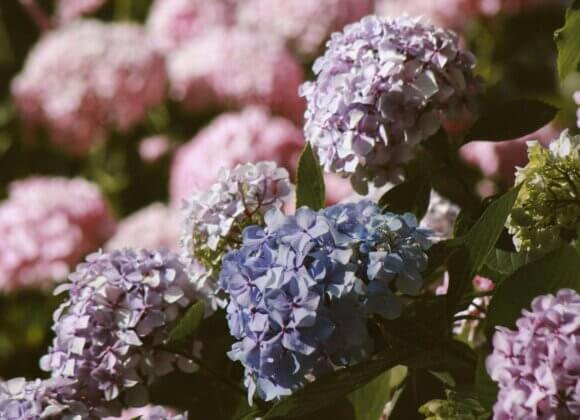
For Austrian gardens, panicle hydrangeas and snowball hydrangeas are particularly recommended. They are considered hardy, prolific bloomers, and relatively winter-hardy. In addition, many of these varieties bloom on new growth, which makes them less susceptible to frost damage.
A classic is Hydrangea arborescens ‘Annabelle’. It produces large, round flower heads that change from green to white and later turn back to a pale green. Even more upright is ‘Strong Annabelle’ or ‘Incrediball,’ a good choice for flower beds where you don’t want the heavy blooms to topple over after rain.
Among panicle hydrangeas, ‘Limelight,’ ‘Little Lime,’ ‘Bobo, ’ ‘MagicalCandle,’ ‘Skyfall,’ and ‘Phantom’ are beautiful white-to-cream-white varieties. They prefer sunny to partially shaded locations and humus-rich, well-drained soil. During hot summers, they need plenty of water, but you should avoid waterlogging.
The climbing hydrangea (Hydrangea petiolaris) is ideal for walls and shadier locations. It produces white flower heads along walls and fences and is particularly well-suited for partially shaded areas.
Country hydrangeas with white flowers, such as ‘Madame Emile Mouillere,’ can also be beautiful, but they are a bit more demanding in colder regions. They should be planted in a sheltered spot, mulched in winter, and not pruned back too severely, since many varieties bloom on old wood.
If you want to play it safe, Austrian gardeners should opt for panicle hydrangeas and snowball hydrangeas. They’re a perfect match for the Cloud Dancer trend—and from summer through fall, they bring exactly the kind of light, serene elegance to the garden that’s so in demand in 2026.
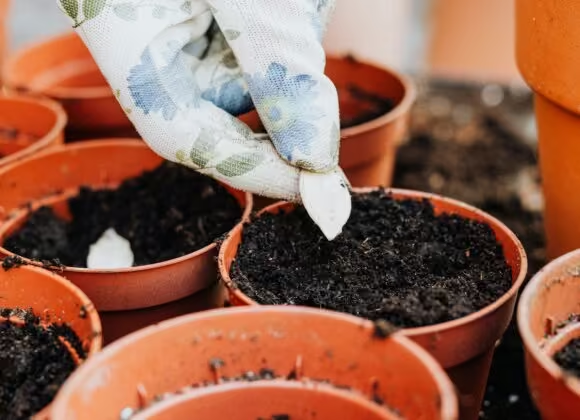
More and more hobby gardeners are turning to saving their own seeds, thereby laying the foundation for a bountiful harvest next year. This not only saves money but also helps promote the concept of sustainability and preserve cherished varieties. From which vegetable varieties can I collect seeds myself? To collect seeds from vegetables yourself, two …
Conservatories offer the perfect setting for enjoying lush greenery and abundant blooms all year round. In this article, you’ll learn which plants are suitable for conservatories, what mistakes to avoid when planting, and get valuable tips from our editorial team. Which plants are best suited for a sunroom? In general, a wide variety of plants—both …
Elevation over heat, water security over drought stress, nature over paved surfaces: Climate change is increasingly reshaping the criteria for high-end real estate. The renowned Austrian platform for luxury real estate, PREMIUM-LIVING.COM, highlights which regions in Austria are benefiting, which international markets are becoming particularly interesting—and why the definition of luxury is changing at the …
SIE WOLLENNICHTSMEHR VERPASSEN?
Unser kostenloser Newsletter liefert Ihnen wöchentlich die neuesten Artikel rund ums Wohnen & Leben.
SIE WOLLENNICHTSMEHR VERPASSEN?
Unser kostenloser Newsletter liefert Ihnen wöchentlich die neuesten Artikel rund ums Wohnen & Leben.
SIE WOLLEN
NICHTS MEHR VERPASSEN?
Unser kostenloser Newsletter liefert Ihnen wöchentlich die neuesten Artikel rund ums Wohnen & Leben.