
Not everyone is happy about the falling leaves; for some, they’re just a chore. Yet leaves in the garden are a real treasure that’s worth gathering in the fall.
Why are leaves important?
Leaves are definitely not waste; rather, they are extremely valuable. They provide nutrients that improve soil quality, protect the soil from temperature fluctuations and drying out, and offer both shelter and food to numerous animals. And all of this comes free of charge—aside from the physical effort required to rake them up.
Is leaving leaves on the ground good or bad for the garden?
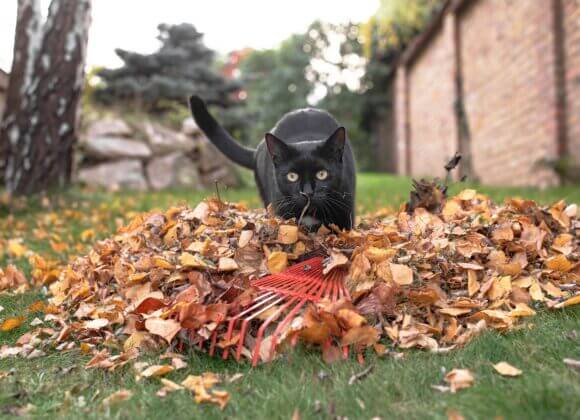
Fallen leaves have many benefits: For one thing, they provide good winter protection for plants—and animals as well—and, for another, they serve as a good fertilizer. That’s why you shouldn’t rush to remove every single leaf from the garden in the fall; instead, it’s generally better to leave the leaves where they are. However, there are a few exceptions: To prevent slipping, paths and patios should be kept free of leaves, and the same applies to gutters. Leaves should also be removed from ponds, as they eventually sink to the bottom and turn into sludge. As they decompose, the leaves consume oxygen and produce putrefactive gases, which is not beneficial for the pond or its inhabitants. Rock gardens and lawns should also be cleared of leaves: both various rock garden plants and the grass can begin to rot under damp leaves. However, don’t simply throw the leaves away—instead, create a leaf pile, compost them, or use them to mulch the soil.
Can you use leaves to protect plants during the winter?
Leaves actually provide excellent winter protection for plants. When loosely piled up, they form air pockets that insulate like bubble wrap—but naturally. This protects the plants’ roots not only from frost but also from drying out and erosion. Leaves can also serve as a sort of winter coat for frost-sensitive shrubs and trees, such as fig trees: To do this, set up a wire mesh fence of appropriate height around the shrub or perennial and fill the space between the plant and the fence with leaves. Don’t pack the leaves too tightly, though: Air should still be able to circulate between them; otherwise, they’ll start to mold when damp.
Which animals and insects benefit from piles of leaves in the garden?
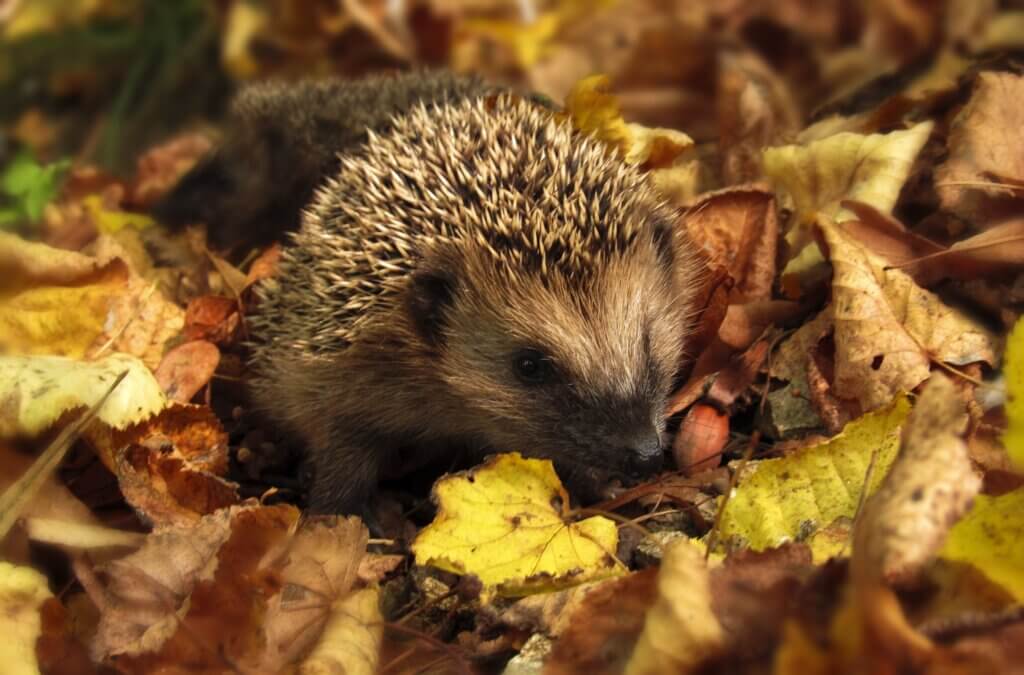
A pile of leaves in the garden is a real blessing for many animals. These include, for example, hedgehogs, which like to hibernate under the thick, insulating blanket of leaves. But the larvae of butterflies, common toads, shrews, earthworms, spiders, beetles, newts, caterpillars, and moths also like to retreat there. Even tiny creatures are content with just a layer of mulch made from leaves. The animals will thank you by next spring at the latest: Many of them are valuable allies when it comes to organic gardening.
Is a leaf vacuum or leaf blower worth it for the garden?
Leaf vacuums or leaf blowers may make the job easier. From an environmental perspective, however, they are not recommended, as they harm soil biology. These devices do not merely suck up withered leaves or blow them to the desired location. Rather, they also draw in microorganisms and small animals into the suction current, which generates air speeds of up to 160 kilometers per hour and suction capacities of about ten cubic meters per minute. Most of these organisms are killed in the process or, at the latest, when they enter the shredder. In addition, plant seeds are also destroyed when leaf vacuums or leaf blowers are used.
Can you compost leaves, and if so, which ones?
Leaves can generally be composted just fine. However, some types of leaves are better suited for this than others. Leaves from fruit trees, maple trees, birches, mountain ash, hornbeams, and linden trees, for example, not only decompose quickly but also contain many nutrients. Leaves from oak, poplar, chestnut, sycamore, and magnolia trees, on the other hand, are less suitable. Due to their high tannin content, these leaves decompose slowly, and the resulting compost may be too acidic for many plants.
There is some disagreement regarding the leaves of nut trees: Not only do they contain a high concentration of tannins, but they also produce juglone. This substance is found in the green husks and leaves and acts, among other things, as a fungicide, insecticide, and dye. Nut tree leaves therefore decompose very slowly and, due to their high acidity, are suitable only for acid-loving plants such as azaleas, rhododendrons, hydrangeas, blueberries, and ferns. If you want to compost nut tree leaves, you should therefore not mix them with your regular compost.
Under no circumstances should leaves infested with fungi, pests, or diseases such as powdery mildew be added to the compost. These must be disposed of immediately.
What is the difference between mulching leaves and composting leaves?
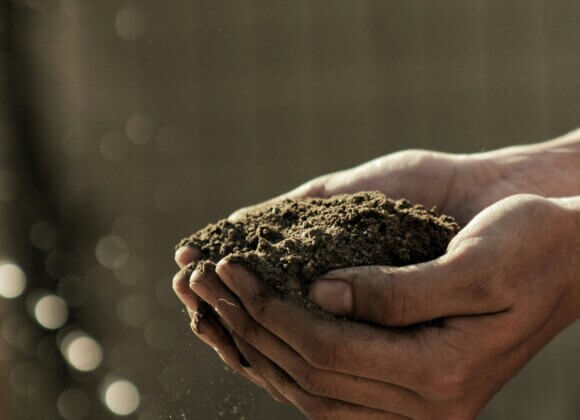
When mulching, leaves are spread over garden beds, under shrubs and hedges, or even in planters. This layer retains moisture in the soil, protects plant roots from frost, and provides a habitat for insects, earthworms, and microorganisms. In addition, as the leaves decompose, they release nutrients that make the soil more fertile—more so than composting does.
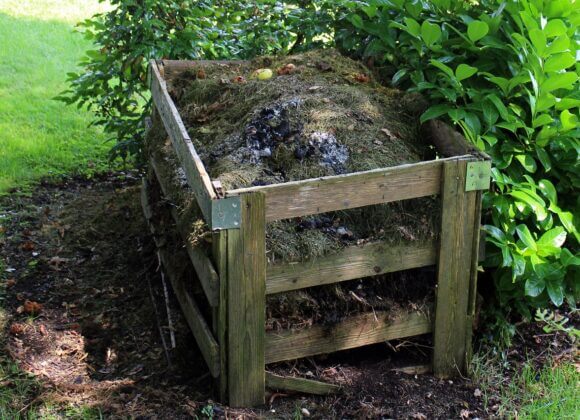
During composting, leaves—like many other organic materials (e.g., garden and kitchen waste)—are broken down by microorganisms under aerobic conditions (i.e., with oxygen) in a compost pile or compost bin, thereby transforming them into nutrient-rich humus.
Whichever method you choose, both have one thing in common: leaves are a natural and nutrient-rich fertilizer for the soil.
How long does it take for leaves to fully decompose?
It usually takes 12 to 18 months for leaves to turn into valuable compost. With oak and walnut leaves, which decompose more slowly, it can take even longer.
How can you quickly turn leaves into rich garden soil?
First things first: Composting leaves isn’t a quick process. Leaf compost can’t be used until about one to one and a half years have passed.
How do you properly dispose of leaves in Austria, and what is allowed?
In Austria, leaves must be disposed of in the organic waste bin. If the bin becomes too small, many municipalities provide organic waste bags that can be filled with leaves and will be picked up during the next organic waste collection. Alternatively, leaves can be disposed of at the nearest recycling center. Under no circumstances should leaves be discarded in nature, as they are legally classified as waste, just like yard trimmings and grass.
Things to Know About Leaves in the Garden:
- A beech tree 60 centimeters in diameter bears about 28 kilograms of leaves
- Leaves are a valuable resource in the garden even in winter, as they protect plants and animals from the cold
- It takes one to 1.5 years for leaves to turn into compost
- Leaves must not be disposed of in the great outdoors, as they are considered waste
Similar posts:
Autumn care: the best tricks for lawns & flower beds