At first glance, rooms with small windows, north- or east-facing rooms, or hallways may not seem like the best places for houseplants. Fortunately, however, there are beautiful houseplants that thrive in low light—in this article, you’ll learn which ones they are and what to keep in mind when choosing them.
Which houseplants thrive in low light?
Not everyone has a bright apartment. But even in rooms with little light, no one has to miss out on the soothing effects of houseplants. That’s because there are so-called shade-loving plants that thrive especially well under these conditions. Many of them are native to rainforests, where they grew in the understory and thus adapted to low light levels. A good indicator that a houseplant needs little light is relatively large, thin leaves.
Which plants are suitable for a dark bathroom?
If the bathroom has no windows at all, houseplants have virtually no chance of long-term survival (see below). If at least a little daylight enters the bathroom—for example, through a small window or a glass door—then at least one or two houseplants might have a chance of surviving there. Provided, of course, that you choose plants that can tolerate high humidity and similarly high temperatures—both of which are the rule rather than the exception in most bathrooms.
Which houseplants can survive in a windowless room like the bathroom?
Houseplants are highly unlikely to survive in windowless rooms, or if they do, only for a short time. This is because plants need light to convert carbon dioxide and water into glucose and oxygen through photosynthesis. However, special plant or daylight lamps can help by creating a day-night cycle that closely mimics nature.
How can I tell if my houseplant isn’t getting enough light?
If houseplants don’t get enough light, this is evident in various symptoms, such as faded leaves or the disappearance of typical characteristics. If spider plants don’t get enough light, the white spots on their leaves disappear; in the case of Monstera, new leaves no longer have slits. Slow or no growth is also an indication of insufficient light. If the plant grows only to one side—toward a light source—that is also a sign that it needs more light.
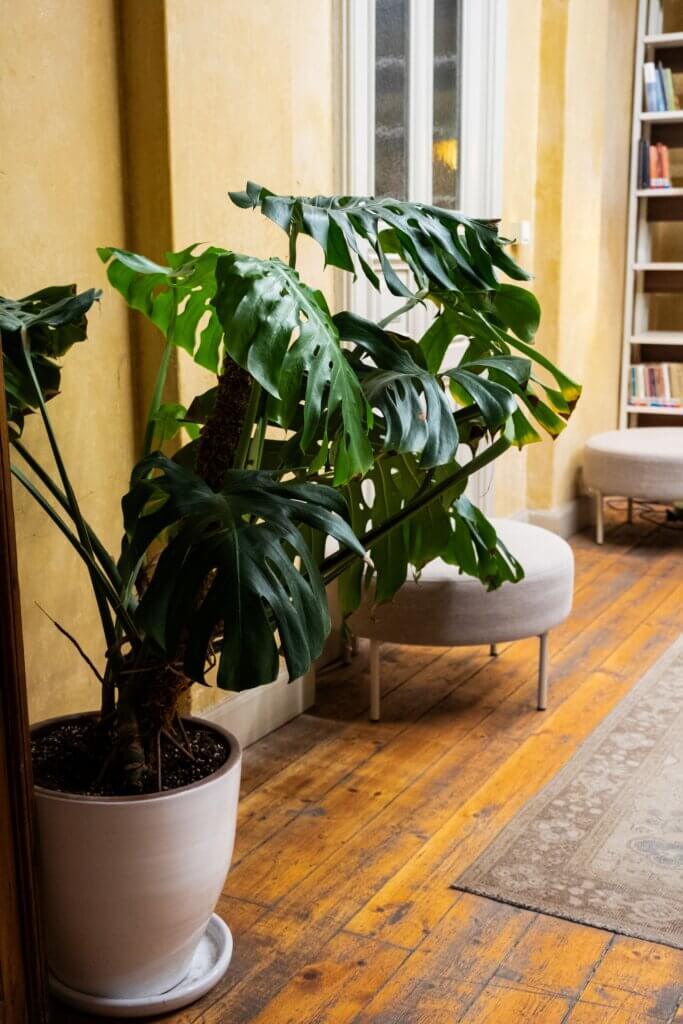
Which large houseplants can tolerate shade?
Among the houseplants that not only tolerate shade but can also grow to impressive sizes is the peace lily. Depending on the variety, it can grow up to 80 centimeters tall. The cobweb palm also reaches roughly this height. The lucky feather, on the other hand, can grow 10 centimeters taller. Nest ferns and kentia palms, among others, can reach heights of up to one meter, while a monstera can easily grow to 1.5 meters tall. Rubber trees aim even higher, reaching heights of up to two meters. The pothos, a climbing plant ( ), can also reach a considerable height with the help of appropriate trellises.
Which houseplants that thrive in low light are also easy to care for?
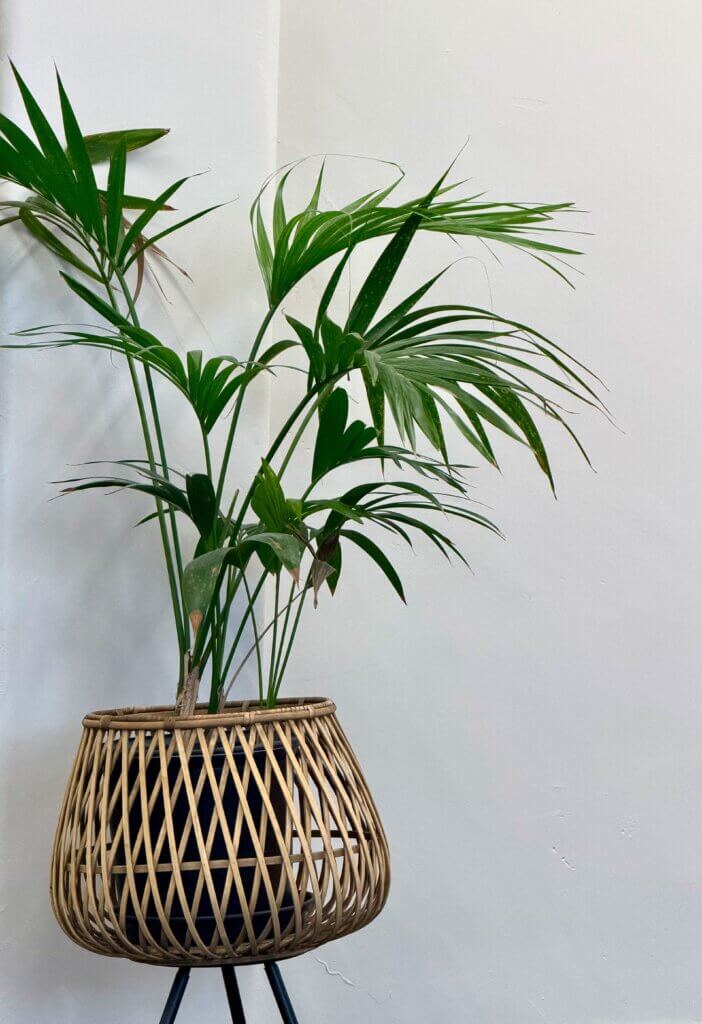
Houseplants that can thrive in low light are often easy to care for as well. This is true, for example, of the Snake Plant: Although it grows more slowly in dark locations and loses its light-colored leaf markings over time, it requires less watering there than in brighter spots. As a desert plant native to Africa, the snake plant can store water in its leaves. Furthermore, the darker the location, the lower its nutrient requirements. The Lucky Feather – It’s even considered the hardiest houseplant in the world: It thrives in virtually any location, including dark ones. You should only water the “lucky feather” once the surface of the potting soil has dried out. There’s just one thing it doesn’t like: very cold temperatures. Another houseplant that’s also suitable for people without a green thumb is the Kentia Palm. This ornamental plant has moderate water requirements, and the same applies to its nutrient needs: The kentia palm should be fertilized once a week only in the spring and summer.
Can houseplants survive under artificial light?
Yes, houseplants can survive even with artificial light.
Which low-light houseplants are non-toxic to cats and dogs?
It’s hard to believe, but there are houseplants that thrive in low light and are also non-toxic to pets—even if the selection is somewhat limited. Dog and cat owners who want to add a touch of green even to dark corners should choose plants such as caladium, spider plants, kentia palms, or sword ferns for their pets.
How do I properly water houseplants in dark rooms?
There is no general recommendation on how to properly water houseplants in dark rooms. Before purchasing a plant, ask for advice on the watering needs of the plant you prefer.
Which hanging plants can thrive in low-light conditions?
Hanging plants that thrive in low light include sword ferns, pothos, climbing philodendrons, and spider plants.
Similar posts:
Identifying and Avoiding Houseplants That Are Toxic to Pets