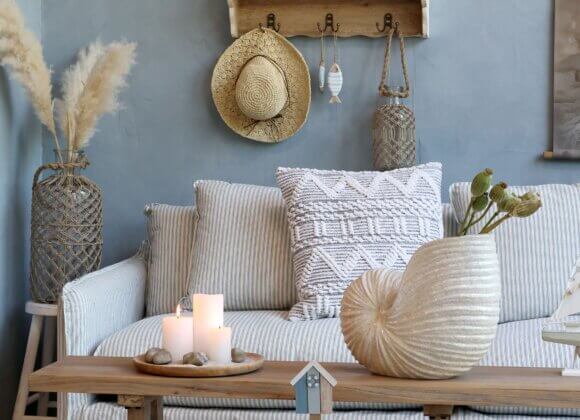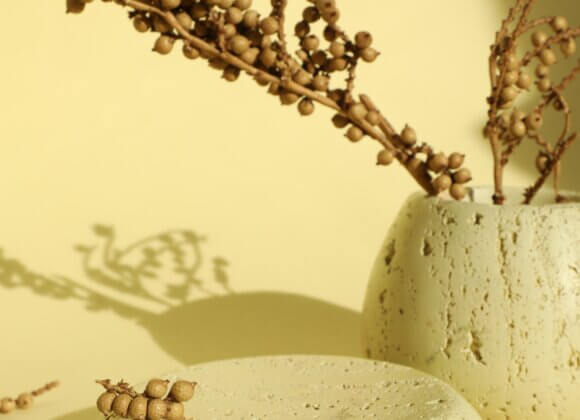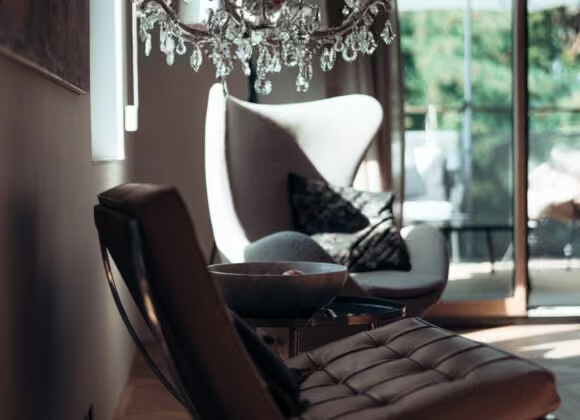

Vibrant colors, handwoven baskets, expressive textiles, and plenty of nature: Afrohemian combines the relaxed, carefree vibe of the boho style with African craftsmanship. The 2026 interior design trend brings warmth and personality into the home—but it also calls for a mindful approach to cultural influences.
For a long time, beige, greige, and as understated shapes as possible dominated our living spaces. Now, it’s time to make things more personal, colorful, and significantly more vibrant again. Afrohemian is one of those interior design trends that consciously moves away from a highly stylized, uniform look. Instead, natural materials meet bold patterns, modern design meets traditional craftsmanship, and cherished keepsakes meet found objects with a traceable origin.
Pinterest included “Afrobohemian Decor” in its trend forecast for 2026. This was based on search data collected over a two-year period. Searches for “Afrobohemian Home Decor” are reported to have increased by 220 percent, and terms such as “Adire fabrics” and “Berber patterns” were also searched for significantly more often.
What is Afrohemian design, and where did this trend come from?
The term “Afrohemian” is a combination of “African” and “Bohemian.” It refers to an interior design style that blends African art and craft traditions with the casual, individualistic aesthetic of the boho style. Typical elements include handwoven textiles, baskets, ceramics, wooden objects, natural fibers, vibrant colors, and many unique, one-of-a-kind pieces.
However, these design elements are not new. Weaving techniques, dyeing methods, basketry, and ceramics have a centuries-old history in numerous African regions. What is new, rather, is the term “Afrohemian,” under which these very diverse influences are currently being grouped as an international interior design trend.
Frequently cited examples include indigo-blue Adire fabrics from Nigeria’s Yoruba tradition, woven baskets from Ghana, Senegal, or Ethiopia, as well as rugs and textiles featuring North African Amazigh motifs. The style should therefore not be understood as a blanket “African look.”
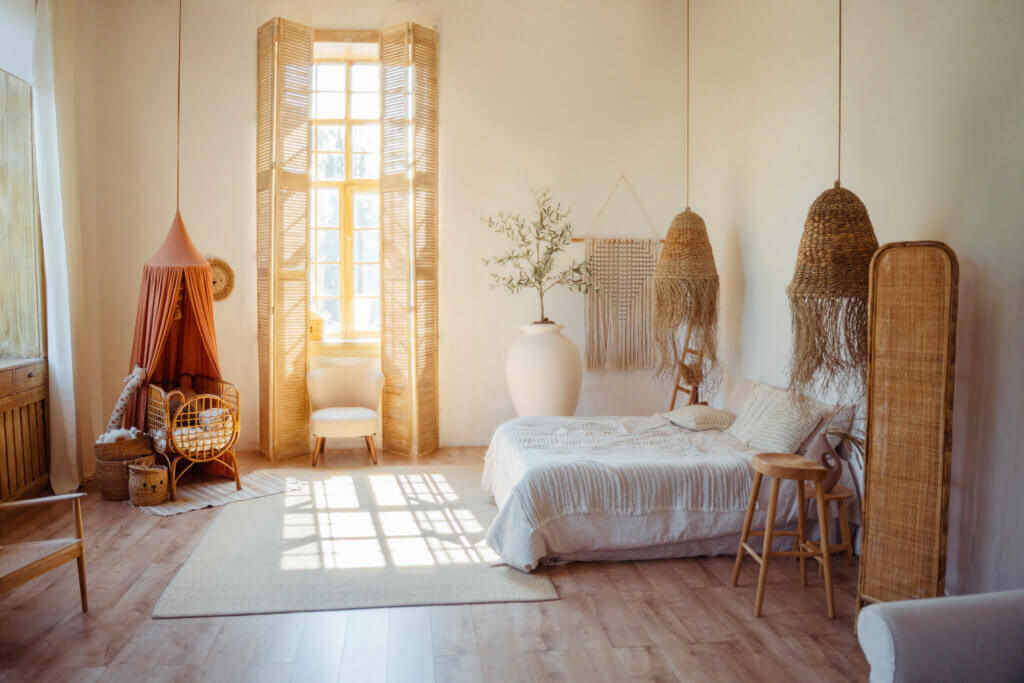
How does Afrohemian differ from the classic boho interior design style?
The classic boho style blends influences from different cultures and eras. Vintage furniture can be paired with oriental rugs, macramé, rattan, fringe, travel souvenirs, and plants. It follows no strict rules and thrives on a relaxed atmosphere that has evolved over the years.
Afrohemian has a more focused aesthetic. While the style draws on the layering, natural look, and joy of creating unique combinations found in boho interior design, it centers on colors, patterns, art forms, and craft techniques that are African or influenced by the African diaspora.
While classic boho is often associated with light, natural tones, macramé, and a certain hippie flair, Afrohemian often has a more graphic, high-contrast, and earthy feel. Dark wood, textured fabrics, hand-formed ceramics, and expressive art give the room more depth. What matters most, however, is not the quantity of decor, but the story and quality of the individual pieces.
What colors are typical?
The color palette is often inspired by the earth, the landscape, plants, and traditional dyeing techniques. Warm natural tones such as sand, clay, terracotta, rust, ochre, and dark brown form a calm foundation. These are complemented by bold accents in indigo, cobalt blue, mustard yellow, red, orange, or rich green.
This style looks particularly harmonious when not all colors are used at the same time. For a living room, for example, a base of warm white, sand, and wood works well, complemented by two bold accent colors. An indigo-blue throw, a terracotta-colored armchair, and a few green plants are all it takes to create the desired atmosphere.
Black is often used as a graphic element—for example, in lamps, picture frames, furniture legs, or geometric patterns. It creates definition and prevents the many natural colors from appearing too haphazard. Gold, brass, and copper can add warmth in small doses, but they should not dominate the entire room.
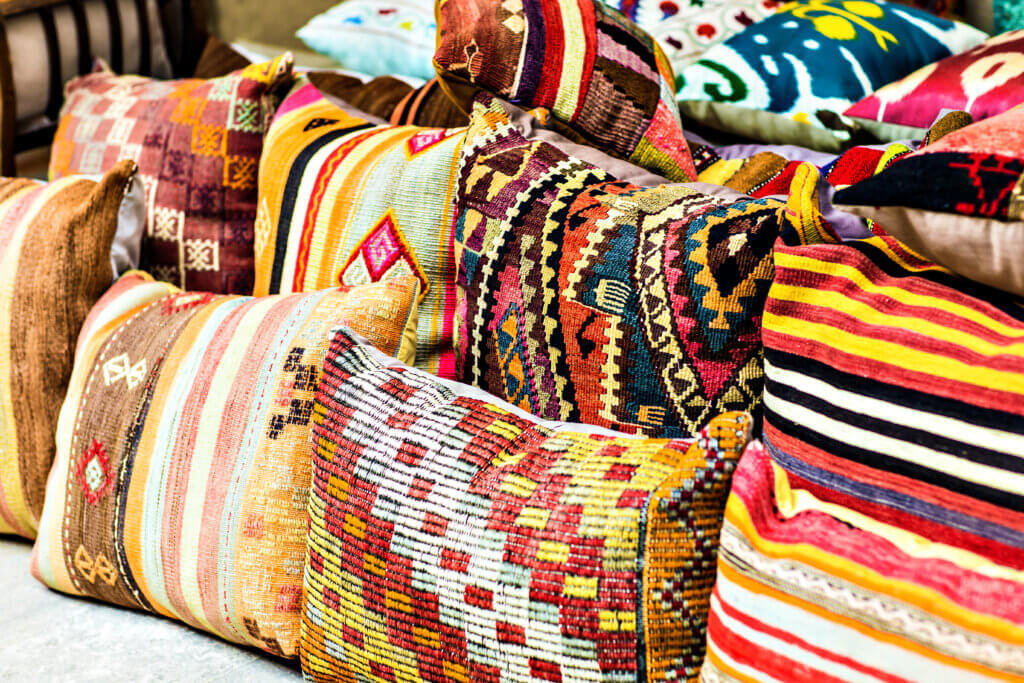
What materials and textiles are characteristic of the Afrohemian interior design style?
Natural, handcrafted materials are at the heart of Afrohemian interior design. These include wood, rattan, raffia, sisal, jute, seagrass, clay, loam, leather, metal, wool, linen, and cotton. Small irregularities are expressly desired: they show that an item was not mass-produced industrially in thousands of identical copies.
When it comes to textiles, different textures can be combined. Coarsely woven rugs, hand-printed pillows, light linen curtains, and a textured wool blanket create the layered look that defines this style. Particularly characteristic are traditional dyeing and weaving techniques such as Adire, in which fabrics are dyed—usually with indigo—using various resist techniques.
It’s important not to choose patterns based solely on their visual appeal. In traditionally crafted textiles, colors and symbols can have cultural significance. That’s why reputable retailers specify the origin, material, and production method—and, ideally, the workshop or cooperative where a piece was made.
How do I decorate a living room in the Afrohemian style?
Start with a calm base. Walls in warm white, beige, sand, or a light earth tone really let bold textiles and dark woods shine. A simple sofa serves as the focal point and can be enlivened with three or four different pillows. It’s better to combine different textures within a coordinated color scheme than to use as many patterns as possible.
A large rug made of wool, sisal, or jute ties the seating area together. This look pairs well with a low wooden coffee table, a metal side table, a wicker armchair, or a single stool with a distinctive shape. Baskets can be used for storage, as planters, or as wall decor.
A large piece of art on the wall usually makes a stronger impression than a collection of interchangeable decorative items. A high-quality textile can also be hung like a picture. Several smaller light sources—such as a floor lamp, table lamps, and indirect lighting—enhance the warm atmosphere.
To keep the living room from looking like a themed set, you should incorporate existing furniture as well. The Afrohemian style works just as well with a modern sofa, a vintage cabinet, or a minimalist dining table. The room can tell different stories—it just shouldn’t try to decoratively recreate an entire continent.
Which plants go well with an Afrohemian interior?
Large, striking plants complement the natural character of the Afrohemian style particularly well. Popular choices include strelitzias, monsteras, fiddle-leaf figs, various types of palms, dragon trees, and rubber trees. Snake plants and zamioculcas also fit in perfectly thanks to their clean lines and can thrive in low-light conditions.
Plants of varying heights can be arranged in small groups. A large specimen plant can be placed next to the sofa, while smaller ones can be placed on stools, shelves, or windowsills. Woven baskets work well as planters, but their interiors should be protected from moisture.
When choosing plants, the actual location matters more than the style. A sun-loving plant won’t thrive even in the most beautiful basket if it’s placed in a dark corner of the room. Small apartments therefore often benefit more from a few healthy plants than from an overcrowded “urban jungle.”
Where can you buy authentic decor for the Afrohemian style in Austria?
Anyone looking for authentic home decor should choose stores that clearly indicate the origin and manufacturing methods of their products. For example, the Habari Design Stores in Vienna carry wickerware from Tanzania, Senegal, Ghana, Kenya, and South Africa.
Mamabulé on Vienna’s Neubaugasse carries, among other items, hand-printed pillowcases, table runners, bedspreads, and ceramics from small Fairtrade workshops, including those in southern Africa.
Another place to shop is the network of Weltläden throughout Austria. The selection varies by location, but often includes handmade home decor items such as Bolga baskets from Ghana or ceramics from South Africa.
How can I incorporate Afro-Hebrew elements without resorting to clichés or kitsch?
The safest approach is to use just a few carefully selected pieces. A handwoven basket, a unique textile, and a work by an African artist are more compelling than a room full of random masks, animal figurines, and safari motifs.
Avoid decor that reduces Africa to wildlife, tribal romanticism, or supposedly “exotic” symbols. Zebra patterns, faux animal skins, colonial travel prints, and haphazardly assembled masks do not make for an Afrohemian interior. Instead, they may reinforce stereotypes.
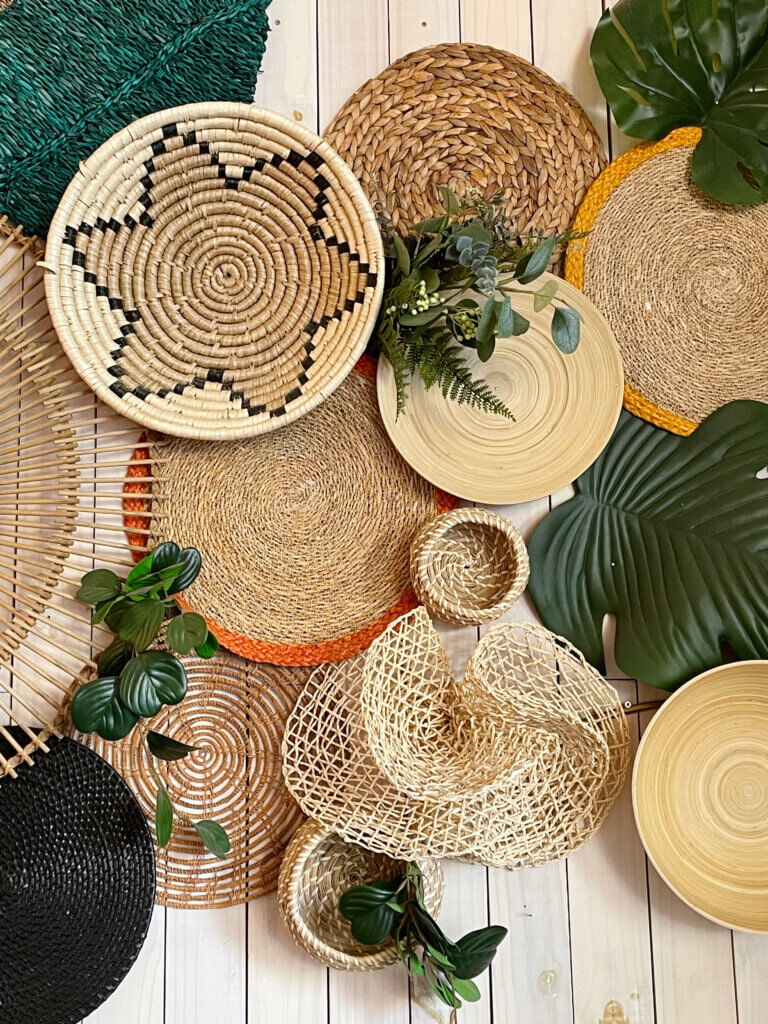
What is the difference between Afrohemian and ethno style?
“Ethnic style” is a very broad umbrella term. In stores, it often refers to home decor items made from or inspired by a wide variety of regions—from North African rugs and Indian pillows to South American patterns and Southeast Asian furniture. The origins and cultural contexts of these items can quickly become blurred.
Afrohemian places greater emphasis on African design traditions and their contemporary evolution. At the same time, the style combines these elements with the relaxed, individualistic approach of boho interior design.
The boundaries are fluid, however. “Afrohemian” is not a uniform historical style either, but rather a contemporary term. Precisely for this reason, it should not lead us to view the great diversity of African cultures as a monolithic design concept. Good interior design highlights differences rather than hiding them under a general label.
How can I incorporate the Afrohemian style into a small apartment?
In small rooms, the rule is: accents rather than clutter. A bold wall color, an expressive piece of art, or a large textile can set the desired tone on its own. Complement this with a basket, two pillows, and a striking plant. That’s usually all it takes.
Multi-functional furniture is especially practical. A woven stool can serve as a seat, a side table, or a plant stand. Large baskets can hold blankets, magazines, or toys while also serving as decorative accents. A narrow wall shelf provides space for ceramics and small art objects without taking up valuable floor space.
It’s also best to exercise restraint when it comes to patterns. Focus on a single pattern family or a common color palette. If indigo, terracotta, and natural white are used consistently, the overall look will be calm despite the variety of materials.
Even More Inspiration for Your Home
Related posts:
Quiet sounds, great effect: Quiet Luxury as a new living culture
Modular Furniture: Flexible Living with Style
Wallpaper Is Making a Comeback: Trends and Tips for Every Room