
A balcony bursting with greenery and flowers is a real treat for the eyes. But for flowers and herbs to thrive there, they need water in addition to the right soil and regular fertilizer. But anyone who thinks you can’t go wrong with watering is mistaken. Because too much or too little water—or watering at the wrong time—can harm the plants. We therefore sought out—and found—answers to the most important questions about “watering balcony plants.”
When is the best time to water balcony plants?
It is best to water balcony plants in the morning. At this time of day, leaves and flowers that get wet dry off quickly, unlike in the evening. This reduces the risk of fungal diseases. If the plants are watered at noon, the water evaporates more quickly and is therefore not available to the plants. On the other hand, water droplets act like a magnifying glass and can cause burns on the leaves.
How often should you water balcony plants?
How often you need to water your plants depends, on the one hand, on the orientation of your balcony: Flowers and herbs on a north-facing balcony need to be watered less frequently than those on a balcony that gets sun for most of the day. It also depends on the types of plants you choose. Plants from the Mediterranean region and desert plants require significantly less water than others. The same applies to the size of the flower pot: Plants in a large pot generally need to be watered less often than those in a small one. This is because large pots contain more soil, which retains water.
How much water do balcony plants need in the summer?
How much water each balcony plant actually needs in the summer depends on the specific species and variety. But that’s not all: the plant’s size and age also play a role in determining its water requirements.
Which balcony plants require very little water?
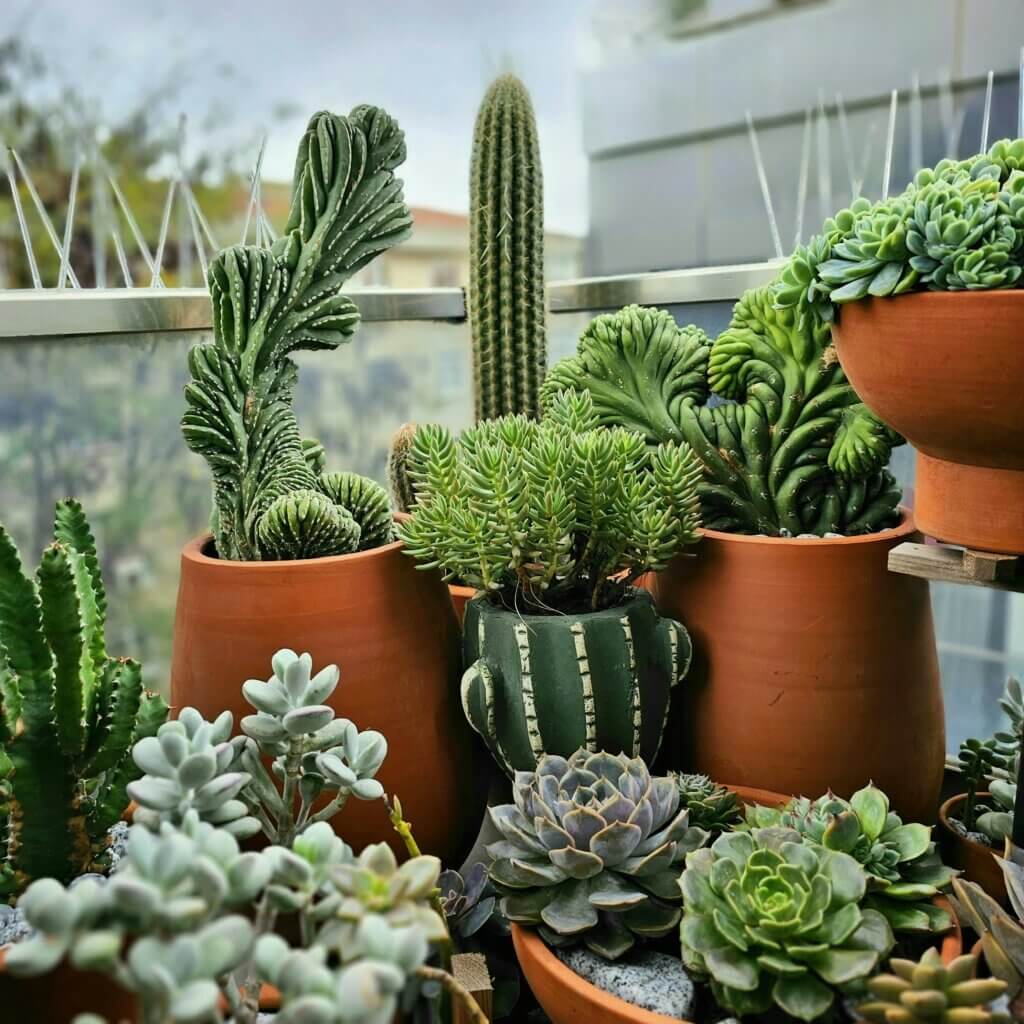
If you want to avoid frequent watering and conserve water, you should choose drought-tolerant and heat-loving plants when planting your balcony. These include, for example, purslane, gazania, coreopsis, geraniums, verbena, begonias, petunias, Cape daisies, gerberas, lavender, or Mediterranean herbs such as rosemary, thyme, or oregano. The same applies to succulents.
How can you tell if your balcony plants need water?
There are clear signs that indicate when a balcony plant needs watering. This is the case when the leaves curl up or droop limply downward. If this happens, you should reach for the watering can right away. To prevent it from getting to that point, you can also check the soil: If the top layer is still moist, you don’t need to water it. If the top layer is already dry, you should dig deeper. To do this, insert your index finger into the soil about as far as the end of the first knuckle—if it’s dry, it’s time to water.
How can you tell if your balcony plants are getting too much water?
If the leaves are wilting, this may be a sign not only of a lack of water but also of overwatering. If balcony plants are overwatered, the roots become waterlogged and can no longer absorb enough oxygen. Soft stems can also be a sign that you’ve been a bit too generous with the watering.
How can you prevent waterlogging in balcony plants?
To prevent waterlogging, it is advisable to use only planters with a drainage hole. Excess water can drain through this opening into the saucer. However, don’t forget to empty the saucer as soon as the soil is saturated with water. A drainage layer at the bottom of the flower pot or planter also helps prevent waterlogging, which can lead to root rot and ultimately the death of the plants. By the way, brown, mushy roots can be a sign of root rot.
Which watering systems are suitable for balcony plants?
Are you planning a trip and worried about how to water your balcony plants? Irrigation systems can help in this situation. If you’re only going away for a day or two, you can use DIY methods like upside-down water bottles with small holes in the caps, clay cones, or a wick. The wick is placed in a container of water and supplies the plants with the necessary moisture. Capillary mats work in the same way. If you’re planning a longer vacation or want to avoid watering altogether, you should opt for an automatic watering system. If you don’t have a water connection on your balcony, there are also models with a water tank that run on solar power.
Good to know:
- It’s better to water your balcony plants thoroughly once than to water them a little bit several times
- On particularly hot days, or if the soil is already very dry, you should first lightly moisten the soil and wait a few minutes before watering it thoroughly
- Water the plants directly onto the soil, not onto the leaves and flowers
- If you want to prevent the soil in the pots from drying out too quickly, you should cover it with stones, bark mulch, or something similar
- Clay and terracotta pots store water and release it gradually. This keeps the soil inside moist and cool for longer
Similar articles:
Climate-Resilient Gardens: Hardy Plants for the Garden
Save water with drought-tolerant plants
From north to west: which plants for your balcony?