
While we’re (still) enjoying sunny summer days, many vegetable plants quickly reach their limits in prolonged heat. Lettuce bolts, spinach produces flowers instead of leaves, and some harvests turn out to be significantly smaller than expected. That’s precisely why many hobby gardeners are increasingly on the lookout for heat-tolerant vegetables and plants.
The good news: Not all vegetables suffer in the heat. Some varieties are native to warmer regions and thrive even when the temperature stays above 30 degrees for days on end. If you choose heat-tolerant varieties when selecting plants, you can expect a successful harvest even during hot summers.
Why Heat Is a Problem for Many Types of Vegetables
High temperatures cause stress for plants. It becomes particularly problematic when heat and drought occur at the same time.
Many popular vegetables, such as lettuce, spinach, and radishes, respond to this with a natural defense mechanism: they begin to flower prematurely. For gardeners, however, this has a downside, because the plants no longer invest their energy in leaves or tubers, but rather in seed production. The vegetables often become bitter or lose quality.
Other plants suffer from sunburn, stunted growth, or water stress. This makes it all the more important to select hardy species that can better cope with the changing conditions.
Which vegetables are particularly heat-resistant?
Tomatoes are among the big winners of warm summers. They are native to Central and South America and need plenty of sun to produce fruit.
They thrive particularly well in sheltered locations, on sunny balconies, or in a greenhouse. It is important to maintain a consistent water supply, as significant fluctuations can cause the fruit to burst or lead to blossom end rot.
Cocktail and cherry tomatoes, in particular, are considered relatively hardy during heat waves. But be careful: Tomatoes should always be protected from rainwater, and when watering, make sure the leaves don’t get wet.
Bell peppers and chili peppers thrive in high temperatures
Bell peppers and chili peppers are also among the vegetables that thrive in warm weather. In fact, that’s when they truly reach their full potential. They require plenty of water and a sunny location.
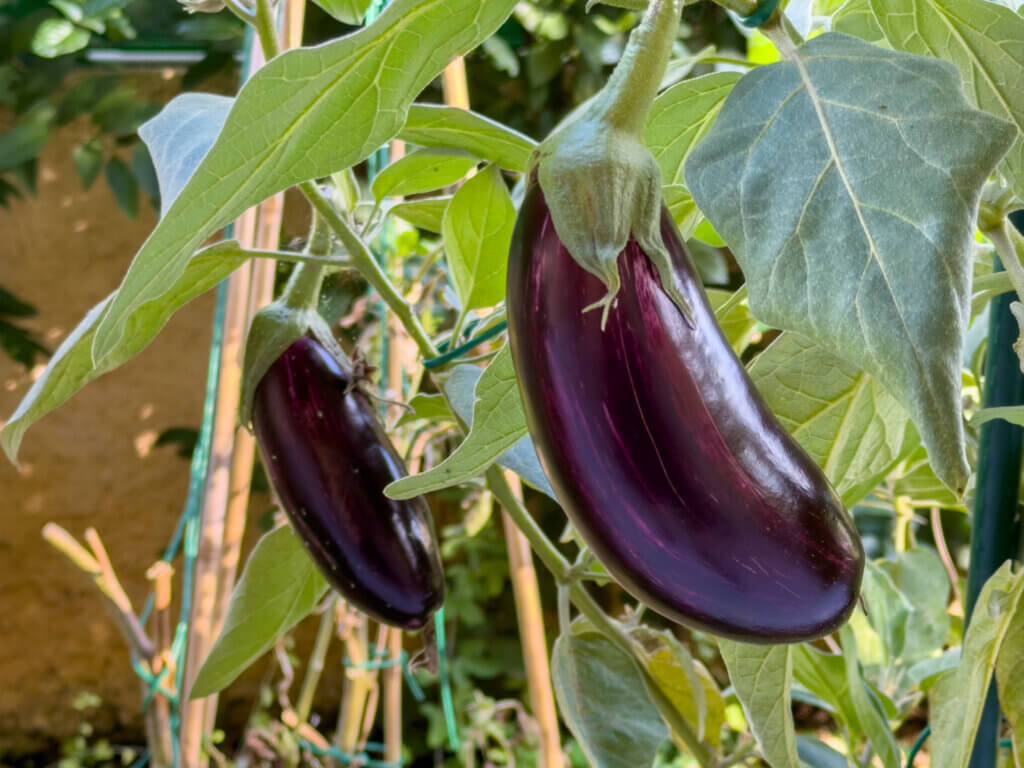
Eggplants are among the vegetables that thrive in hot weather
Eggplants are native to tropical and subtropical regions and are considered true sun-lovers. The warmer the location, the better they thrive. In cooler summers, eggplants often grow slowly, whereas in high temperatures they can develop vigorous plants and produce abundant fruit.
They thrive especially well in sheltered courtyards or on south-facing terraces.
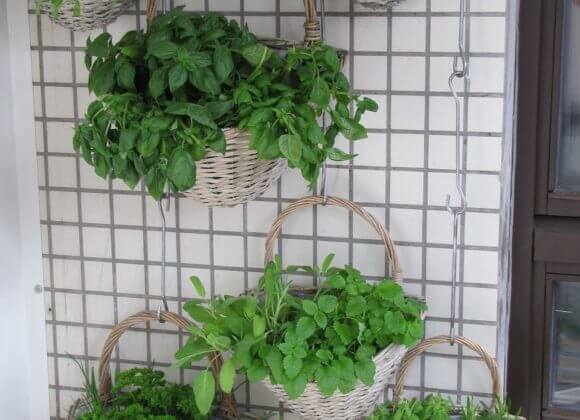
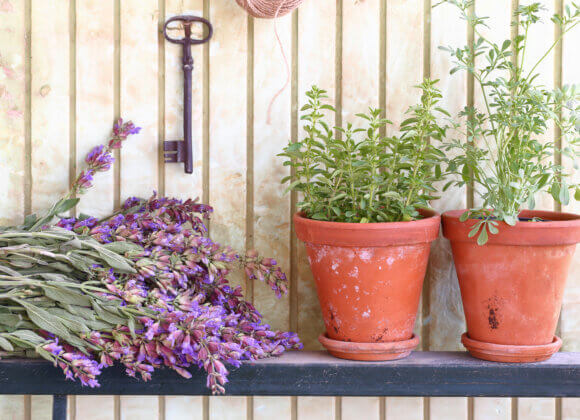
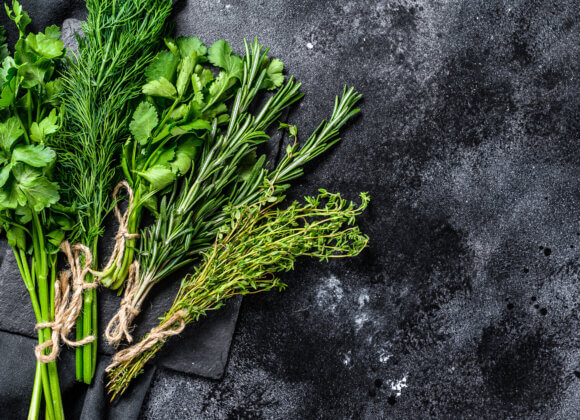
Mediterranean herbs are perfect for hot summers
Not only vegetables, but also many herbs hold up surprisingly well when cooked.
These include, among others:
- Rosemary
- Thyme
- Sage
- Oregano
- Lavender
These plants are native to the Mediterranean region and have “grown up” with dry summers. They require significantly less water than many other garden plants and, at the same time, provide fresh flavors for the kitchen.
Beans and sweet potatoes thrive in warm weather
Bush beans and pole beans often thrive particularly well in high temperatures. The only important thing is to ensure they have an adequate water supply during the flowering period.
Sweet potatoes are also becoming increasingly popular. These heat-loving plants were long considered exotic, but conditions in Central Europe have long since become more favorable for them. Thanks to rising temperatures, they can now be successfully cultivated in many regions.
Okra: A particularly heat-tolerant vegetable
Okra is not yet very well known; it is found primarily in Africa, India, and the southern states of the U.S.
This plant thrives in temperatures at which many native vegetable varieties would have long since wilted. Okra continues to grow reliably even in extreme heat and is considered extremely drought-tolerant. For hobby gardeners who enjoy experimenting, it could be an exciting alternative in the future.
These vegetables are particularly susceptible to heat
Not all vegetables are suited for hot summers. The following are particularly sensitive:
- Lettuce
- Iceberg Lettuce
- Spinach
- Radishes
- Peas
- Lamb’s lettuce
These plants prefer moderate temperatures and are therefore often grown in the spring or fall. If you want to harvest fresh leaves in the summer as well, you should opt for Swiss chard, a more heat-tolerant alternative to spinach.
How to Protect Vegetables from Extreme Heat
Even heat-tolerant plants benefit from certain protective measures.
Mulching helps retain moisture in the soil
A layer of grass clippings, straw, or shredded plant material reduces evaporation and keeps the soil moist longer.
Water in the morning instead of in the evening
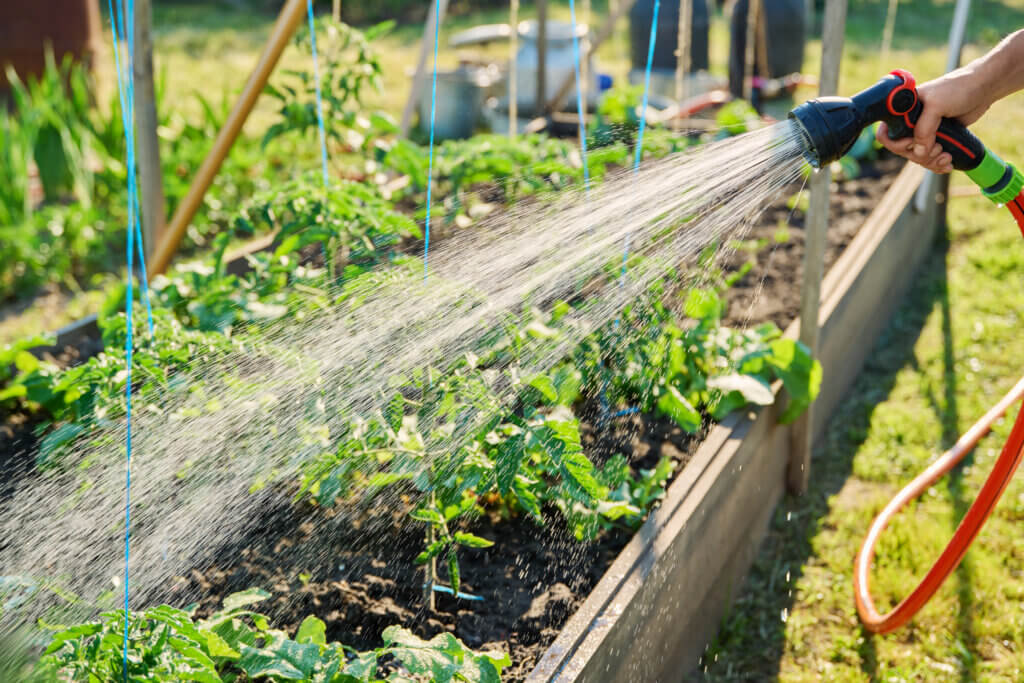
Watering early in the morning ensures that plants get water when they need it and helps reduce water loss through evaporation.
Creating Shadows During Extreme Phases
When temperatures exceed 35 degrees, even heat-tolerant vegetables can benefit from a little shade—provided by umbrellas or shade sails.
Be sure to choose the right variety
There are often significant differences within a single vegetable variety. Varieties specifically bred for summer or hot weather usually cope better with high temperatures.
Climate Change Is Changing the Vegetable Garden
Experts predict that hot, dry summers will become more common in the future. For hobby gardeners, this means that the selection of plants may change increasingly.
While traditional spring vegetables are under pressure, heat-loving varieties are gaining in popularity. Mediterranean vegetables and herbs, which were once considered exotic, may become an increasingly common sight in home gardens and on balconies in the future.
Those who choose heat-tolerant plants today will make their gardens more resilient and can look forward to a bountiful harvest even during hot summers.
Heat-Resistant Vegetables: Good to Know
- Tomatoes, bell peppers, and eggplants are among the most heat-tolerant vegetables.
- Mediterranean herbs often require significantly less water than other garden plants.
- Mulch protects the soil from drying out and conserves water.
- Lettuce and spinach are particularly sensitive to high heat.
- Okra is considered one of the hardiest vegetables for very hot summers.
Related posts:
How to Get Rid of Ants and Mosquitoes in Your Home: 5 Tips
Grilling fish the right way – celebrity chef Lukas Nagl reveals how it’s done
The 7 most popular summer herbs in the kitchen