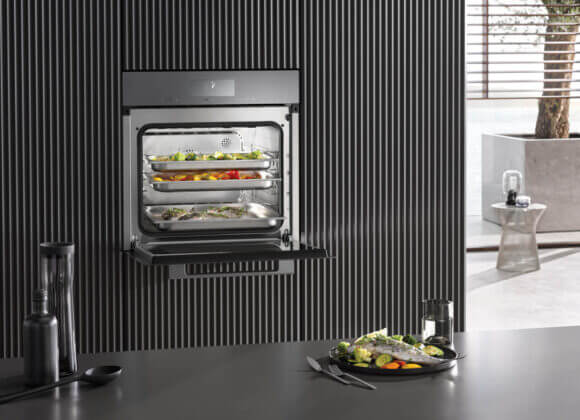

For many people, a good cup of coffee in the morning has long been a ritual. So why hide the machine, beans, and cups somewhere between the toaster and the paper towel roll? A coffee bar brings together everything you need for espresso, cappuccino, and other drinks in one place—and can even become a little interior design highlight.
The idea behind it is simple: Everything you need on a regular basis to make coffee gets a designated spot. The coffee maker and grinder are within easy reach, you don’t have to hunt for cups in three different boxes, and sugar, spoons, and the milk frother go right where they belong.
Not only does the result look tidier—your morning coffee suddenly feels a little more like a ritual.
Where can you set up a coffee bar?
The most obvious place is, of course, the kitchen. A free countertop, a niche between tall cabinets, or a separate section next to the breakfast area are particularly well-suited.
But a coffee bar doesn’t necessarily have to be part of the kitchen. A sideboard in the dining room can work just as well as a small cabinet in the living area. The most important thing is that there’s a power outlet nearby and enough space for the machine and its accessories.
If you’re planning a renovation, you can even incorporate the coffee bar into your kitchen design—for example, as a separate niche with lighting and shelves, or behind cabinet doors, so that the entire setup simply disappears when not in use.
How much space do you need for a coffee bar?
Surprisingly little. Even a space about 60 to 80 centimeters wide can be enough for a compact coffee corner. Depth is much more important: Espresso machines not only require floor space but often also need room above them to refill water, or in front of them to comfortably handle the portafilter and drip tray.
If you’re working with shelves, you should therefore measure the coffee machine first and then plan—not the other way around. For larger setups, it’s worth planning for some counter space. After all, you need a little room to move around when grinding, tamping, or frothing milk.
What belongs in a coffee bar?
That depends entirely on how you drink coffee at home. If you just want an espresso in the morning, you’ll need significantly less than someone who experiments with grind size, milk foam, and different beans.
The basic setup includes a coffee maker or espresso machine, coffee (or beans), and the cups you use most often. You can also add a coffee grinder, milk frother, tamper, and drip tray. Small bowls or containers hold sugar, spoons, and other accessories.
Keep in mind: Not everything you own needs to be on display. A coffee bar looks especially nice when the countertop isn’t completely cluttered.
How do you set up a coffee bar?
The best approach is this: Keep everyday items within easy reach. Items used rarely can be put away.
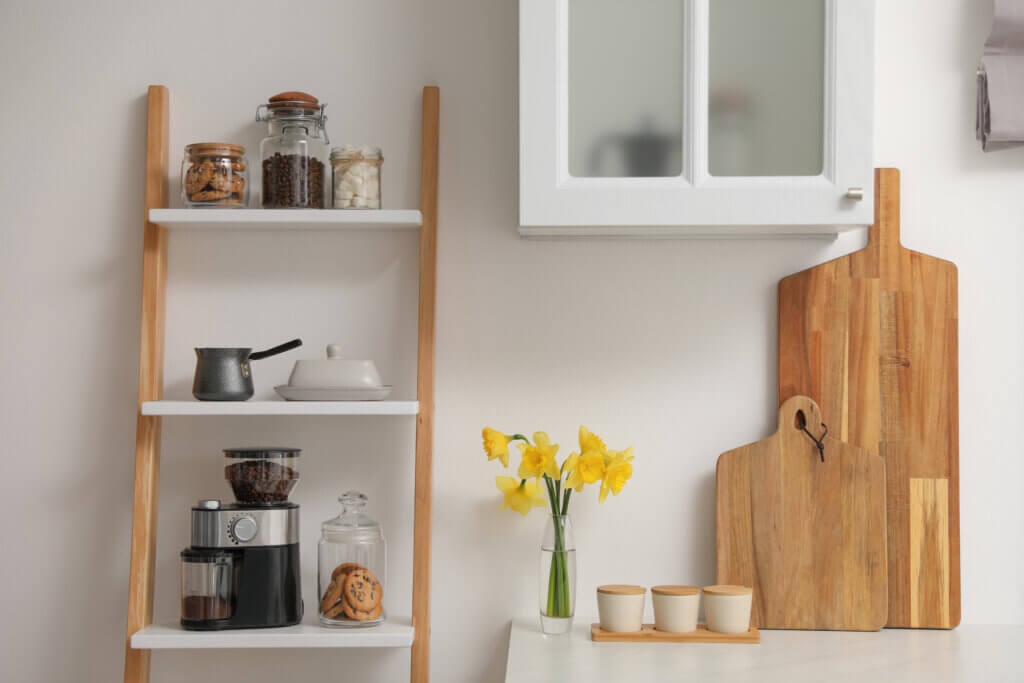
Cups, for example, can be placed on a narrow wall shelf or hung on hooks. Coffee beans are best stored in a tightly sealed container protected from light. Accessories can be tucked away in a drawer or in small boxes.
A tray for your most important utensils is especially handy. It visually groups items together and makes a loose collection of a grinder, sugar bowl, and spoons look tidier right away.
It’s also worth planning for cables. Otherwise, having several devices next to each other can quickly turn a charming coffee corner into a small tech station.
How do you design a beautiful coffee bar?
The simplest trick: repeat materials that are already present in the room. If wood is a central feature in the kitchen, a wooden tray or a matching shelf can tie the coffee bar in with the rest of the room. In a modern kitchen, stainless steel, glass, or dark ceramic work well. In bright rooms, natural tones and handmade cups look especially beautiful.
The backsplash can also be part of the design. Tiles, natural stone, wood, or a bold wall color can add character even to a small niche.
A shelf above it provides space for cups and attractive glasses. A small picture, a plant, or a single vase adds even more warmth to the space.
And since coffee often kicks off the morning before the rest of the household wakes up, good lighting is a must. A small wall sconce or under-cabinet light can quickly turn a practical corner into a true favorite spot.
Which coffee maker is best?
That depends less on the look and more on your personal habits: A fully automatic coffee machine is convenient when you’re in a hurry and want a variety of drinks at the touch of a button. An espresso machine requires a bit more practice and equipment, but it offers significantly more opportunities to experiment.
If you love filter coffee, you can set up your own coffee bar without a big machine—using a manual filter, French press, or AeroPress, for example. The most important thing is not to set up your coffee station based on an idealized image on social media, but rather to tailor it to your own daily routine. Even the most beautiful portafilter machine is of little use if no one really feels like weighing beans and frothing milk in the morning.
How do you keep a coffee bar neat and clean?
Unfortunately, coffee doesn’t just make you happy—it also leaves behind crumbs. Ground beans, splashes of milk, and water droplets are all part of everyday life in a coffee corner.
That’s why low-maintenance surfaces make sense. Stone, tile, stainless steel, and sealed wood are easy to wipe down. Delicate materials right next to the machine are less practical. It’s also helpful to assign a specific spot for every item. If you have to move five things out of the way after every cup of coffee, even the most beautiful coffee bar will eventually become a mess.
A small cloth in the drawer, a container for coffee grounds, and as little decoration as possible directly in the work area make daily cleanup much easier.
Similar posts:
Composting at Home: Does It Really Work?
Toast Day: Why a slice of bread deserves a holiday
Repairing electrical appliances: Tips for a longer service life