
Composting is considered a classic gardening task—but even without a balcony or garden, you can turn organic waste into valuable humus. Modern systems make composting indoors easier than many people think. Find out here what actually works, which methods are suitable, and how to avoid unpleasant odors.
Anyone who wants to live more sustainably will sooner or later come across the topic of composting. After all, a lot of kitchen waste still ends up in the general trash, even though it contains valuable nutrients. But what can you do if you don’t have a yard? The good news is that composting works even in an apartment. With the right methods, organic waste can be recycled in a space-saving and hygienic way. However, there are a few rules to follow to ensure this sustainable endeavor doesn’t turn into a smell problem.
Is it really possible to compost at home?
Yes, it is generally possible to compost indoors. This involves using special systems designed for small spaces. Worm bins, bokashi buckets, and electric composters are particularly popular.
While worm bins break down organic waste with the help of compost worms, bokashi buckets rely on fermentation. Electric composters speed up the process through heat and aeration.
The best method depends on the available space, the amount of waste, and personal preferences.
What are some good methods for composting indoors?
Three systems in particular have become established for apartments:
Worm Bin
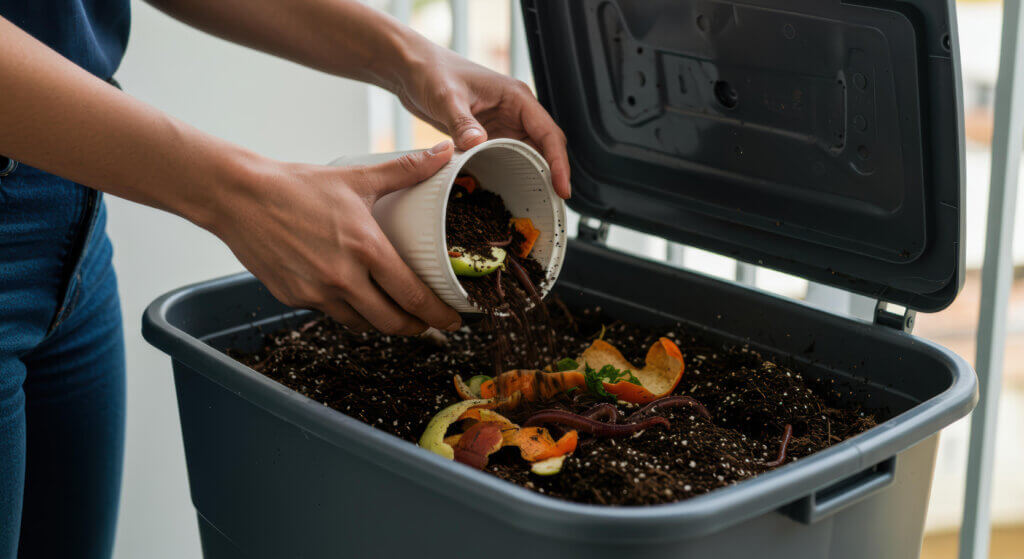
In a worm bin, special compost worms turn kitchen scraps into nutrient-rich worm castings. The system takes up very little space and can be placed, for example, in the kitchen, a storage room, or the basement.
Bokashi Bucket
In the bokashi process, kitchen scraps are fermented in an airtight container. With the help of microorganisms, a nutrient-rich material is produced that can later be used as fertilizer.
Electric Compost Bin
Electric devices shred and dry organic waste within a few hours. They significantly reduce the volume of waste and are particularly well-suited for people looking for a quick and easy solution.
What kinds of kitchen scraps are suitable for composting?
Many types of organic kitchen waste can be composted without any problems.
These include, among other things:
- Fruit and Vegetable Bowls
- Leftover salad
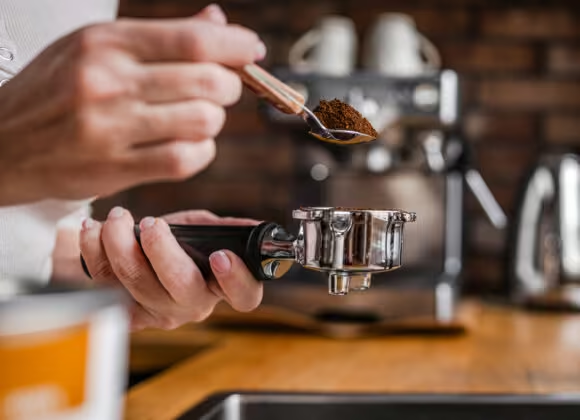
- Coffee grounds, including filter paper
- Tea bags without plastic components
- Eggshells
- Wilted Herbs
- Vegetable scraps
- Small amounts of bread
These materials provide important nutrients and promote decomposition in the composting system.
What kinds of kitchen waste aren’t suitable for composting?
Not all food waste is suitable for home composting.
You should avoid:
- Leftover meat and sausage
- Fish
- Dairy products
- Cooked meals in large quantities
- Strongly spiced foods
- Oils and Fats
- Animal feces
- Food Contaminated with Mold
This waste can cause unpleasant odors, attract pests, or disrupt the composting process.
How can I prevent odors when composting indoors?
Many people’s biggest concern is unpleasant odors. In fact, a properly functioning composting system should hardly have any smell at all.
The most important things are:
- The right balance of wet and dry materials
- Adequate ventilation
- Regularly replenishing textured materials such as cardboard or paper
- No excessive amounts of food scraps
- A comfortable room temperature
When properly maintained, worm bins usually smell like damp soil. If unpleasant odors develop, it is usually a sign of an imbalance in the system.
Where should a compost bin be placed in an apartment?
The ideal location depends on the specific method.
Worm bins thrive at temperatures between 15 and 25 degrees Celsius and should not be placed in direct sunlight. Suitable locations include, for example, storage rooms, a pantry, or sheltered corners of the kitchen.
Bokashi buckets simply need to be kept in a dry place at room temperature. Electric composters can usually be placed directly on the kitchen countertop.
How long does it take to compost indoors?
The duration depends on the system used.
- Worm bins usually take two to six months to produce finished humus.
- Bokashi buckets ferment the waste within two to four weeks.
- Electric composters often process food waste within a few hours.
If you want to see results quickly, you’re best off using electric devices. However, for particularly high-quality compost, worm bins are considered the most sustainable solution.
Is it worth it to compost in an apartment?
For many households, the answer is a clear “yes.” The amount of non-recyclable waste is reduced, valuable nutrients remain in the cycle, and houseplants and balcony plants benefit from the homemade fertilizer.
People who are committed to living sustainably, in particular, can make a small but effective contribution to waste reduction through home composting.
Related posts:
Compost heap good for the garden and climate