
Where does wine feel most at home in an apartment? Does it always have to be stored lying down? And how bad is a room temperature of 20 degrees, really? Master Sommelier Alexander Koblinger explains what matters most when storing wine at home—and why consistency is often more important than the perfect temperature.
Not everyone has a wine cellar—but that doesn’t mean good bottles have to be stored poorly. While wine does have certain requirements for its environment, some of these can be met even in a regular apartment. The most important factors are darkness, quiet, and as little temperature fluctuation as possible.
Alexander Koblinger is one of Austria’s most renowned sommeliers. A Master Sommelier, he has been a leading figure in the world of wine at Döllerer in Golling, in the Salzburg region, for many years. He explains where wine is best stored at home, when a wine cooler is worth the investment—and why even red wine belongs in the refrigerator after it’s been opened.
Mr. Koblinger, a question for the expert: How do you store wine properly at home?
Above all, wine needs consistency. A temperature that remains as steady as possible, little to no light, and no strong vibrations are more important than a perfect wine cellar. For longer-term storage, the location should also not be too dry, especially for bottles with natural corks.
What is the ideal temperature for storing wine?
For long-term storage, around 10 to 14 degrees is ideal. However, it’s not so much the exact number that matters as maintaining a temperature that’s as constant as possible. Constant fluctuations are more problematic than, for example, a stable 15 or even 18 degrees. The warmer the wine is stored, the faster the maturation and aging processes occur.
And what do I do if I don’t have a basement?
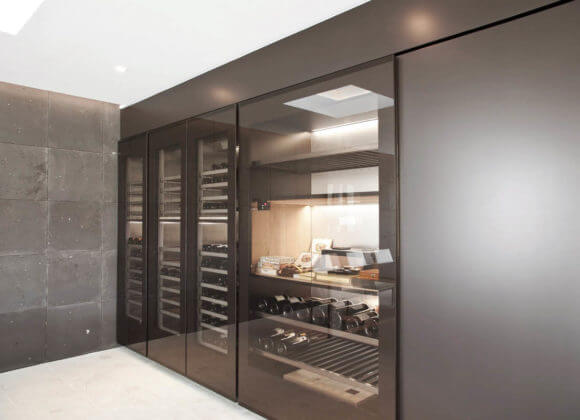
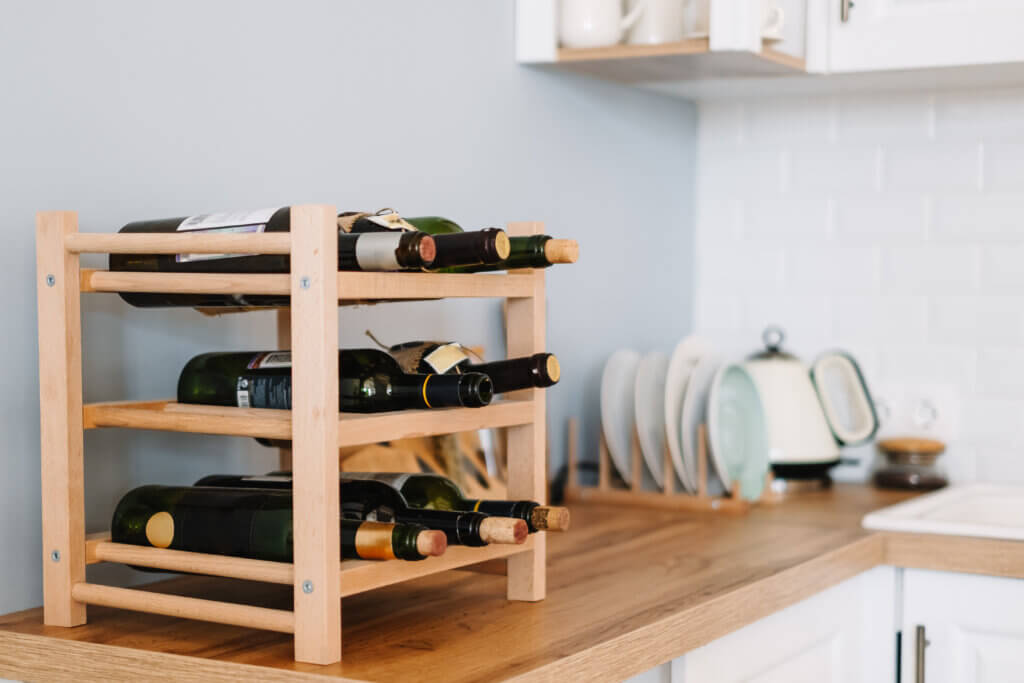
Look for the coolest, darkest, and most temperature-stable spot. An interior storage room, a cool entryway, or a closet against an interior wall would be ideal. The kitchen, areas near windows, and spots next to radiators or even a tiled stove are unsuitable. If you want to store high-quality wines for years, a wine climate cabinet is practically a must in the long run.
Should I store wine upright or on its side?
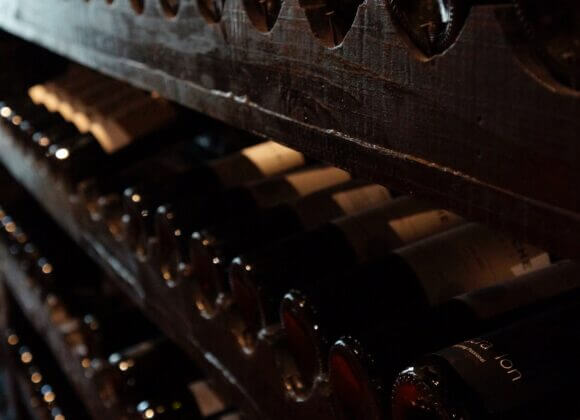
I would store bottles with natural corks on their sides if I plan to keep them for a long time. This keeps the cork in contact with the wine. Bottles with screw caps or other airtight closures can be stored upright without any problems. For short-term storage, this is of secondary importance.
Which rooms in the apartment are best suited for storing wine?
The best room isn’t necessarily the coolest one, but rather the one with the most consistent temperature. Interior rooms without direct sunlight are usually better suited than the kitchen or living room. Avoid the attic and areas near radiators, because significant temperature fluctuations can occur there. Wine doesn’t like that at all.
How long can you store wine at home?
That depends heavily on the wine and the conditions. A wine intended for casual enjoyment won’t improve with ten years of aging. Under good conditions, age-worthy wines can mature for many years or even decades. At normal room temperatures, however, I wouldn’t really store high-quality wines for the long term. If, on the other hand, I have a temperature-controlled room, there’s a lot of leeway in terms of how long I can store them.
Does light harm wine?
Yes. Strong sunlight and UV light, in particular, can have a negative effect on wine. That’s why many wine bottles are dark in color. When it comes to storage, the rule is simple: the darker, the better. Direct sunlight should be consistently avoided.
Are there differences between red wine and white wine when it comes to storage?
There are hardly any differences when it comes to basic storage conditions. Both benefit from darkness, a stable temperature, and a quiet environment. The main difference lies in the individual aging potential of each wine, not in its color. Here, it’s more important to consider the wine’s structure. A great Riesling can age significantly longer than a simple red wine.
When does it make sense to get a wine refrigerator for your home?
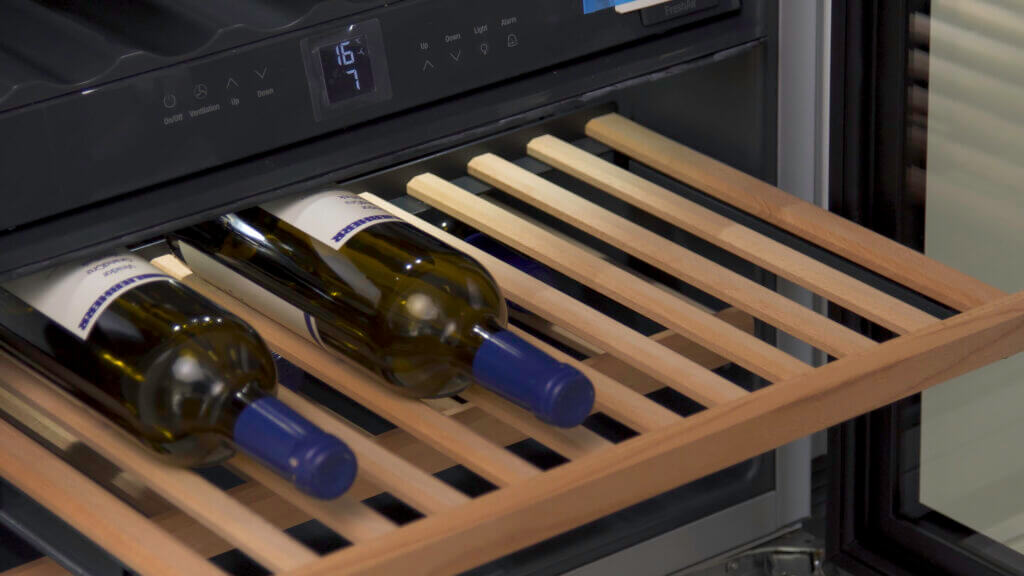
If you’re only storing wine for a few weeks or months, not necessarily. However, for those who collect high-quality bottles or want to let their wines age for several years, a wine climate cabinet makes a lot of sense. Above all, it provides something that’s difficult to achieve in an apartment: consistency.
What is the proper way to store opened bottles of wine?
Reseal the bottle and put it in the refrigerator—even red wine. Storing wine in a cool place significantly slows down oxidation. Before drinking, you can let red wine warm up a bit. The less wine is left in the bottle, the faster it will develop, because there is more oxygen present.
What are some affordable solutions for storing wine without a cellar?
A dark cabinet in the coolest room is often sufficient to start with. It’s important to keep it away from radiators, stoves, direct sunlight, and extreme temperature fluctuations. However, for wines that are meant to age for a very long time, I wouldn’t improvise. In that case, a small wine cooler is the more sensible investment in the long run.
Our Wine Storage Expert

Alex Koblinger is one of Austria’s most distinguished sommeliers. The Master Sommelier oversees the wine selection at Döllerer in Golling and has been named Sommelier of the Year twelve times. In 2018, he became the first Austrian to be named a Sake Samurai—an honor recognizing exceptional contributions to Japanese sake culture. For more than 25 years, he has been involved internationally with wine, winemakers, and the culture of fine dining.
Website: https://www.doellerer.at/
Related posts:
The most important glasses for home: red wine, champagne
Grilling Poultry: These Specialties Will Surprise Every Guest