Clay is one of the oldest building materials in the world. Buildings around the world have been constructed from this natural building material for thousands of years. In Austria too, specifically in the Weinviertel and Burgenland, clay was the predominant building material for centuries. It was not until the 19th century that it was gradually replaced by fired bricks and gradually fell into oblivion. In the course of growing sustainability efforts, building with clay is now increasingly becoming the focus of modern architecture again.
Is clay suitable as a structural building material?
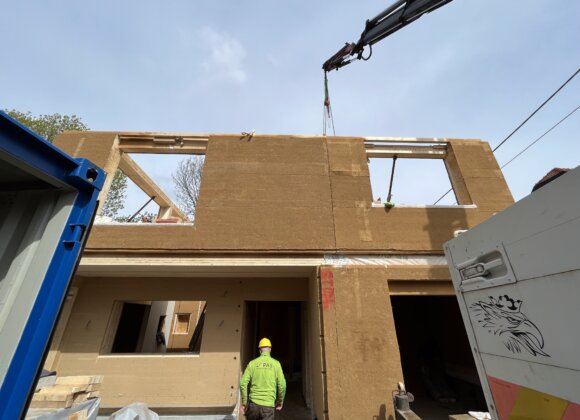
In principle, an entire house can be built from clay. “It is also suitable as a structural building material,” says Andi Breuss, wood and earth building planner and chairman of the Netzwerk Lehm association. The exterior walls can be built from air-dried clay bricks or clay blocks, which are already available to buy, or from rammed earth. The latter involves filling the formwork elements with a maximum 15-centimetre layer of clay and then compacting it to half its thickness using pneumatic hammers. Another alternative is a wood-clay composite system that Breuss has developed himself. “This will soon be available across the board,” says the planner. The solid corrugated clay construction method that was predominant in the Weinviertel and Burgenland in the past, where clay was simply piled up, is no longer an option. “It is uneconomical and no longer meets building physics requirements,” says the planner. Fillings in walls and floors, in which clay is mixed with wood or hemp fibers, or a screed made of clay are also feasible. “However, the market for the use of clay as a structural building material is not yet there,” says Breuss. This is also reflected in the prices: “If earth is not processed on a large scale, it is more expensive,” says the earth building expert.
Clay in the interior
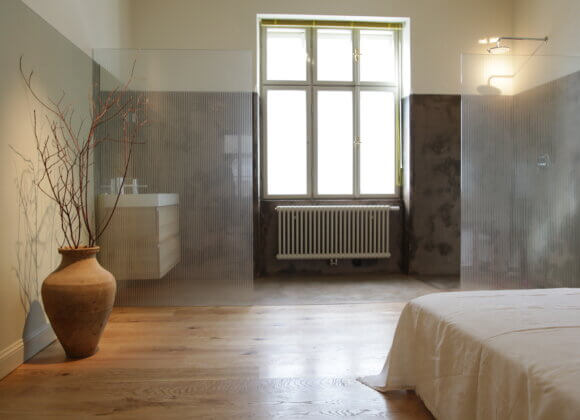
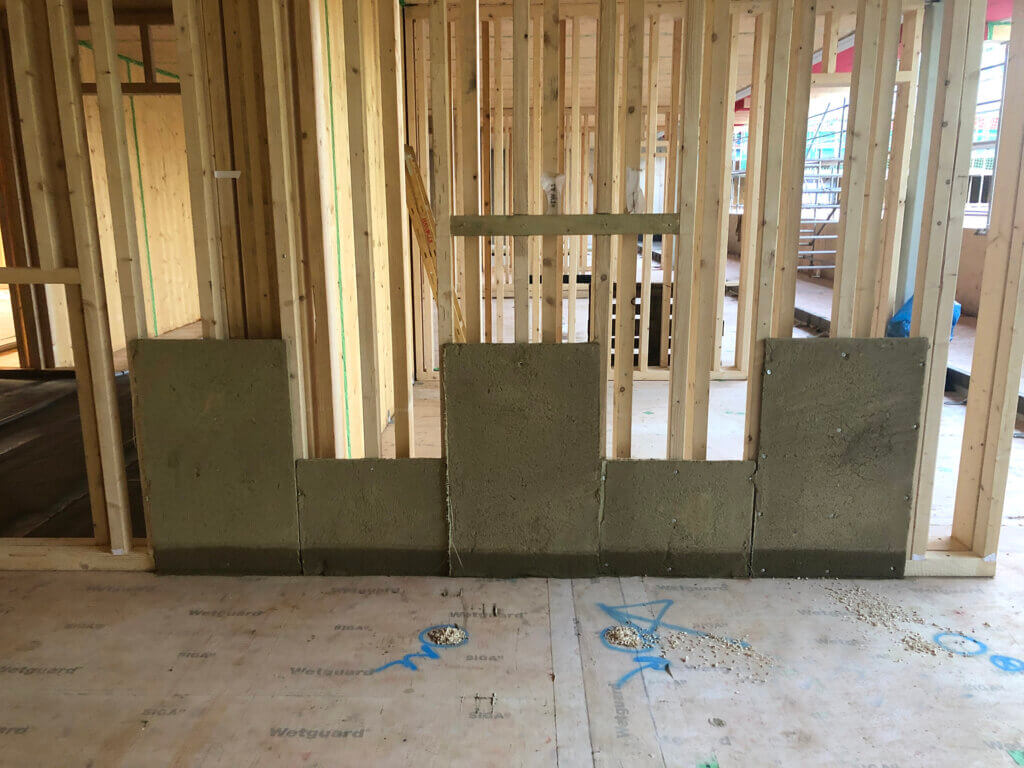
Clay is also an option for interiors. Clay building boards are already a sustainable alternative to plasterboard in drywall construction – but there is still plenty of room for improvement. However, the use of clay plaster and clay paint is already widespread in Austria – not least because of their positive effect on the indoor climate.
Building with clay – the indoor climate benefits
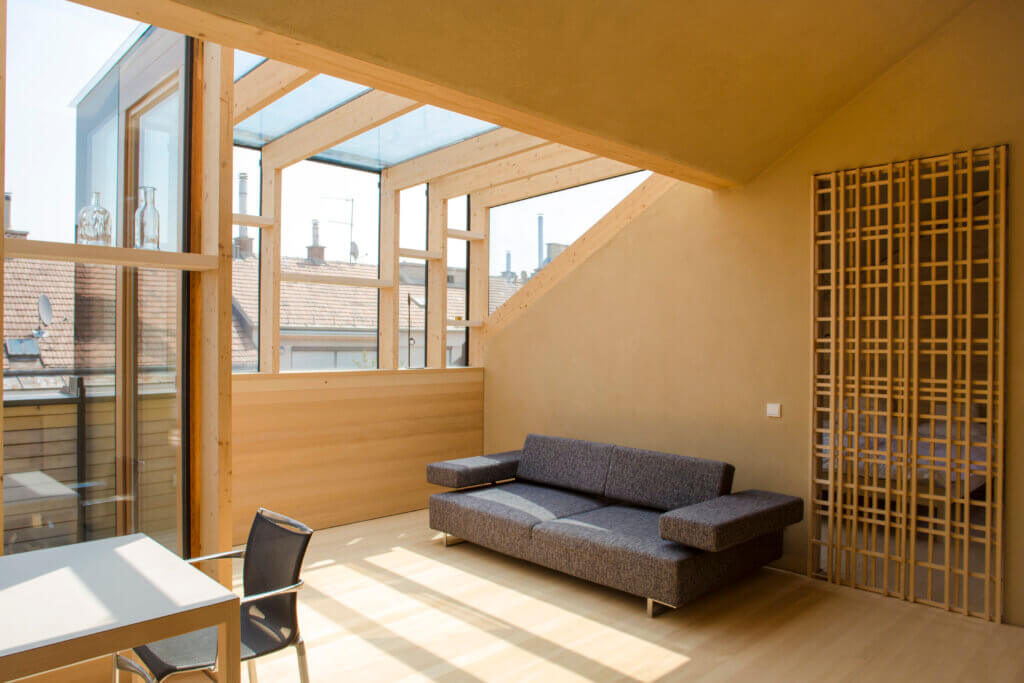
Probably the most important property of clay is its ability to regulate moisture. Clay can absorb up to 40 times more moisture and release it back into the room air than bricks, for example. In addition, the natural material is anti-allergenic, neutralizes odours and pollutants and reduces the formation of fine dust. However, residents also benefit from another property of clay, namely its high storage mass. It prevents overheating in summer and keeps the heat in during the winter.
Is building with clay particularly sustainable?
In contrast to other building materials, clay, which does not have to be fired, requires significantly less energy to produce than reinforced concrete or bricks, for example. “It is also the only recyclable mineral building material,” says Breuss. This is because the unfired clay can be reused at any time and indefinitely. “You only need to moisten it to make it plastic and workable,” explains the planner.
Another plus point on the sustainability side is the fact that the mixture of sand, silt and clay, which can contain larger rock particles such as gravel, stones or organic material, is available almost everywhere and in unlimited quantities. “Clay is almost everywhere in the earth. You just have to dig it up and have it tested for contamination. If there is none, it can basically be used,” says Breuss, who also points out the long service life of an earth building. “If constructed correctly, an earth house will certainly last longer than a reinforced concrete building,” says the earth building specialist.
Our expert

Andi Breuss completed two degrees (Timber Construction Architecture at the University of Art and Industrial Design Linz and Psychology and Sociology at the University of Vienna). He has many years of experience in building with wood, straw and clay, both in new construction and the expansion of existing buildings.
FAQ: Building with clay
Yes, in principle this is possible. Modern construction methods such as clay bricks, rammed earth or wood-clay composite systems can also be used as a load-bearing building material. Traditional historical methods such as corrugated earth building, on the other hand, are considered technically outdated.
The building material is experiencing a renaissance as part of the sustainability debate. It requires hardly any energy to produce, is completely recyclable and is available almost everywhere – properties that make it particularly attractive for contemporary construction.
Clay earth significantly improves the indoor climate: it regulates humidity, binds pollutants and odors and has an anti-allergenic effect. Clay plaster and paints also ensure a pleasant, natural living environment.
Currently yes – at least in part. As clay is not yet used on a large industrial scale, the costs may be higher. However, this ratio is likely to change with increasing use.
Very durable – provided it is professionally planned and constructed. Experts believe that, if constructed correctly, clay houses can even last longer than reinforced concrete buildings.
Related posts:
Sustainable building materials, part 1: Building with wood
Sustainable floor coverings: Bamboo, cork & co. in comparison