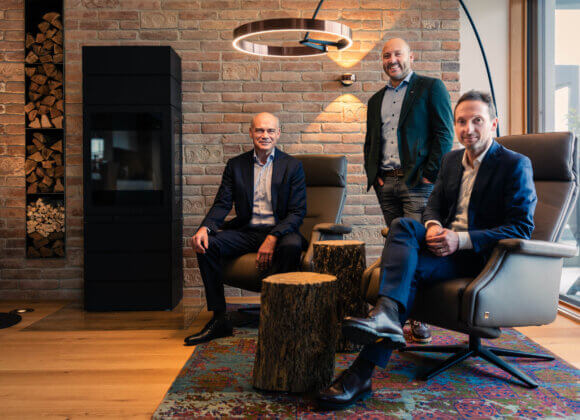

At an exclusive press breakfast organized by the Austrian luxury real estate platform PREMIUM-LIVING.COM, experts in real estate, investment, taxation, and financing discussed the resurgence of investment apartments. The key takeaway: Fewer new construction projects, rising rental demand, stabilized financing costs, and tax incentives are creating a new market environment—but location, quality, and realistic calculations are more important than ever.
Just a few years ago, the traditional investment or retirement apartment seemed hardly attractive to many private buyers: high financing costs, uncertainty in the real estate market, and a sharp rise in construction costs had significantly dampened demand. The situation has since changed: fewer new units are being built, Vienna continues to grow, rental apartments are in demand—and financing costs are once again more predictable.
Under the title “Investment Apartments Are Back. But Are They Worth It Again?,” PREMIUM-LIVING.COM hosted an exclusive press breakfast featuring experts in real estate development, investment, tax consulting, and financing.
“Real estate is much more than just an attractive investment. It can provide financial security, open up long-term opportunities, and play an important role for the next generation as well,” said Bernd Gabel-Hlawa and Benedikt Gabriel, CEO and founder of PREMIUM-LIVING.COM. “With our new ‘Investment Properties’ category, we’re responding to the renewed interest in high-quality investment real estate. At the same time, we want to provide more information and, in particular, raise awareness among women and parents about real estate as a tool for financial planning.”
With its new “Investment” category, PREMIUM-LIVING.COM brings together selected investment properties in Vienna and the surrounding area, drawing on expertise in real estate, taxation, and financing. The goal is to provide potential investors with sound guidance and to clearly explain opportunities as well as relevant market conditions.
Fewer New Construction Projects, Higher Demand
For Sebastian Unger, CEO of BIP Immobilien, investment apartments are making a comeback “for the right reasons.” While just a few years ago nearly every conversation ended with the topic of interest rates, today the focus is once again more on location, floor plan, and rentability. At the same time, the shortage in the housing market is becoming increasingly apparent.
“During the crisis, many projects were never even started. These apartments are missing now and will continue to be missing in the coming years. At the same time, Vienna continues to grow. For someone looking to rent out a property long-term, this is a very stable starting point,” says Unger. His advice to first-time buyers: “Think in terms of decades, not years. An investment apartment isn’t a quick profit—it’s a foundation.”
Roland Pichler, managing director of DWK – Die Wohnkompanie GmbH, also, currently observes a unique situation: While purchase prices have largely stagnated in recent years, rents have risen significantly. Adjusted for inflation, real estate prices have thus declined in real terms, while achievable returns have improved. In select projects, gross initial yields of around four percent are now possible, while in traditional new residential construction, yields of about 3.5 percent are realistic. According to Pichler, two- and three-room apartments with good public transportation access, functional floor plans, and open spaces remain particularly in demand. “The traditional 35-square-meter investment apartment remains a viable product. For those who want to keep as many options open as possible in the long term, slightly larger apartments are often the more sustainable choice.”


Location alone is no longer enough
Marion Weinberger-Fritz of Raiffeisen Vorsorge Wohnung emphasizes that a good investment apartment today must offer much more than just being compact and rentable. In addition to good transportation access, features such as amenities, energy efficiency, cooling, accessibility, high-quality windows, shading, and electric vehicle charging options are playing an increasingly important role. “Rentability is one of the key value drivers for an investment apartment,” says Weinberger-Fritz. Added to this are tax considerations and long-term value appreciation. The current shortage in the housing market presents opportunities for private investors—provided that the seller and the project are carefully vetted.
It is precisely the security of ownership, which is guaranteed by the land registry, that makes a condominium a long-term component of financial planning for many people.

Why Real Estate Is Also Becoming a Greater Focus for Women
Jasmin Soravia of J. Soravia Beteiligung examines investment apartments from an investor’s perspective. She notes that micro-location, flexible floor plans, energy efficiency, operating costs, and a realistic purchase price are particularly crucial. “I’m not just buying an apartment; I’m buying into a building,” says Soravia. That’s why reserves, the condition of the building, the condominium ownership agreement, and future investments must also be taken into account.
She sees real estate as a particularly relevant topic for women when it comes to long-term wealth building. “Women in Austria still face a significant pension problem. At the same time, I often find that stocks are perceived as abstract, whereas an apartment is something tangible.”
However, it is crucial to evaluate a property objectively as an investment: not based on the gross return, but on the amount that actually remains after accounting for operating costs, vacancies, reserves, financing, and taxes. “An apartment can be a very good building block—but it shouldn’t make up your entire net worth.”
This is exactly where the PREMIUM-LIVING.COM initiative comes in: It aims to raise awareness of issues such as financial planning, the gender pension gap, and ensuring long-term financial security for one’s family.

Tax Opportunities Through the End of 2026
A detailed analysis is also worthwhile from a tax perspective. Kerstin Koppensteiner (TPA) highlights, in particular, the financing structure, the “hobbyist” test, value-added tax, and depreciation options.
For newly constructed residential buildings completed after December 31, 2023, and before January 1, 2027, that meet the “Bronze” building standard, the extended accelerated depreciation may be relevant. “A common misconception is that every newly purchased apartment automatically qualifies for this benefit,” says Koppensteiner.
In particular, making optimal use of depreciation and the deductibility of financing costs could reduce the current tax burden and improve cash flow. Her most important advice: Clarify tax issues as early as possible, rather than waiting until after the purchase.

A legal review protects against costly surprises
In addition to location, return on investment, and financing, the legal structure of an investment apartment also plays a key role. Peter Fassl, Mag., of HSP Rechtsanwälte advises carefully reviewing the purchase agreement, land registry, any potential encumbrances, and the legal framework governing condominium ownership.
Anyone wishing to rent out a property should also clarify early on which provisions of tenancy law apply and what options are available regarding rent levels and lease terms.
“In practice, problems often arise from poorly drafted lease agreements, invalid fixed-term or value-protection clauses, or a misinterpretation of the applicable provisions of tenancy law,” said Fassl. The rights and obligations associated with condominium ownership should not be underestimated either. An early legal review can help prevent future conflicts and unexpected costs.
Financing: The market is on the move again
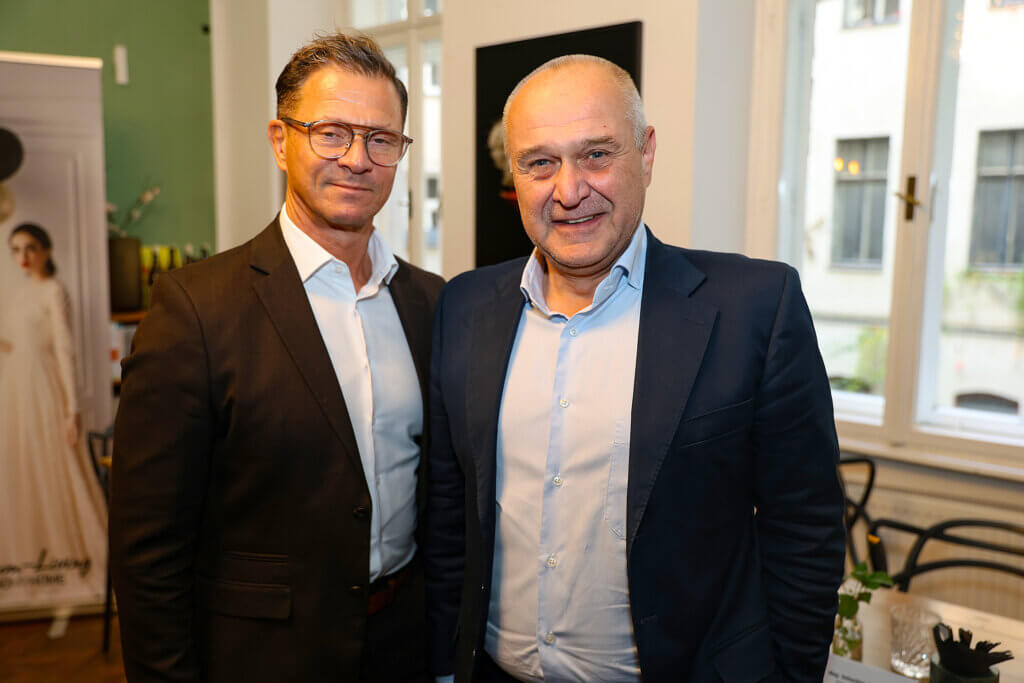
There has also been a significant uptick on the financing side. Manuel Tauchner of realfinanz points out that in 2025, approximately 20 percent more apartments were sold than in 2024—and that this trend is continuing this year as well.
Mortgage lending has also rebounded significantly. According to figures from the Austrian National Bank cited by realfinanz, the volume of new mortgage loans rose from about 10.4 billion euros in 2023 to about 16.8 billion euros in 2025.
For banks today, the most important factors are equity, affordability, and the quality of the property. Differences among lenders include how they assess future rental income, equity requirements, loan terms, and interest and principal repayment models.
“Don’t pick out the apartment first and then look for financing,” Tauchner advises. Financial viability and the financing plan should be considered together from the very beginning.
Investment apartments are back—but they’re not a sure thing
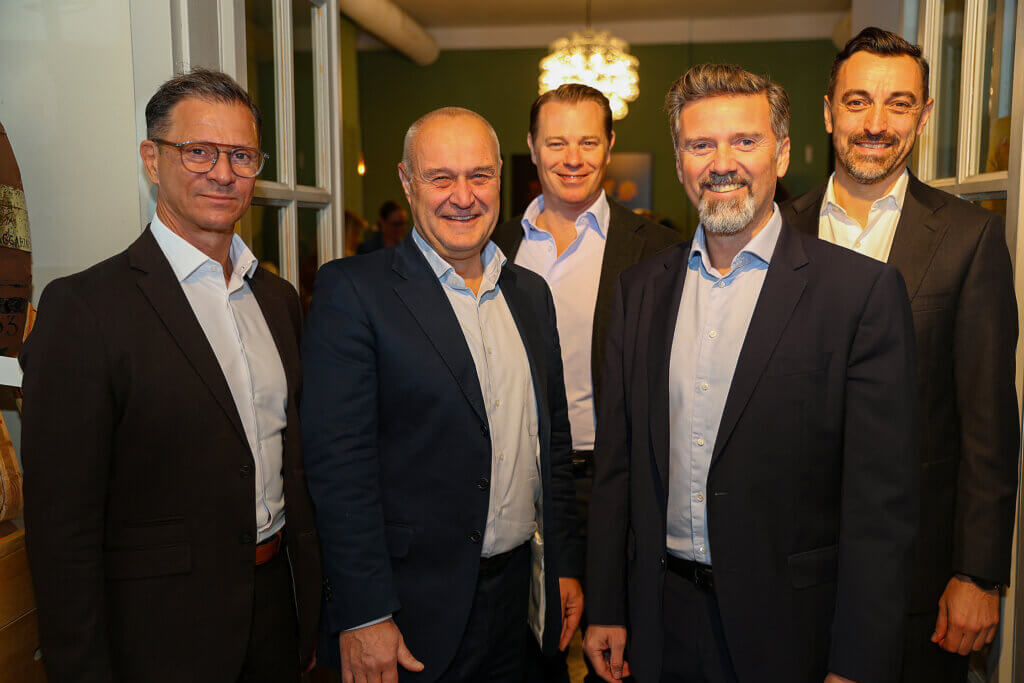
The expert panel’s conclusion: The market environment has shifted in favor of long-term investors. Fewer new construction projects, rising demand for rental apartments, more stable financing options, and greater flexibility in tax planning are once again making real estate a more attractive investment option.
However, a good investment apartment is not a sure thing. Key factors include a realistic purchase price, a sustainable location, high rentability, energy-efficient construction, sufficient equity, and an honest calculation of all costs. “It’s not just about ongoing rental income or building wealth. Especially in a growing city with a housing shortage, a property purchased today can also become increasingly important for the next generation in the long term,” say Bernd Gabel-Hlawa and Benedikt Gabriel.
Or, as became clear several times during the press breakfast: The focus isn’t on whether an investment apartment works in principle—but rather, which one does.