
Warm, natural, and wonderfully imperfect: Travertine brings exactly the blend of tranquility and texture into the home that we long for in the fall. This natural stone is no longer reserved just for floors and bathrooms—today, it finds its way into the living room as vases, bowls, candleholders, or side tables. And it makes even small accessories look quite impressive.
Maybe it’s because of its color. That warm beige—somewhere between sand, cream, and cappuccino—just goes especially well with this time of year, when we’re spending more time indoors again. But maybe it’s also its surface: small pores, subtle irregularities, and natural color gradients that make each piece look a little different.
In any case, travertine is back—though “back” isn’t quite the right word. This natural stone has been a part of architecture and interior design for centuries. What’s new, above all, is how naturally it’s used as a decorative element today. Instead of covering entire floors or walls with it, suddenly a tray, a lamp, or a candleholder is enough to add warmth to a room.
It’s no coincidence that natural stone is a perfect fit for the times: For fall 2026, interior designers are increasingly turning to warm colors, natural materials, and textured surfaces. Travertine combines all three.
What is travertine?
Travertine is a natural limestone formed by the deposition of calcium carbonate from mineral-rich water. It is characterized by its small pores and cavities—and it is precisely these features that give the stone its distinctive appearance.
In terms of color, travertine ranges from an almost white cream through beige and honey to richer browns and reds. No two slabs or accessories are exactly alike: veining, pores, and variations in color are inherent to the material.
Depending on how the stone is finished, it can have a very different appearance. When honed, it has a calm and elegant look; when left with an open-pore finish, it appears much more rustic. In addition to polished surfaces, there are also honed, brushed, and tumbled finishes, among others.
Why is travertine decor trending in the fall of 2026?
Because we want our homes to feel warmer again—visually, at least! After a period of very light, smooth, and often almost clinical-looking interiors, the focus is increasingly shifting toward texture, patina, and materials that clearly showcase their natural qualities. Dark woods, warm browns and ochre tones, textiles with a distinct texture, and natural stone are the perfect match.
Travertine has a luxurious look without being ostentatious. An interior designer once aptly described the stone as a material that “whispers rather than shouts.” It is precisely this understated presence that makes it so versatile.
Current home collections are also revisiting this material. For Fall 2026, for example, H&M Home combines travertine with mango wood, stainless steel, warm white, and black—a good example of how modernly the stone is now interpreted.
What kinds of travertine decorations are available?
The beauty of the current travertine trend: You don’t need a new floor or a freshly renovated bathroom.
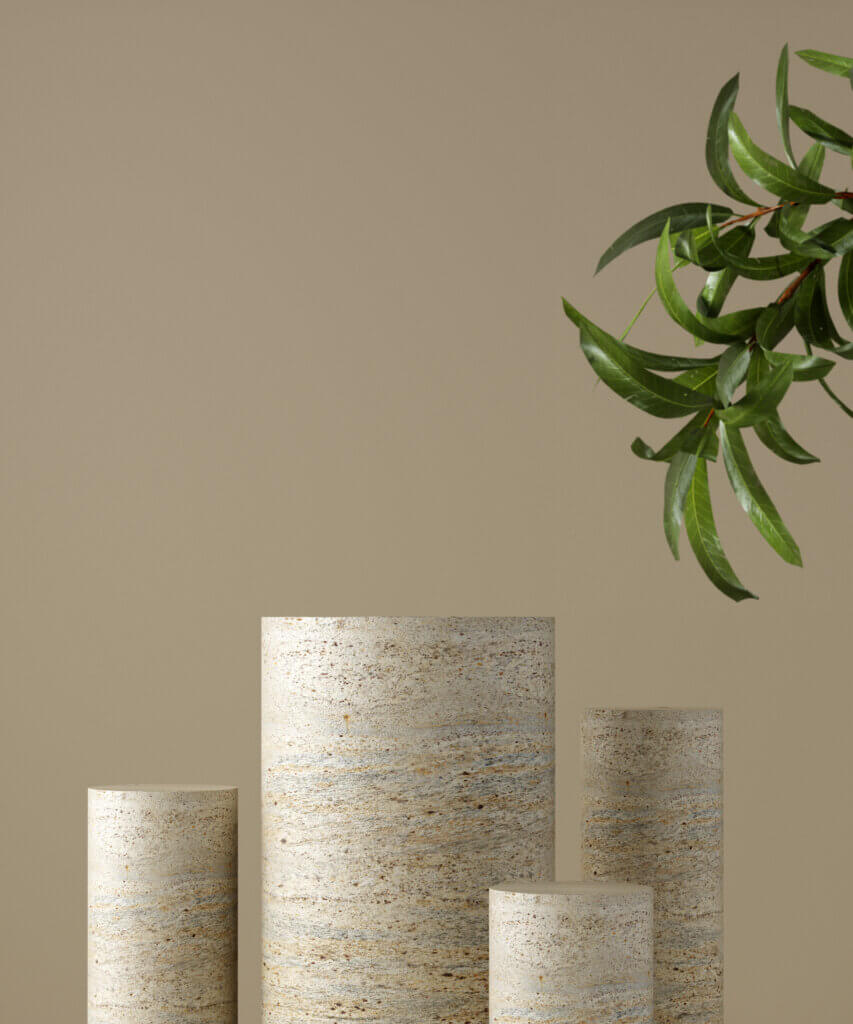
Even small accessories work wonderfully. Candle holders, bowls, trays, vases, bookends, and lamp bases are especially popular. On a coffee table, a small travertine tray can visually tie together perfume bottles, candles, or your favorite items.
The look becomes a bit more striking with side tables, console tables, or coffee tables made of travertine. They almost look like small sculptures and therefore usually require very little additional decoration. Especially with this characterful stone, the rule is: better one good piece than five small ones.
How do you properly incorporate travertine into your decor?
You can’t go wrong with wood. Walnut, dark oak, and other warm woods, in particular, enhance the stone’s earthy feel.
For a more subdued look, pair it with linen, wool, bouclé, and ceramics. If you prefer a more modern style, combine travertine with stainless steel, chrome, or black metal. It’s precisely this contrast that prevents beige and natural stone from looking too bland.
Glass can also be particularly beautiful: the lightness of transparent or colored glass creates an intriguing contrast to the solid stone.
In the fall, you can incorporate more textile elements. A travertine side table next to a dark velvet sofa or a stone candleholder on a coarse wool fabric instantly adds more depth to the room.
What colors go well with travertine?
Actually, there are surprisingly many. Warm natural tones like cream, sand, taupe, greige, and brown are particularly harmonious. If you’d like a bit more color, pair travertine with olive green, rust red, burgundy, or eggplant. Dark chocolate brown also works beautifully—and will be one of the key fall colors in interior design in 2026 anyway.
For a more modern contrast, add black or dark anthracite. Even bold colors work, as long as the natural stone is given enough visual breathing room. What you should avoid: too many different shades of beige and stone without contrast. Otherwise, a cozy, natural look can quickly turn into a rather monotonous room.
Does travertine go with every interior design style?
Yes. Clean, geometric travertine pieces work well in minimalist spaces. In a Mediterranean-style home, the surface and shape can be a bit more organic. In modern interiors, on the other hand, the stone works particularly well in contrast with metal and glass.
Travertine also pairs beautifully with vintage furniture. An old wooden cabinet next to a sleekly designed travertine lamp often looks more interesting than a perfectly coordinated set.
How do you care for decorative travertine?
As sturdy as the stone may seem, it isn’t completely resistant to damage. Travertine is naturally porous and can absorb liquids. Acidic substances in particular—such as vinegar, lemon juice, or wine—can damage delicate surfaces.
For decorative items, a soft, slightly damp cloth is usually sufficient. Harsh or highly acidic cleaners should be avoided. For trays or side tables, it’s also a good idea to wipe up spills as quickly as possible. If you place glasses on them, you can’t go wrong with coasters.
However, there’s no need to make a big deal out of minor irregularities or variations. After all, a large part of travertine’s charm lies precisely in the fact that it doesn’t look completely perfect.
Similar posts:
Beach House Decor: Ideas for Bringing That Beach House Vibe Home
7 Tips for the Perfect Outdoor Kitchen in Your Garden
Neo Deco: The Modern Art Deco Style for Your Home