
For a long time, white was considered a timeless and uncomplicated choice for the kitchen. But sage green, sand, terracotta, and dark blue are increasingly bringing warmth and personality to cabinet fronts. Which colors are suitable for the kitchen, how they transform the space, and what to consider when making your selection.
For years, white kitchens have been the safe choice. They look bright and clean, are easy to coordinate, and outlast fleeting trends. So they’re unlikely to disappear. But their dominance is beginning to crumble: Warm neutral tones, muted greens, earthy shades, and dark colors are increasingly replacing pure white and cool gray.
This reflects the kitchen’s evolving role. It has long since ceased to be merely a functional workspace; it is now also a gathering place, a dining area, and—in open-concept layouts—a visible part of the living space. Accordingly, it can be designed to be cozy and personal. But which color (https://myhome.at/farbtrend-honey-glow/) is best suited for the kitchen, and how does it influence the room’s atmosphere?
The Effect of Colors in the Kitchen
Colors influence how we perceive a space and the mood we associate with it. However, their effect cannot be reduced to simple formulas such as “Yellow makes you happy” or “Blue is calming.” In addition to the actual shade, brightness, intensity, lighting conditions, color combinations, and personal experiences also play a role.
Light colors generally have a lighter feel and can make small kitchens appear more spacious. Dark shades create depth and a sense of coziness, but require sufficient light. Very bold colors have a stimulating effect, but can quickly feel overwhelming when used on large surfaces. If you want to play it safe, choose a muted shade of your favorite color.
Green Kitchen Cabinet Doors: Natural and Versatile
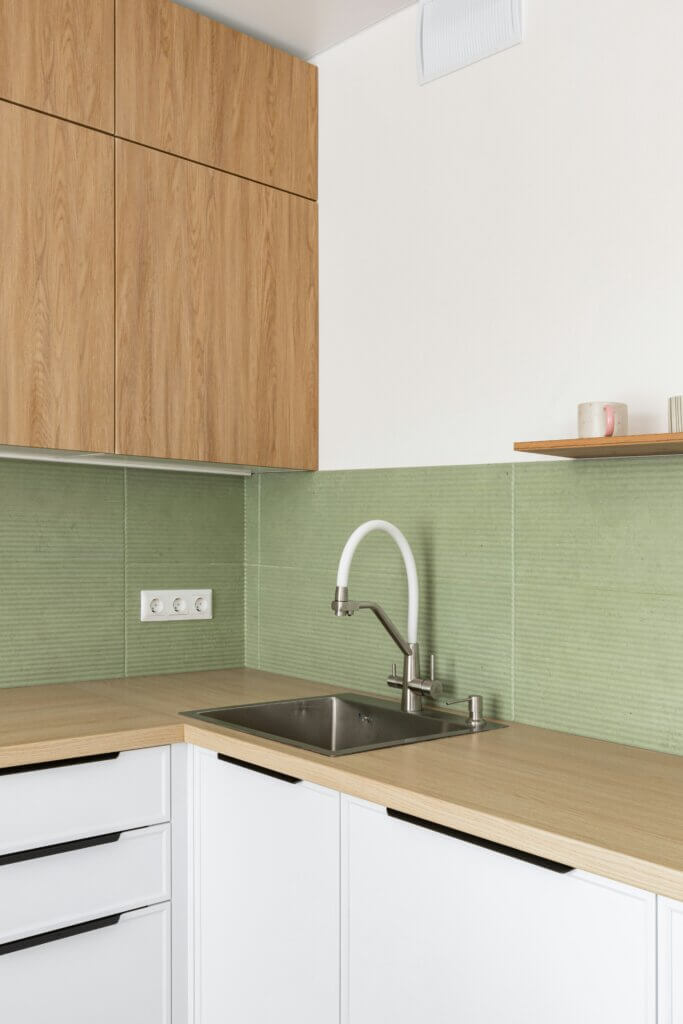
Green is currently one of the most popular colors for kitchen cabinet fronts. The shade is associated with nature, freshness, and balance, and can be combined in many different ways. Light sage green has a calm and understated effect, making it suitable even for smaller kitchens. Olive or moss green makes a bolder statement and, when paired with wood, natural stone, cream, and brass, creates a particularly cozy atmosphere.
If you don’t want to paint the entire kitchen green, you can just paint the base cabinets or the kitchen island. This keeps the room bright while still giving it more character.
A blue kitchen has a calm and elegant feel
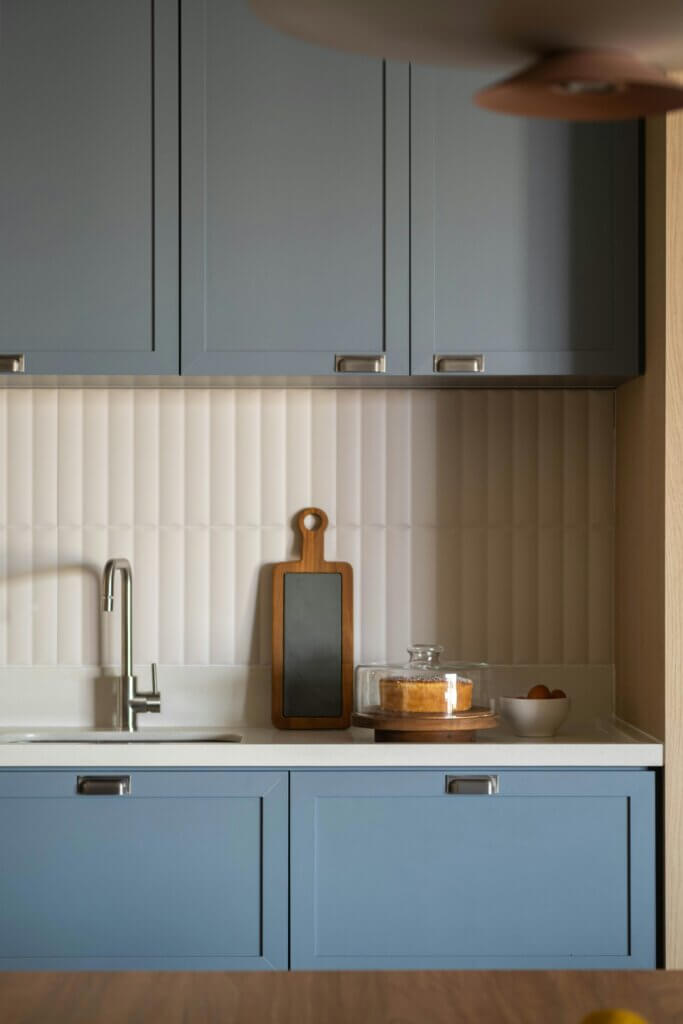
Blue usually looks a bit cooler and more elegant than green. A muted gray-blue pairs well with light-colored woods and white or cream-colored countertops. Dark navy blue adds depth to a kitchen and can be used almost like black, but with a slightly softer look.
To keep a blue kitchen from looking too cold, it needs warm contrasts. Wooden floors, brass handles, natural materials, or beige textiles create a harmonious balance. Darker shades of blue, in particular, look their best in larger kitchens with plenty of natural light.
Yellow, Apricot, and Terracotta bring warmth to the kitchen
Warm colors appear lively, inviting, and welcoming—qualities that are well-suited to a kitchen as a gathering place. Butter yellow or soft apricot can make a darker room appear more inviting. Terracotta, rust red, and muted orange convey warmth and harmonize particularly well with wood, cream, and natural stone.
However, bold color schemes should be used sparingly on large surfaces. Often, a colored kitchen island, a single row of cabinets, or a painted wall is enough. Earthy and slightly muted shades usually have a more timeless look than bright, bold colors.
Kitchen cabinet fronts in beige, greige, and cream: the new neutrals
If you want a timeless kitchen but find pure white too sterile, you can opt for warm neutral tones. Sand, cream, taupe, greige, and so-called mushroom tones create a cozy atmosphere without overwhelming the space. At the same time, they can be reinterpreted time and again with different accessories.
These colors look particularly harmonious when paired with oak, travertine, ceramic, and matte metal surfaces. They are suitable for both modern, minimalist kitchens and classic designs. Unlike cool gray, they bring a subtle warmth to the room.
Dark Kitchens: Striking, but Demanding
Anthracite, eggplant, burgundy, or an almost black shade of green give kitchens an elegant, furniture-like look. However, these colors require plenty of light and should be balanced with lighter surfaces. A light-colored countertop, cream-colored walls, or warm wood flooring prevent the room from feeling too heavy.
Even in small kitchens, dark colors aren’t necessarily off-limits. When used on base cabinets or on a single wall, they can even add depth. Keep in mind, however, that dust and fingerprints are often more visible on very dark cabinet fronts.
What colors work well in a small kitchen?
Small or poorly lit kitchens generally benefit from light, warm tones. Cream, sand, light greige, sage, or a soft gray-blue add color to the room without making it appear smaller. If you want to incorporate a bolder shade, a combination of light-colored upper cabinets and darker lower cabinets is a good option.
In large, open-concept kitchens, however, the cabinet fronts can be more richly colored. Dark green, navy blue, or burgundy can provide visual stability to the kitchen units and more clearly separate them from the adjacent living area.
How to Choose the Right Colors for Kitchen Cabinet Doors
Before making your final selection, you should view color samples in your own kitchen for several days—ideally in the morning and evening, as well as under both natural and artificial light. A shade that appears warm and soft in the showroom may suddenly look cool or grayish at home. The flooring, countertop, backsplash, and adjacent living areas must also be taken into account when making your decision.
If you’re not quite ready to commit to an all-color kitchen, start with a two-tone design: light-colored upper cabinets, colored lower cabinets, or an eye-catching kitchen island. This way, you can incorporate color without having to say goodbye to your white kitchen entirely.
Related posts:
7 Tips for the Perfect Outdoor Kitchen in Your Garden
Color Trend: Honey Glow
Smart cooking: how kitchen appliances are revolutionizing everyday life