Hot days and tropical nights put an enormous strain on the body. Circulatory problems, poor sleep, headaches, difficulty concentrating, and general discomfort are just a few of the issues caused by high temperatures. Light, airy clothing—preferably made from natural materials—moderate exercise, proper ventilation, exterior shutters, or air conditioning can at least provide some relief. But one thing is often overlooked: Choosing the right foods can also help make the heat more bearable. We’ll show you the best cooling foods.
Which foods cool the body from the inside?
There are a wide variety of foods that cool the body from the inside, as both Traditional Chinese Medicine and Indian Ayurveda recognize. First, there are fruits and vegetables that contain a lot of water. These include, for example, watermelons, berries, and cherries, as well as citrus fruits, cucumbers, tomatoes, kohlrabi, and lettuce. According to TCM and Ayurveda, carrots, celery, spinach, radishes, peaches, bananas, yogurt, dairy products, quinoa, rice, and fish are also said to have a cooling effect. The same applies to seaweed, bananas, barley, buckwheat, and millet, as well as herbs such as basil, mint, sage, dill, tarragon, saffron, cardamom, and cilantro, which is popular in Ayurvedic cuisine because of its cooling effect.
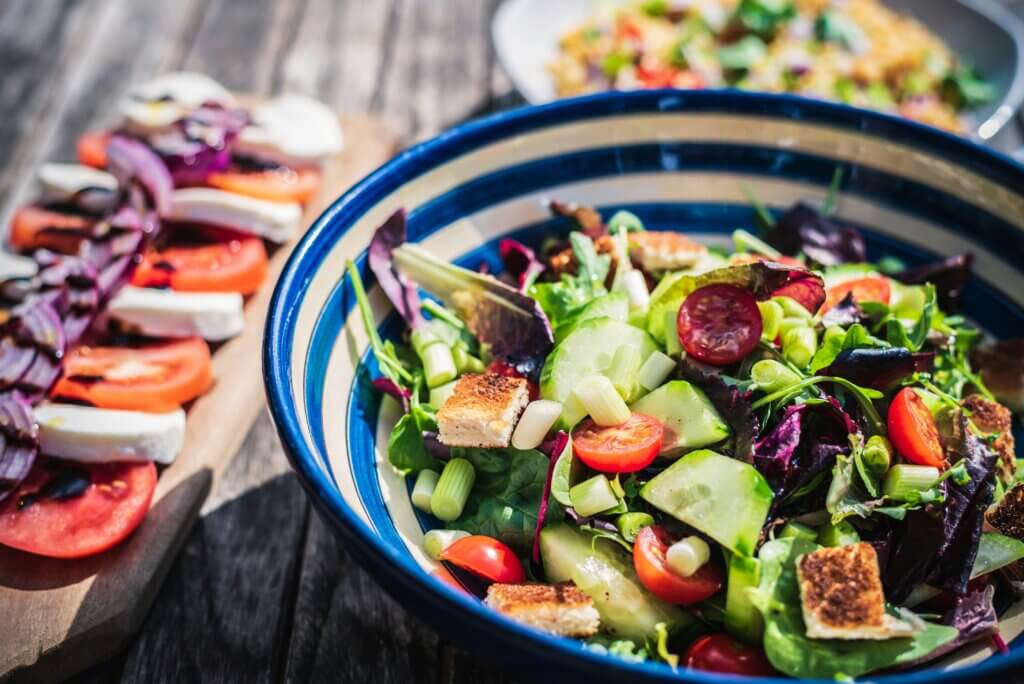
Cooling foods: Salads of all kinds are easy on the body.
Why do some foods cool the body?
One reason some foods cool the body is their water content. Cucumbers, zucchini, tomatoes, and melons, for example, provide the body with fluids. A balanced fluid balance helps the body regulate its temperature. If these foods also contain bitter compounds or essential oils that have an additional cooling effect, the cooling effect is enhanced. Bitter compounds, for example, are found in spinach, while cooling essential oils are found in mint. They promote blood circulation, which opens the pores and allows sweat to evaporate more easily. However, the menthol in mint has a cooling effect on the body even before that, as it creates a pleasantly cool sensation in the mouth.
By the way: According to TCM, the way food is prepared also plays a key role in determining whether it has a cooling or warming effect. To cool the body, TCM recommends steaming, braising, or simmering foods over low heat. In contrast, popular methods such as grilling, slow cooking, or frying over high heat cause too much energy to be stored in the food, thereby warming the body.
Which fruits and vegetables have the best cooling effect?
Fruits and vegetables with a high water content and/or bitter compounds have the best cooling effect on the body.
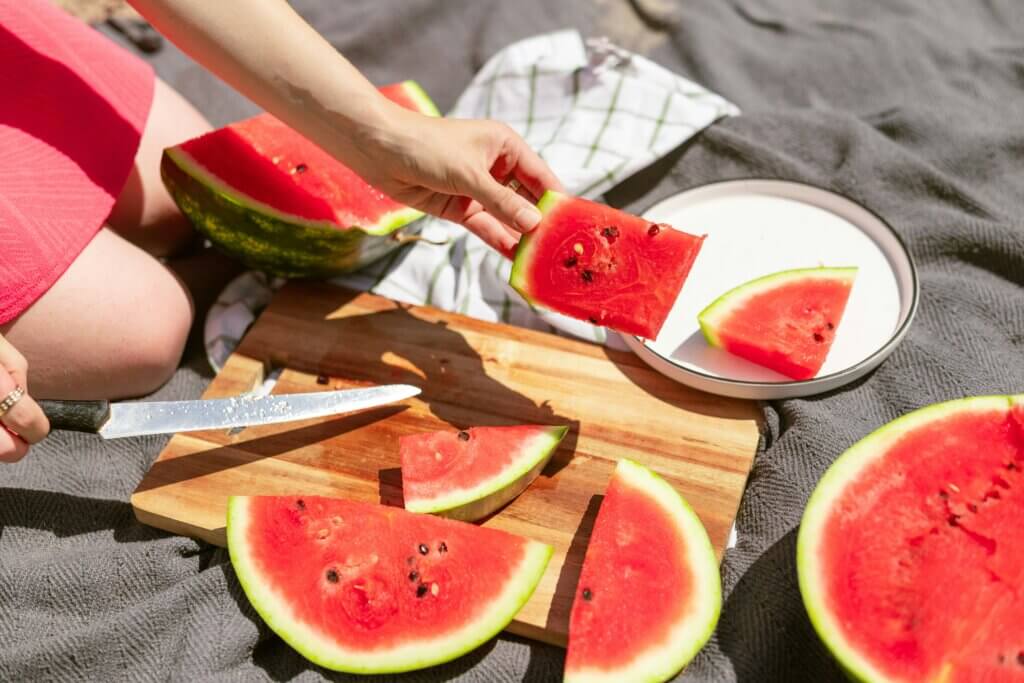
Refreshing Foods: Watermelons are light and easy to digest—making them ideal for hot summer days.
Do spicy spices really help you cool down?
Opinions are divided on whether spicy spices like chili really help you cool down. The fact is that they stimulate blood circulation and metabolism, and thus promote sweating. Sweat, in turn, helps lower body temperature slightly.
What should you eat when it’s hot?
When it’s hot, opt for light, easily digestible foods. Soups—including cold ones—and water-rich fruits and vegetables provide the body with sufficient fluids and help it replenish the electrolytes lost through sweating. To ease the strain on your circulation and digestion, you should also opt for several small meals rather than two or three large ones on hot days.
Ideally, food should be lukewarm or at room temperature. Hot—as well as ice-cold—foods must be brought up to body temperature in the stomach after consumption, which can be taxing, especially on hot days. Incidentally, sweating after eating such foods is a sign of this.
What foods should you avoid on hot days?
On hot days—and especially in the evenings—avoid fatty, heavy foods. The body needs a lot of energy to digest them, and this can sometimes cause sweating.
What to Drink in Hot Weather—Warm or Cold?
First things first: When it’s hot, be sure to drink plenty of fluids—that can easily amount to two to three liters. Ideally, opt for water or unsweetened herbal and fruit teas. You should, however, avoid alcohol and drinks that are very high in sugar. Like food, drinks should ideally be neither ice-cold nor hot, but rather lukewarm to room temperature. If they’re too cold or too hot, your body will have to warm them up to body temperature—which is sure to make you break out in a sweat.
Hardly any other vegetable is as synonymous with fall as pumpkin. It can taste creamy, nutty, sweet, or spicy; it works just as well roasted in the oven as it does in a curry—and it even makes a surprisingly good addition to cakes. Which varieties are best for what, when you can eat the skin, …
For many people, a good cup of coffee in the morning has long been a ritual. So why hide the machine, beans, and cups somewhere between the toaster and the paper towel roll? A coffee bar brings together everything you need for espresso, cappuccino, and other drinks in one place—and can even become a little …
For a long time, white was considered a timeless and uncomplicated choice for the kitchen. But sage green, sand, terracotta, and dark blue are increasingly bringing warmth and personality to cabinet fronts. Which colors are suitable for the kitchen, how they transform the space, and what to consider when making your selection. For years, white …
SIE WOLLENNICHTSMEHR VERPASSEN?
Unser kostenloser Newsletter liefert Ihnen wöchentlich die neuesten Artikel rund ums Wohnen & Leben.
SIE WOLLENNICHTSMEHR VERPASSEN?
Unser kostenloser Newsletter liefert Ihnen wöchentlich die neuesten Artikel rund ums Wohnen & Leben.
SIE WOLLEN
NICHTS MEHR VERPASSEN?
Unser kostenloser Newsletter liefert Ihnen wöchentlich die neuesten Artikel rund ums Wohnen & Leben.