The triumph of wood as a building material continues. This natural building material is increasingly being used in the construction of single and multi-family homes, high-rise buildings, schools, commercial properties and many other buildings. According to pro Holz Austria, timber construction already accounts for almost a quarter of the total construction volume in Austria – and the trend is rising. There are good reasons for this, as building with wood has various advantages. And not only from an ecological point of view.
Why is wood considered a sustainable building material?
Wood lives up to its reputation as a sustainable building material in various ways. One of the most important aspects in this context is the fact that it is a renewable raw material. While the resources of other building materials are limited, wood is constantly growing. Specifically, one cubic meter of wood is produced in domestic forests every second. According to pro Holz Austria, this means that one third of the annual wood growth would be enough to build the entire volume of building construction for a year in wood, at least at present.

Low CO2 footprint
Wood can also score points in terms of CO2. On the one hand, one cubic meter of wood binds around one tonne of CO2 equivalents. In addition, the energy required to process wood, and therefore the CO2 emissions, are significantly lower than those of steel or concrete. Wood is also often processed regionally – the short transportation routes also have a positive effect on the CO2 balance.
Another point is that pure timber buildings can be easily separated and reused or incinerated at the end of their life. If a timber construction or parts of it are thermally recycled, the carbon stored during the growth of the trees is released again and the CO2 cycle is closed.
Is building with wood energy-efficient?
Due to its insulating properties, wood also improves energy efficiency and thus significantly reduces energy consumption for heating and air conditioning. This is because the material’s low thermal conductivity ensures that heat is stored in winter. In summer, in turn, it helps to keep rooms from overheating.
Quickly built
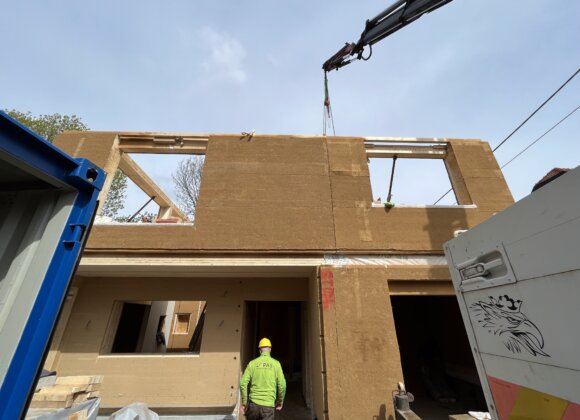
Time is money – this also applies to building a house. However, if you opt for timber, you can significantly reduce the construction time for your own four walls. This is because the building material is perfect for modular construction. With this method, walls, ceilings and now even entire units, including building services, are prefabricated in the factory and assembled on site.
Building with wood is good for the indoor climate
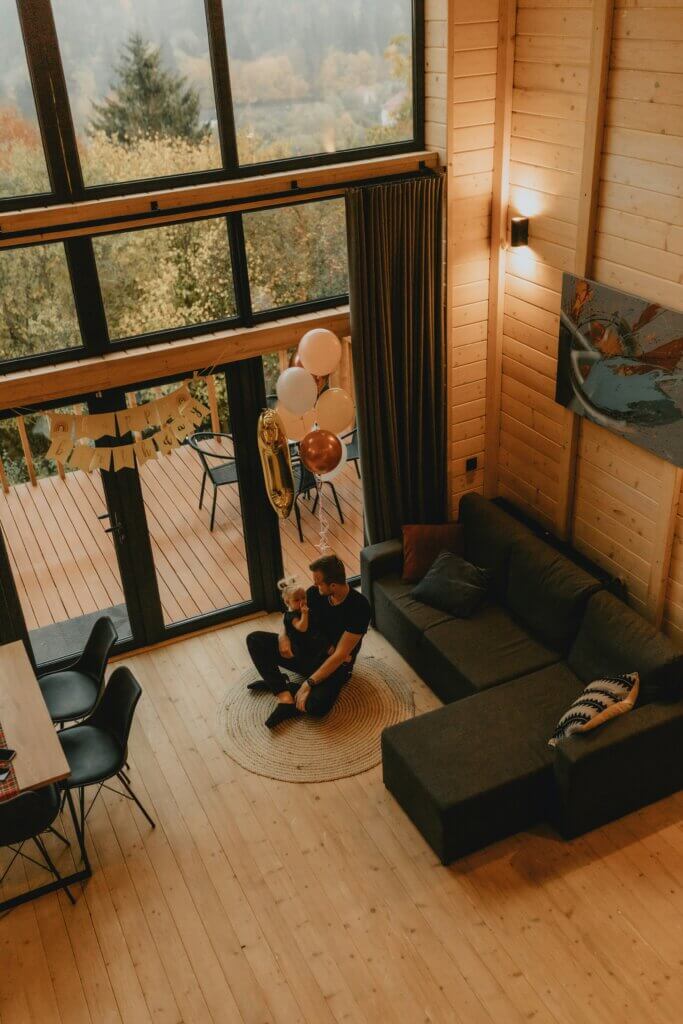
Not only the climate in general, but also the living climate benefits from the natural building material. For example, wood regulates the humidity in the rooms. If it is too dry there, it releases moisture. If, on the other hand, the humidity indoors is too high, the building material absorbs it. This improves the air quality indoors and also reduces the risk of mold growth. Studies also show that the scent of wood strengthens the immune system and that rooms with natural wooden surfaces reduce blood pressure, heart rate and stress levels.
Is wood suitable for renovations?
Wood is not only suitable for new builds, but also for renovations. This is partly due to the fact that the load-bearing capacity of wood is high, but its own weight is low. In view of its lower weight compared to other building materials, timber is therefore often the only alternative for many building extensions for structural reasons – and thus offers a decisive advantage when it comes to redensification in cities.
Durable and versatile
In many areas of Austria, especially in the Alps, wood was the predominant building material for centuries. The fact that it is also durable is demonstrated by the many buildings that still exist today. Incidentally, the oldest wooden house in the world is in Norway – it was built around 1170.
Several factors are essential to ensure that wooden buildings can provide a roof over the heads of several generations: in addition to using the right type of wood, these include the construction and professional workmanship. If all this is guaranteed, the two biggest enemies of timber buildings, namely permanent moisture and the resulting fungal infestation, have virtually no chance.
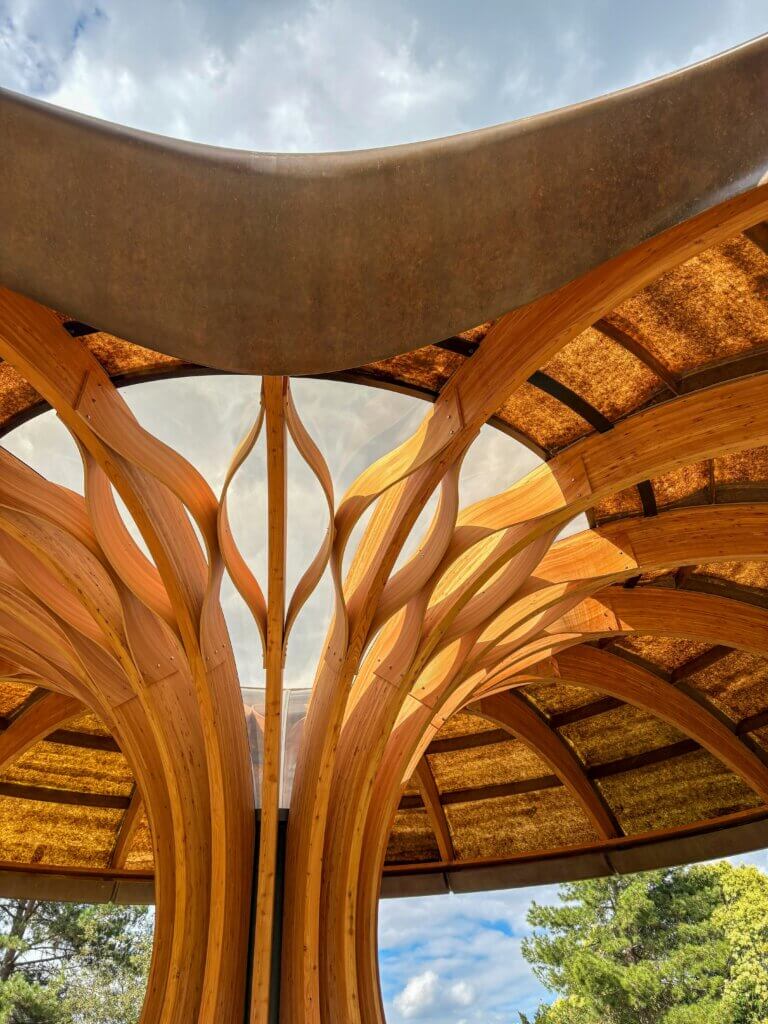
In addition, wood is extremely versatile: it can be used both indoors and outdoors, for new buildings, extensions and additions. On the other hand, thanks to innovative calculation and production techniques, wood offers numerous new design possibilities.
How high-maintenance are wooden buildings?
Wooden houses are no more or less maintenance-intensive than others. The higher the quality of the wood and the construction method, the less the house needs to be maintained. However, there is another exception: if you want to prevent a wooden façade from turning gray over the years, which is completely natural, you have to reach for the paintbrush every few years.
However, you should give wooden decking, which in most cases is directly exposed to the weather all year round, a little more care. This is because cleaning and care are not only important for the appearance, but also for maintaining the smooth surface structure. You should therefore treat your wooden decking to a beauty treatment twice a year, preferably in spring and fall.
What does building with wood cost?
Whether wood is more expensive or cheaper than other building materials cannot be answered so simply. This is because the type and quality of the wood in question is decisive. In general, however, it can be said that due to the lower weight of timber, the foundations for timber houses can be smaller – a factor that is reflected in the costs. The same may apply to transportation.
Disadvantage fire hazard?
It is undisputed that wood burns, but it burns slowly. Furthermore, the charcoal produced on the surface by the fire protects the wood underneath for a longer period of time, so the load-bearing capacity remains intact for a long time. And of course, wooden houses must also comply with official safety regulations.
Another persistent myth is that wooden houses are hard of hearing. However, thanks to solid wood panels, wooden frames with gravel fillings, wooden composite ceilings and the like, this problem has now been overcome.
FAQ: Building with wood
Wood is a renewable raw material that is continuously available – in Austria alone, around one cubic meter grows every second. Wood also binds CO₂ and causes significantly fewer emissions during processing and transportation than steel or concrete.
Thanks to its low thermal conductivity, wood acts as a natural insulator. It stores heat in winter and protects against overheating in summer, which can significantly reduce heating and cooling costs.
With the right planning and execution, timber buildings are extremely durable – examples date back to the 12th century. Wood also performs better than often assumed when it comes to fire protection, as it burns slowly and retains its load-bearing capacity for a long time.
The maintenance costs are comparable to other construction methods, but depend heavily on the material quality and design. Costs cannot be assessed across the board, but can be partially offset by lower weight (e.g. smaller foundations).
Related posts:
Revitalization of historic old buildings: A trend with future potential
In the middle of Vienna: living and living naturally in solid timber construction
Sustainable floor coverings in comparison: bamboo, cork & co.