
Allergies have long been one of the major widespread diseases of our time. In Europe alone, around one in three people now suffers from an allergic disease – and the trend is rising. Hay fever, food intolerances, neurodermatitis or asthma are only the most visible manifestations of a complex process in the body: the immune system overreacts – often to actually harmless stimuli.
At the heart of this is almost always an inflammatory process. This “silent inflammation” can become chronically established in the body and is increasingly associated with other diseases – from autoimmune diseases to cardiovascular problems. Accordingly, there is great interest in a possible antidote: the so-called anti-inflammatory diet.
But how much science is actually behind this concept? And where does the simplification begin? While modern nutritional medicine analyzes individual nutrients, micronutrients and biochemical processes, traditional Chinese medicine (TCM) takes a completely different approach. It views the human being as an energetic system – and speaks not of inflammation, but of “heat”, “dampness” or “stagnation”.
In conversation with TCM nutrition expert Ruth Unger, it becomes clear that both perspectives can complement each other – if you know their limits.
Ms. Unger, traditional Chinese medicine does not know “inflammation” in the Western sense, but speaks of heat, dampness or stagnation – can these concepts be linked to inflammatory processes from today’s perspective?
Yes, these concepts can certainly be linked from today’s perspective. In particular, the TCM pattern of so-called “damp heat” – a combination of dampness and heat – shows many parallels to inflammatory processes as we know them in the West. The symptoms can vary greatly and range from skin problems, cold sores and bad breath to recurring infections such as cystitis. From a TCM perspective, such patterns are often caused by unfavorable eating habits, but also by emotional factors, especially when feelings are suppressed over a long period of time.
Many TCM dietary recommendations are based on the energetic qualities of foods. Are there any scientific approaches that can biochemically explain or at least partially confirm these classifications – for example “cooling” or “warming”?
Yes, there are such approaches. The food properties described in TCM, such as “cooling” or “warming”, can be explained in part by biochemical and physiological reactions in the body – such as influences on blood circulation, metabolism or thermogenesis. In this sense, these classifications should be understood less as “magical” and more as a functional description of bodily reactions. At the same time, TCM nutrition remains a holistic system: it takes into account individual patterns, digestive power and energetic connections. This complexity cannot be completely reduced to isolated nutrients or individual biochemical parameters.
Where do you see the greatest overlaps – and where are the clear contradictions – between modern nutritional research and TCM dietetics when it comes to chronic inflammation?
The greatest overlap between modern nutritional research and TCM dietetics can be seen above all in the basic recommendations for chronic inflammation. Both approaches recommend consistently reducing inflammation-promoting foods – especially sugar, white flour products, highly processed foods, trans fats, processed meat – i.e. sausages – and alcohol. There is also a consensus that a predominantly plant-based diet with plenty of fruit and vegetables has a supportive effect.
Differences can be seen above all in the preparation and evaluation of individual foods. While raw fruit and vegetables are often considered particularly healthy in Western diets, TCM prefers cooked or simmered foods. From their point of view, raw food can promote so-called “dampness” in the body and intensify existing disharmonies – for example in the sense of “damp heat”. There are also differentiated views on spices: Foods such as chili, ginger or turmeric, which are often valued in modern nutritional science for their anti-inflammatory properties, are considered by TCM to have a strong heating effect and should be avoided in the case of corresponding symptoms.
The top 5 anti-inflammatory foods
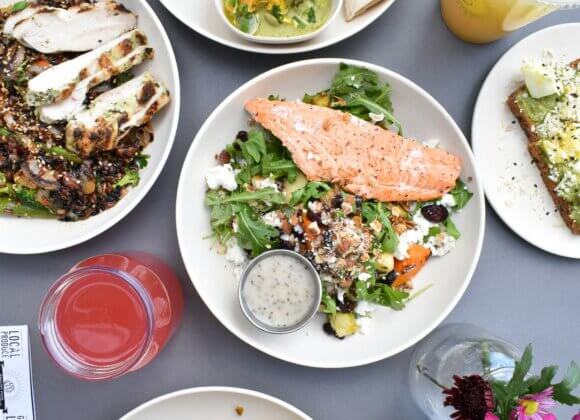
1. oily fish (salmon, mackerel, sardines)
Rich in omega-3 fatty acids (EPA & DHA), which directly intervene in the inflammatory metabolism. They inhibit the formation of pro-inflammatory messenger substances.
→ Recommendation: 2 portions per week
2. berries (blueberries, raspberries, strawberries)
Contain high amounts of anthocyanins – antioxidants that reduce cell stress and slow down inflammatory processes.
→ Recommendation: 100-150 g daily
→ Particularly effective: blueberries (highest antioxidant capacity)
3. green leafy vegetables (spinach, kale, chard)
Provide vitamin K, magnesium and secondary plant substances that have an anti-inflammatory effect and support vascular health at the same time.
→ Recommendation: several times a week, ideally daily
→ Preparation: raw or only briefly cooked
4. walnuts
One of the best plant-based sources of omega-3 fatty acids (ALA) and polyphenols.
→ Recommendation: a handful a day (approx. 30 g)
→ Additional benefits: good for the heart and brain
5. extra virgin olive oil
Contains oleocanthal, a substance with an anti-inflammatory effect that is slightly reminiscent of ibuprofen – but in a natural, mild form.
→ Recommendation: 1-2 tablespoons daily
→ Quality is crucial: cold-pressed, extra virgin
Our expert

Ruth Unger is a qualified TCM nutritionist. Her company food:wise stands for a smart, mindful and individual way of eating – in harmony with the body, life circumstances and the inner center.
Website: www.foodwise-tcm.at
Related posts:
When spring irritates: allergies at a glance
Blood sugar balance: Why we are constantly tired – and what helps
Strengthen the immune system: no chance for colds & co