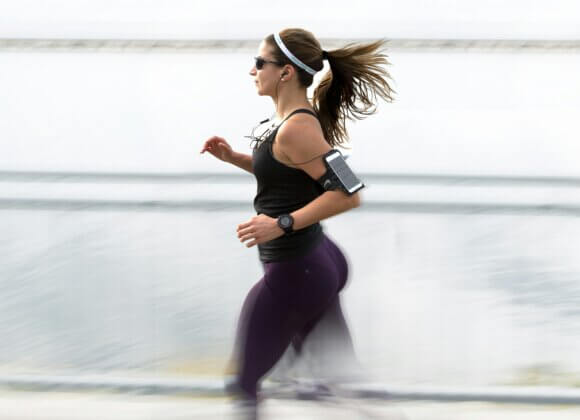

Exercising in hot weather isn’t necessarily unhealthy—but high temperatures do put extra strain on the body. Running and personal trainer Lorenz Winter (fitbylorenz) explains which sports are suitable right now, when it’s best to work out, how much you should drink, and which warning signs you need to take seriously.
When the thermometer climbs toward 40 degrees, even everyday activities become more strenuous—and exercise even more so. That’s because, in addition to the work the muscles are doing, the body has to prevent its core temperature from rising too much. It sweats more, blood flow to the skin increases, and the cardiovascular system works at full capacity.
That doesn’t mean you automatically have to give up exercise in the summer. The key is to adapt your workout to the conditions. “Workouts should fit the person and their daily routine, not the other way around,” says Lorenz Winter, a running and personal trainer from Graz. This is especially true on hot days.
Is exercising in hot weather healthy?
Generally speaking, yes. “Through sweating and increased blood flow to the skin, the body has very effective mechanisms for dissipating heat,” explains Winter. At the same time, heat means the body has to work harder. The heart rate rises more sharply during the same level of physical activity, the body loses fluids and electrolytes through sweat, and, above all, endurance performance decreases.
People who train regularly in warmer temperatures can get used to it to a certain extent. “Over the course of about seven to 14 days, your sweat response improves and the cardiovascular strain caused by the heat decreases, among other things,” says Winter. However, this is not an argument for training in extreme heat: “On extremely hot days, it makes more sense to postpone your workout, move it indoors, or significantly reduce the intensity, rather than insisting on completing a planned session.”
At what temperature does exercising in the heat become dangerous?
There is no exact temperature threshold. A temperature of 30 degrees or higher in dry, windy conditions feels different to the body than 30 degrees in high humidity and direct sunlight.
“As a simple rule of thumb for recreational athletes, you can say that once temperatures reach around 25 to 30 degrees, you should gradually adjust your workout,” explains Winter. When temperatures are well above 30 degrees, humidity is high, and the sun is intense, strenuous endurance training in particular should be postponed to cooler hours whenever possible.
Extra caution is advised during the first hot days of summer or when temperatures rise sharply. At that point, the body has not yet had a chance to acclimate to the temperatures.
Which sport is best for hot weather?
Sports in which you can adjust the intensity and take breaks according to your individual needs are well-suited for this. Winter recommends, for example, light cycling, walking, or strength training in a cool environment. Swimming is also a good option, “because water greatly facilitates heat dissipation.”
Long, intense endurance activities—such as extended runs, strenuous interval training, or longer bike races—are less suitable. Sports that require a lot of protective clothing or equipment can also be problematic in hot weather, as these can interfere with sweat evaporation and thus the body’s natural cooling mechanism.
When is the best time to exercise in the summer?
Anyone who exercises outdoors should avoid the hottest hours of the day if possible. “If possible, early in the morning or later in the evening,” Winter advises. He particularly prefers the early morning for running: “Not only is the air temperature lower, but so is the amount of solar radiation.”
However, humidity may be higher in the morning. Therefore, the temperature reading alone does not necessarily indicate how strenuous the workout actually is.
How intense should exercise be in hot weather?
On hot days, less really is more. Instead of desperately trying to reach a certain running pace, time, or performance level, you should pay closer attention to your body.
“In hot weather, you should focus less on maintaining a fixed pace or speed and more on your internal stress levels—such as heart rate or perceived exertion,” explains Winter. A run in hot weather can be significantly slower than one at 18 degrees and still provide the same training benefit. “That doesn’t mean the workout is any less effective.” His recommendation: Reduce intensity, shorten the duration of your workout, take longer breaks, and plan for additional breaks to drink and cool off.
How much should you drink when exercising in hot weather?
There is no one-size-fits-all amount to drink. How much a person sweats varies from person to person. It’s important to start your workout already well-hydrated.
According to Winter, during longer workouts, fluid intake should be adjusted to match your individual sweat rate. However, “more is better” does not automatically apply here: “The goal is to avoid severe dehydration—but at the same time, you shouldn’t drink more than you lose, since excessive drinking can contribute to hyponatremia.”
After exercising, you need to replenish lost fluids. If you sweat heavily, this also applies to electrolytes.

Do you need electrolytes when exercising in hot weather?
Not during every workout. “For a light workout lasting, say, 30 to 60 minutes, water is usually enough for a healthy person—especially if they eat normally before and after,” says Winter.
Electrolyte drinks can be helpful during prolonged physical exertion, in extreme heat, when sweating heavily, or when doing multiple training sessions in a short period of time. Sodium is particularly important, as large amounts of it can be lost through sweat. During normal training sessions, these losses are usually easily replenished through diet.
What’s the right way to dress for exercise in hot weather?
Lightweight, breathable, and with minimal insulation: Summer sportswear should, above all, allow sweat to evaporate and the body to release heat.
Functional fabrics can help wick moisture away from the skin. In direct sunlight, light colors are a good choice because they absorb less radiant energy. “Sunscreen and a lightweight hat are also essential,” Winter recommends.
What are the warning signs of overheating during exercise?
According to Winter, warning signs include “unusual weakness, dizziness, headaches, nausea, coordination problems, muscle cramps, extreme exhaustion, and noticeable changes in behavior or consciousness.” There’s no room for discretion here either: “I know most people don’t want to hear this, but you need to stop training immediately. Just don’t try to finish the session.”
Affected individuals should be moved to the shade or a cool room as quickly as possible. Excess clothing should be removed or loosened, and the body should then be actively cooled—for example, with cold water, damp towels, or ice packs.
If the person is fully conscious and can swallow without difficulty, they may drink fluids. However, if they experience impaired consciousness, severe confusion, or other serious symptoms, prompt medical attention is required.
Our expert

Lorenz Winter is a running and personal trainer from Graz. For him, it’s not about short-term success, but about individually tailored training with a clear structure and meaningful progression. Whether you’re a beginner, an ambitious athlete, or simply looking to feel fitter in your own body—his credo is that training should fit the person and their daily life, not the other way around.
Website: www.fitbylorenz.at
Instagram: https://www.instagram.com/fitbylorenz/
Related posts:
Cottage Cheese: 6 Light Recipes for Summer
Ready for the Women’s Run – How to Prepare Optimally
High-Protein Eating in Everyday Life: Here’s How to Do It