
It’s the same old story every year: No sooner have the leaves changed color than they start falling from the trees. While children—and even the occasional adult—take great delight in the rustling leaves under their feet, many a gardener tears their hair out over it. Yet the leaves hold untapped power, as they’re packed with nutrients. So why not turn this colorful bounty into valuable fertilizer on your compost pile? In this article, we’ll explain how to properly compost leaves and what you should keep in mind.
What kinds of leaves shouldn’t go in the compost?
In principle, any type of leaf can go on the compost pile. However, some decompose more easily there, while others take significantly longer. The only leaves that definitely shouldn’t go in the compost are diseased ones: leaves infested with rust, fungal diseases like powdery mildew or sooty mold, or pests have no place there. If the compost is spread in the garden in the spring, it will also spread diseases and pests.
How long does it take for leaves to compost?
The duration of the decomposition process depends on the type of leaves involved. Broadly speaking, leaves can be classified as either easily or difficult to decompose. For example, leaves from fruit trees, birch, rowan, hornbeam, or maple decompose easily because they contain relatively little tannic acid. In contrast, leaves from oak, poplar, chestnut, sycamore, or magnolia decompose more slowly. But regardless of whether the leaves decompose easily or slowly, patience is always required: In principle, it takes about one to two years for leaves to turn into compost. If they are chopped into small pieces, the process proceeds a little faster. A thermal composter, as well as mixing and regular turning, also help speed up the process.
Can walnut leaves go in the compost?
Walnut leaves can certainly go in the compost—but ideally on their own. This means it’s best to set up a separate compost pile just for walnut leaves. There’s a very specific reason for this: Walnut leaves contain a lot of tannins and produce a growth-inhibiting substance called juglone. As a result, walnut leaves decompose very slowly, which slows down the entire composting process. So when it comes to walnut leaves, the rule applies once again: the smaller they are, the better. That way, the decomposition process happens a little faster. Still, patience is required: It takes about two years for walnut leaves to turn into compost.
If there are only a few nut leaves, you can even add them to your regular compost—but only if they’re shredded and in small amounts.
How do you set up a leaf compost pile?
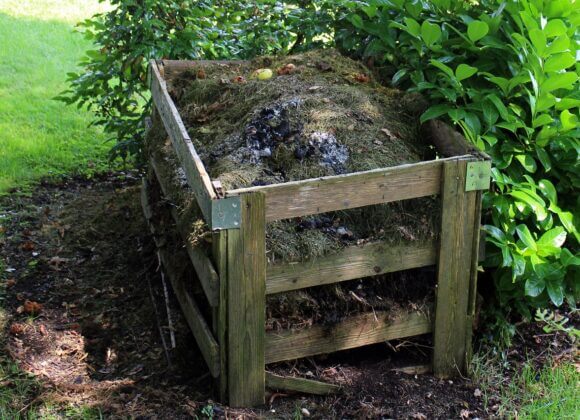
If you have only a few leaves, you can add them to your regular compost. If you have a lot of leaves, it makes sense to start a separate compost pile consisting only of leaves. You don’t necessarily need a compost bin for this; even a wire container works well. Then it’s time to start layering: The bottom layer consists of leaves—ideally, a variety of different types. On top of that, add a thin layer of mature compost. If it’s already freezing, you can wait until spring to add this to an open compost pile. If you don’t have any compost, you can substitute it with a mixture of twigs or straw (for aeration) along with kitchen scraps, horn shavings, recent grass clippings, or rock dust as nitrogen sources. Finish with another layer of leaves. Since dry leaves decompose slowly, the pile should be moistened one last time. In the spring, turn the leaf compost and moisten it as needed. Repeat the turning process if necessary.
How can you tell if leaf compost is mature?
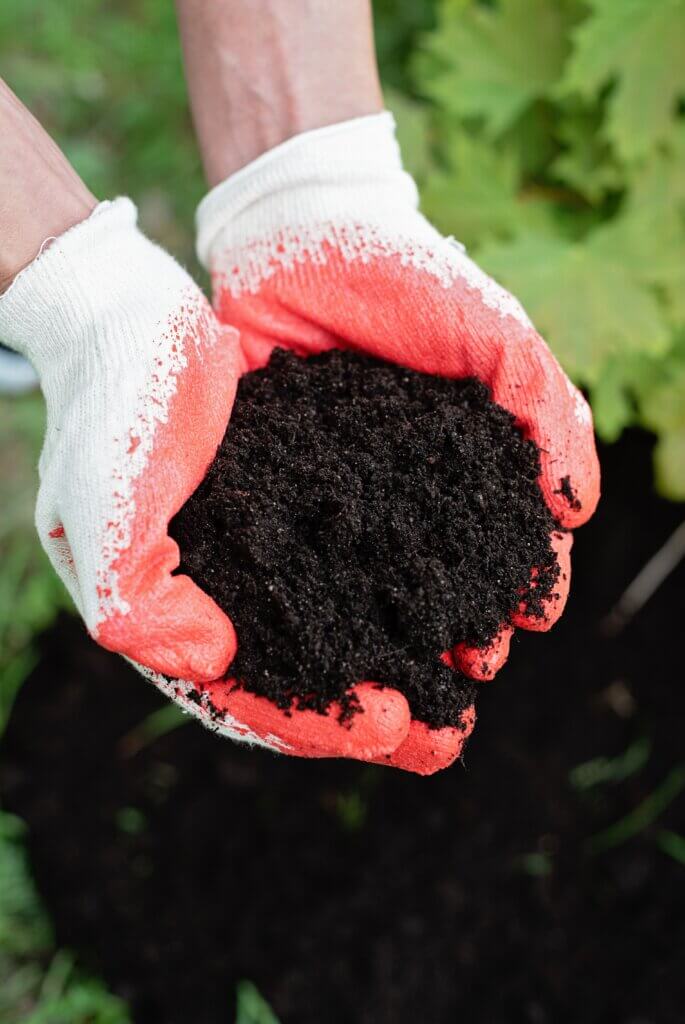
Mature leaf compost can be recognized by its dark color, crumbly texture, and earthy smell. If you don’t trust your senses, you can also perform the so-called cress test: Simply place a small amount of compost in a bowl and moisten it if necessary. Sprinkle a few cress seeds on top and press them in gently. Place the dish in a bright spot where the temperature is about 18 degrees. If the seeds germinate and the plants grow healthily, the compost is ready.
Which plants thrive in leaf compost?
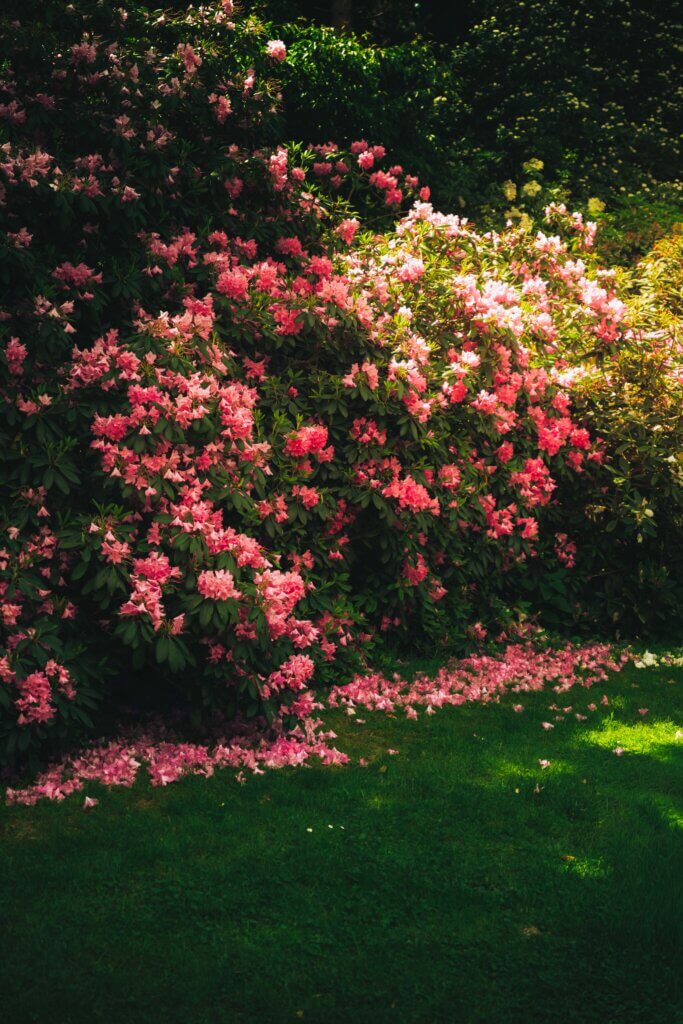
Leaf compost is ideal for plants that prefer acidic soil. These include, for example, rhododendrons, broom, lily of the valley, raspberries, blackberries, and bog plants, as well as azaleas.
Composting Leaves: Our Conclusion
- Leaves are far too valuable to end up in the organic waste bin.
- Any type of leaves can be turned into leaf compost. The only exception is leaves that are diseased or infested with pests.
- Depending on the type of leaves, it takes between about one and two years for them to turn into compost.
Similar posts:
Leaves in the Garden: Compost, Mulch, or Just Remove Them?