
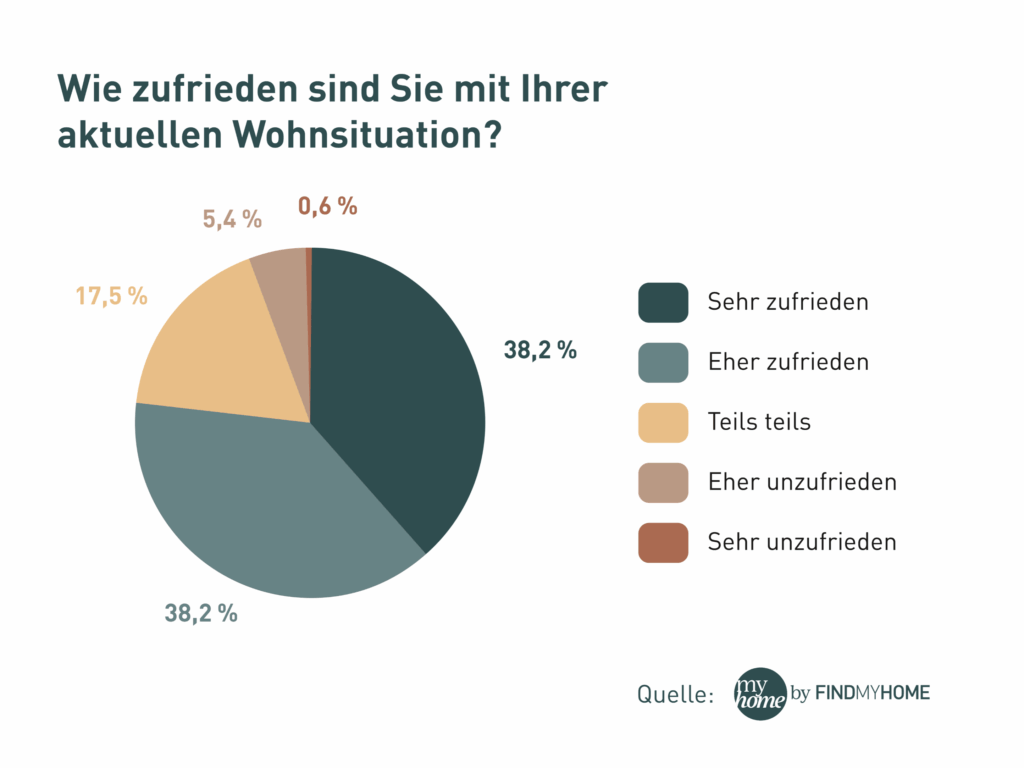
A recent MYHOME.AT survey reveals a surprisingly clear result: the majority of Austrians are “rather satisfied” with their homes – but hardly anyone lives there permanently. For young people in particular, the apartment is increasingly becoming a stopover – a temporary home that adapts to life. Not the other way around.
“The biggest surprise is the combination of high housing satisfaction and a strong willingness to change – especially among younger people,” commented Benedikt Gabriel, CEO and founder of the renowned Austrian real estate platform FINDMYHOME.AT together with Bernd Gabel-Hlawa , on the survey conducted among readers of the online real estate magazine MYHOME.AT , which is part of the brand environment.
While older generations are gaining more stability, the 19 to 35 age group lives at a different pace: they are mostly satisfied – but rarely very satisfied. And they are most likely to be planning their next move, as the latest survey revealed. “For young people, we clearly see housing as a stopover,” explains Bernd Gabel-Hlawa. “The apartment is right for now – but it is deliberately not intended as the last step.” Job change, urban mobility, relationships, family planning: housing is readjusted as a life module – not as a promise of ownership.
The big shift: relocation was yesterday – optimization is today
With increasing age, not only does satisfaction change, but also the nature of the change:
- 19-35 years: Relocation as an option
- 36-45 years: Renovating and remodeling
- from 46: selective improvements instead of a new start
“When change shifts from radical relocations to renovation and optimization, we need to focus clearly on the existing building,” says Gabriel. “It’s about making the most of your current home.” The trend is clear: optimization is replacing the classic new start.
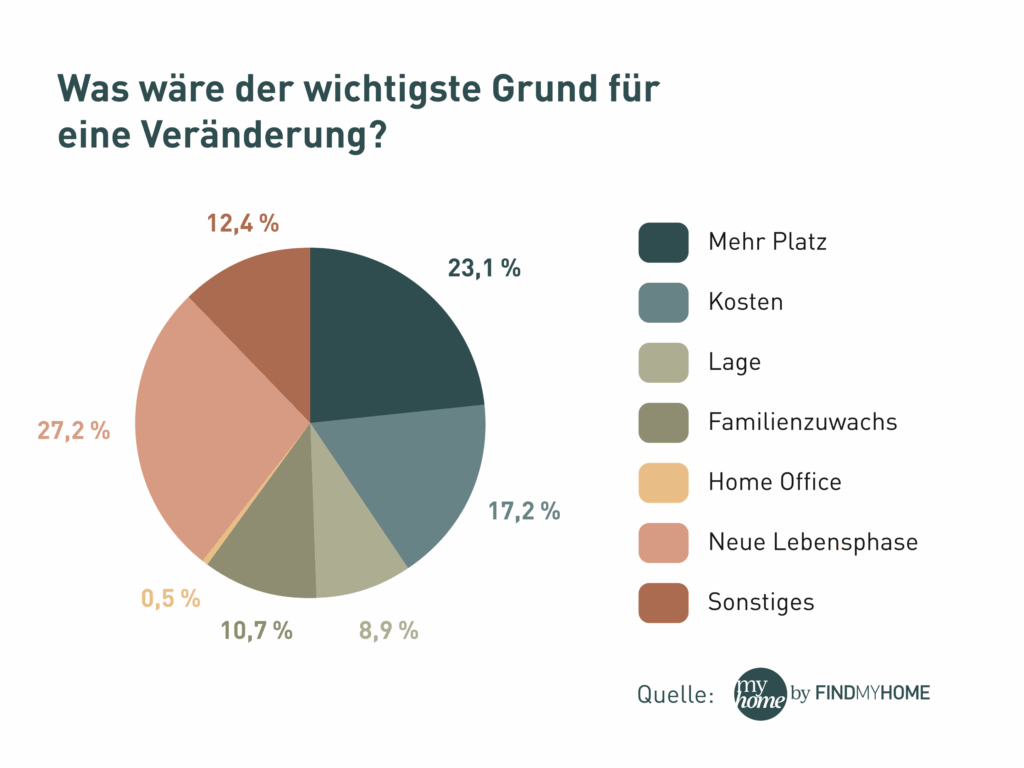
Vienna: Small apartments, big pressure
This is particularly evident in urban regions. In Vienna, living spaces are smaller, the perception of space is more critical – and the desire for change is particularly high. “Urban living creates pressure to optimize, not primarily a desire to escape,” explains Gabel-Hlawa. “Flexible solutions are needed – from smart organization to balcony optimization.” The city makes you creative, but also willing to compromise – but everything with moderation and purpose.
“Location compensates for space – but only up to a certain point,” says Gabriel. “If a sensible solution is no longer possible despite all the organization systems, the decision is tilted towards a larger apartment.”
Housing cost stress: the problem lies in the middle
Another key finding relates to affordability: it is not only low incomes that perceive housing costs as a burden – the middle class is particularly hard hit. In other words, the group with an income of 2,000 to 3,000 euros feels the pressure the most. “The issue has reached the heart of society, not the margins,” says Gabel-Hlawa. “The market doesn’t offer enough affordable options with a good price-performance ratio for this middle class.”
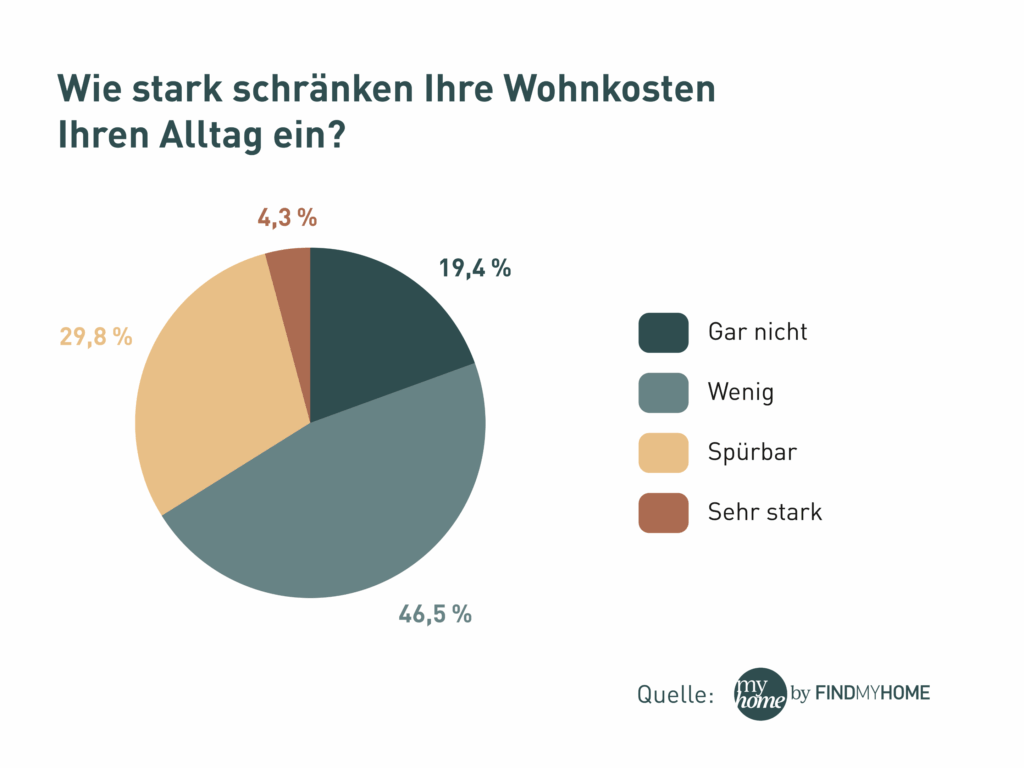
More money = not automatically more home satisfaction
Even high earnings do not protect against housing compromises. The survey shows: Housing satisfaction does not depend on income, but on the perceived quality of everyday life. “The decisive factor is the perceived price-performance ratio,” says Gabriel. “Many people don’t live better, they just live more expensively.”
The key word for 2025: mucking out
The most common change across all age groups is surprisingly simple – and at the same time symbolic: mucking out. Tidiness becomes the new quality of living, fewer possessions replace more square meters. “The fact that even very satisfied people are planning changes shows that optimization is an expression of identification, not frustration,” says Gabel-Hlawa. “People are constantly working on their homes to better reflect their personality and rhythm of life.”

MYHOME.AT conclusion: Living as a feeling – not as square meters
The survey paints a clear picture: Housing remains a deeply emotional issue. It’s not just about space or furnishings, but about identity, security and lifestyle. At the same time, it is clear that adaptations today are seen less as a radical new start and more as a further development of what already exists. Optimizing, redesigning and improving are increasingly replacing the classic move. It is also explosive that housing cost stress is no longer a marginal phenomenon – and finally, order is establishing itself as the new currency of living.
Or as Gabriel puts it in a nutshell: “Today, living feels less final – but rather like a space that is constantly being rewritten.”
Related posts:
More is more – the comeback of maximalism
Converting the cellar: from junk room to hobby room
Multifunctional offices: when the home office is also a guest room