
Remodeling the cellar: How do you turn a junk room into a dream room? Find tips on humidity, lighting and legal aspects here. Plus creative ideas for wine cellars, gyms, music rooms and workshops.
The cellar – for many, it’s nothing more than a necessary evil, crammed full of odds and ends, old furniture and things that you “might need at some point”. Yet there is enormous potential here: with the right planning, the dark storage room can be turned into an inspiring place for hobbies and relaxation. Whether it’s a wine cellar, private gym, music room or workshop – if you redesign your cellar sensibly, you will gain valuable living space.
Step one in basement remodeling: Getting a grip on moisture
Before you start remodeling your basement, you should check the indoor climate. Modern basements with good waterproofing are often dry and unproblematic. In older buildings, however, cellars are often susceptible to moisture – a damp room is not only unpleasant, but can also be harmful to health and damage the fabric of the building.
If you notice moisture problems, first determine the cause: Is it coming from outside through the walls? Is it rising from the floor? Sometimes improved ventilation through regular airing or the installation of a ventilation system can help. In the case of more persistent problems, subsequent external sealing or a horizontal barrier may be necessary – work that should definitely be carried out by specialists. Modern wall coatings and sealing slurries can significantly improve the indoor climate. A dry foundation is the prerequisite for all further steps.
Light into the dark: lighting concepts for windowless rooms
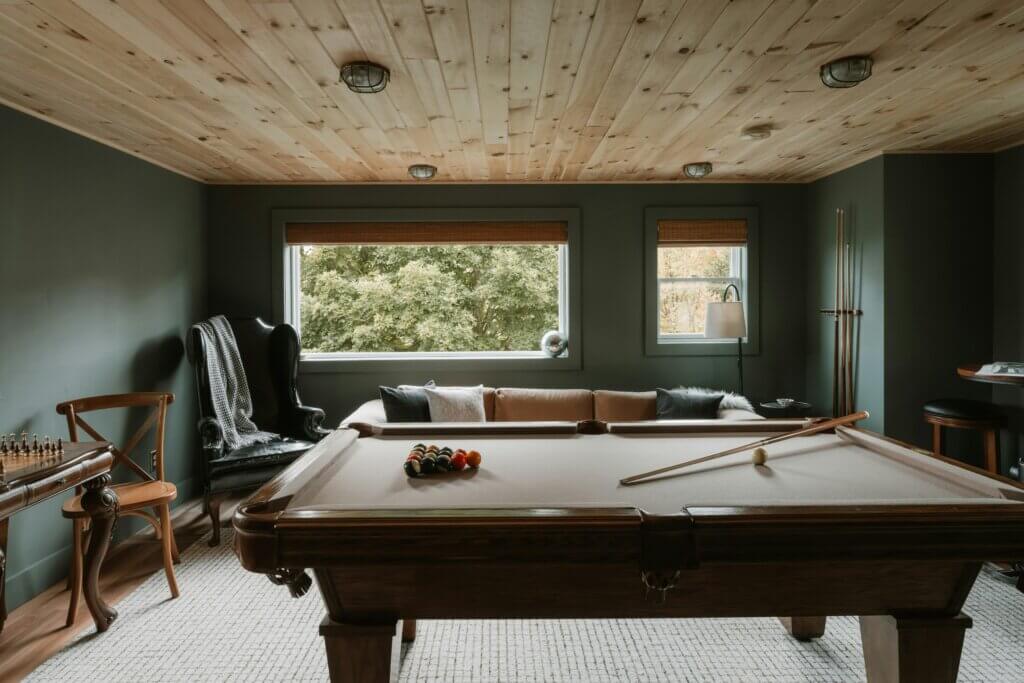
With the right lighting concept, you can create an inviting atmosphere. Plan several lighting levels when remodeling a basement: bright ambient lighting on the ceiling provides orientation, while targeted accent lighting highlights individual areas. LED panels with a daylight spectrum have a more pleasant effect than cold neon light, while indirect lighting makes the room appear larger. Mirrors and light wall colors further enhance the effect.
Basement remodeling ideas: What your basement can become
The fine wine cellar: Constantly cool temperatures and natural darkness create perfect storage conditions. With a matching shelving system made of wood or metal and atmospheric lighting, your cellar becomes a private retreat for connoisseurs.
The home gym: You can train whenever you want in your own fitness room. Shock-absorbing flooring such as rubber mats, a large mirror and a good sound system are part of the basic equipment. Robust, moisture-resistant furniture made of plastic or coated metal is ideal.
The soundproof music room: The thick walls already partially insulate the sound. With additional acoustic panels, you can practice without disturbing the neighbors. Sufficient power connections for amplifiers and equipment are important.
The fully equipped workshop: A sturdy workbench made of hardwood or metal, well thought-out storage systems and a good extraction system are the be-all and end-all. Make sure you have enough sockets, preferably distributed throughout the room.
What you need to consider when remodeling and using a basement
Basement remodeling requires careful planning. First check: Is the room height sufficient? Are there enough power connections? How is the ventilation?
Legal aspects: In most cases, a change of use does not require planning permission as long as you do not remove any load-bearing walls. Stricter requirements apply for permanent living or working space: Minimum requirements for room height (usually 2.30 m), lighting, ventilation and fire protection must be met. In the case of condominiums, you may need the consent of the owners’ association.
Technical requirements: Plan the electrical installation carefully and ensure there is sufficient heating. Infrared heaters or electric radiators are practical solutions for cool cellar rooms.
Which furniture and materials are suitable for cellar furnishings?
When remodeling your basement, use moisture-resistant materials: plastic and powder-coated metal for shelves, treated or painted wood, tiles or vinyl as flooring and damp-proof paint for the walls. Furniture on legs allows air to circulate. Avoid untreated solid wood, upholstered furniture, carpeting and wallpaper – they do not tolerate the cellar climate well.
Conclusion: Space problem becomes space gain
A converted cellar is more than just additional storage space – it is an enrichment for your home. With the right preparation, well-thought-out planning and suitable materials, you can transform a junk room into a space that noticeably improves your quality of life. The investment is not only worthwhile for greater living comfort, but can also increase the value of your property.
Related posts:
Damp cellar: recognizing the causes and acting correctly