
Whether it’s paint, wallpaper, wood, or sophisticated lighting designs: when it comes to interior design, the ceiling is often overlooked. Yet this “fifth wall” in particular offers a surprising number of ways to add more character to your home. So it’s time to look up. In this article, you’ll learn how to design your ceiling and discover which ideas are currently trending.
When we redesign a room, we think about wall colors, furniture, flooring, and home accessories. But what about the ceiling? It usually stays white. Yet it takes up just as much space as the floor and has a decisive influence on how we perceive a room. It can convey a sense of spaciousness, create a feeling of coziness, highlight architectural features, or even become an eye-catcher in its own right. Interior designers have long since embraced what’s known as the “fifth wall.” And even within your own four walls, it’s worth paying more attention to it. Because sometimes, the greatest design potential actually lies right above our heads.
Why should you consider the ceiling when designing a room?
A ceiling is much more than just the top of a room. Together with the walls, floor, and lighting, it shapes the overall feel of the space. A light-colored ceiling can convey a sense of openness and airiness, while darker shades create a cozy, almost intimate atmosphere. Decorative elements such as stucco, wood paneling, or wallpaper, in turn, lend a room its unique character.
Particularly interesting: The design of the ceiling can also visually alter proportions. This allows high-ceilinged rooms to feel cozier and low-ceilinged rooms to appear more spacious through strategic use of color and lighting. So, if you take the “fifth wall” into account when designing your interior, you can achieve a lot with relatively simple means.
What colors are suitable for ceiling design?
White is a classic, but by no means the only option. Delicate pastel shades, soft sage green, powdery pink, or a warm beige lend ceilings a subtle elegance. Those who are more daring can opt for bold colors like burgundy, dark blue, or eggplant. Especially in bedrooms and living rooms, such shades can create a wonderfully cozy atmosphere.
The technique known as “color drenching” creates a particularly harmonious effect: walls and ceilings are painted the same shade. The transitions blend together, making the room appear as if it were cast from a single mold. This works equally well with light, natural tones and with rich, dark colors.
Another trick is to choose a ceiling paint that’s a few shades lighter than the wall paint. This creates a smooth transition without making the contrast too harsh. By the way: If you want to hide uneven surfaces, you’re usually better off with matte paints than with glossy finishes.
How can you make low ceilings appear higher?
Not everyone lives in an older building with three-meter-high ceilings. But even low ceilings can appear surprisingly spacious with the right design.
Light colors reflect light and make the ceiling appear to recede. This effect is particularly striking when the walls and ceiling are painted in similar light shades. This avoids harsh transitions and makes the room feel more serene.
Vertical design elements can also help: Curtains that start as high up as possible, tall shelves, or narrow wall sconces draw the eye upward. When it comes to lighting, flat ceiling lights or indirect light sources are often a better choice than low-hanging pendant lights.
By the way, dark colors are by no means off-limits for low ceilings. When used correctly, they can even create a sense of depth. The key factors are how they interact with the wall colors, the lighting conditions, and the desired atmosphere.
Wallpaper, wood, or stucco: What are some ideas for a unique ceiling?
If you want to give your ceiling more personality, you don’t have to undertake a major renovation right away. There are plenty of ways to turn an unremarkable surface into a design highlight.
Wallpaper on the ceiling, for example, is a surprising eye-catcher. Floral patterns, geometric shapes, or subtle textures transform the fifth wall into a design element in its own right. This works especially well in bedrooms, small home offices, or entryways. It’s important to have a suitable surface and paste that’s compatible with the wallpaper.
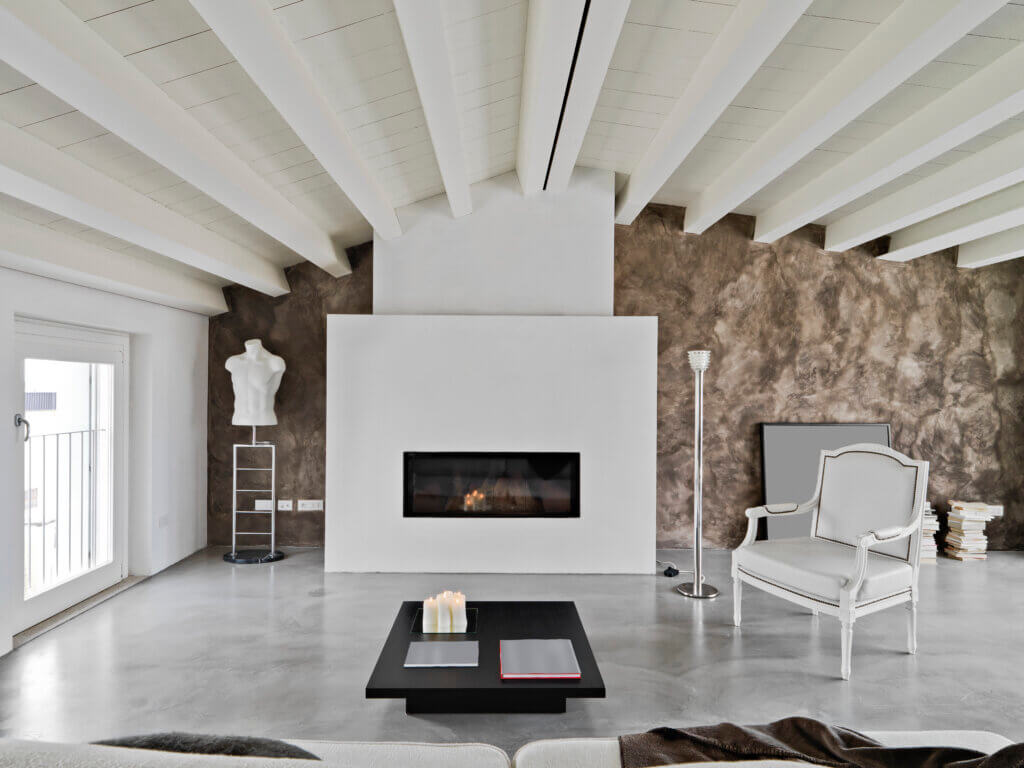
Wood paneling, on the other hand, adds warmth and a natural feel. Whether it’s light oak, thin wood slats, or a modern take on the classic coffered ceiling, wood brings texture to a room and pairs particularly well with minimalist interiors. Depending on the material and construction, it can also help improve the room’s acoustics.
Stucco and decorative moldings are also experiencing a resurgence. What used to be reserved primarily for opulent apartments in older buildings can now be incorporated into modern spaces as well. Simple ceiling medallions, delicate profiles, or geometrically arranged decorative moldings add architectural accents without appearing obtrusive.
And for those who prefer a truly unique look, decorative plastering techniques, lime paints, or intentionally exposed concrete surfaces are all options. The key is to ensure that the ceiling design complements the architecture and character of the room.
What role does lighting play?
Lighting and ceilings go hand in hand. After all, even the most beautiful design only truly comes into its own with the right lighting.
Indirect LED lighting—for example, in perimeter light coves or behind suspended ceiling elements—creates a soft, atmospheric glow. The ceiling almost seems to float. This is a great way to create a pleasant atmosphere, especially in living rooms and bedrooms.
Recessed lights, on the other hand, have a particularly understated look and are well-suited for clean, modern architecture. However, they require sufficient space for installation. In rooms with lower ceilings, flat surface-mounted lights or strategically placed wall sconces are a good choice.
An eye-catching pendant light can also be part of the design concept. When hung above the dining table, it becomes the focal point of the room, while a combination of multiple light sources provides flexibility. Ideally, the lighting should be adjustable and dimmable depending on the time of day and how the space is being used.
How can ceiling design improve room acoustics?
Beautiful rooms shouldn’t just look good—they should sound good, too. Especially in open-concept living-dining areas with large windows, smooth floors, and few textiles, sound can travel in an unpleasant way.
This is where acoustic ceilings or sound-absorbing ceiling elements come into play. Special acoustic panels, perforated wood surfaces, or fabric acoustic elements can reduce reverberation and make conversations more pleasant.
The good news is that acoustic solutions no longer have to look like an office or a recording studio. Many systems feature sophisticated designs and can be integrated almost invisibly or intentionally used as design elements.
Which ceiling design works best for which room?
Not every idea works equally well everywhere. In the living room, the ceiling can certainly make a statement—for example, with a bold color, an elegant cove lighting, or modern decorative moldings. In the bedroom, calm, warm tones are preferred, as they convey a sense of comfort. A colored ceiling can even create a particularly cozy atmosphere here.
In the kitchen, on the other hand, low-maintenance, suitable surfaces and functional lighting play an important role. In the bathroom, paints, wallpapers, and wall coverings must be suitable for the level of humidity. For the entryway, on the other hand, bolder design ideas are ideal: a patterned wallpaper or an unexpected color on the ceiling can create a special first impression as soon as you enter the apartment.
FAQ: The 7 Most Common Questions About Ceiling Design
Light colors such as white, cream, light gray, or soft pastel shades usually make rooms appear more open. It looks particularly harmonious when the ceiling and walls are color-coordinated.
That depends on the desired effect in the room. A lighter-colored ceiling often creates a sense of spaciousness, while a darker ceiling can evoke a feeling of coziness and comfort. Both options can be aesthetically appealing.
In general, many ceilings can be wallpapered, provided the surface is dry, sturdy, clean, and sufficiently smooth. It is important to use the right wallpaper and paste and to apply them carefully. Problematic surfaces require proper preparation.
In older apartments, classic stucco elements, ceiling rosettes, and decorative moldings are particularly well-suited. Modern color schemes can also highlight the generous ceiling heights and create an intriguing contrast to the historic architecture.
The cost depends heavily on the materials, the area, and the amount of work involved. A fresh coat of paint is generally less expensive than wallpaper, wood paneling, or a suspended ceiling with built-in lighting. Any necessary preparatory work also affects the price.
In small rooms, light colors and subtle textures often work particularly well. However, if you want to make a bold statement, you can also use patterned wallpaper or a bold ceiling color. The key is to have a cohesive overall design.
Even a fresh coat of paint can significantly change the feel of a room. Decorative moldings or a new, carefully selected ceiling light also offer creative possibilities. For more extensive changes, however, additional preparatory work is usually required.
Similar posts:
Aubergine: The Trending Color—Here’s How This Rich Shade Is Making Its Way Into Our Homes
How do you create spaces with character?
Travertine Decor: Natural Stone as a Fall Must-Have