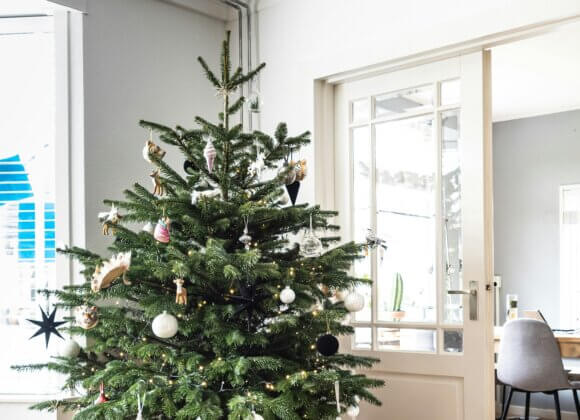
Once the Christmas magic has faded, the Christmas tree has to go. But it doesn’t have to be thrown away straight away – give it a new lease of life with Christmas tree upcycling but a second life.
The Christmas tree has just created a festive atmosphere in all its splendor. But even the most beautiful Christmas season comes to an end, which means the Christmas tree has to leave the house. But perhaps this is not necessary – with a little knowledge, skill and imagination, the fir, spruce or pine can be used for other purposes after Christmas.
Good against colds
Conifers are not only pleasing to the eye, but also have healing powers, as Paracelsus and Hildegard von Bingen already knew. For centuries, their resin was used as a wound healing agent or for rheumatism and arthrosis ointments due to its antiseptic and circulation-promoting effect.
In addition, the needles of fir and spruce contain essential oils that have a positive effect on the respiratory tract due to their expectorant and antibacterial properties. Why not make an expectorant tea from fresh or dried needles: simply pour a cup of hot water over one or two teaspoons of needles and leave to infuse for five to ten minutes. You can also mix spruce and fir needles with medicinal herbs such as sage or thyme.
Of course, the needles can also be used for inhalation, as a gargle or cold bath: For the latter, boil around 150 grams of needles in enough water for around ten minutes. Pour the brew through a sieve into the bath water and enjoy your forest bath for around 20 minutes, which not only provides relief for colds, but also for joint pain and muscle tension.
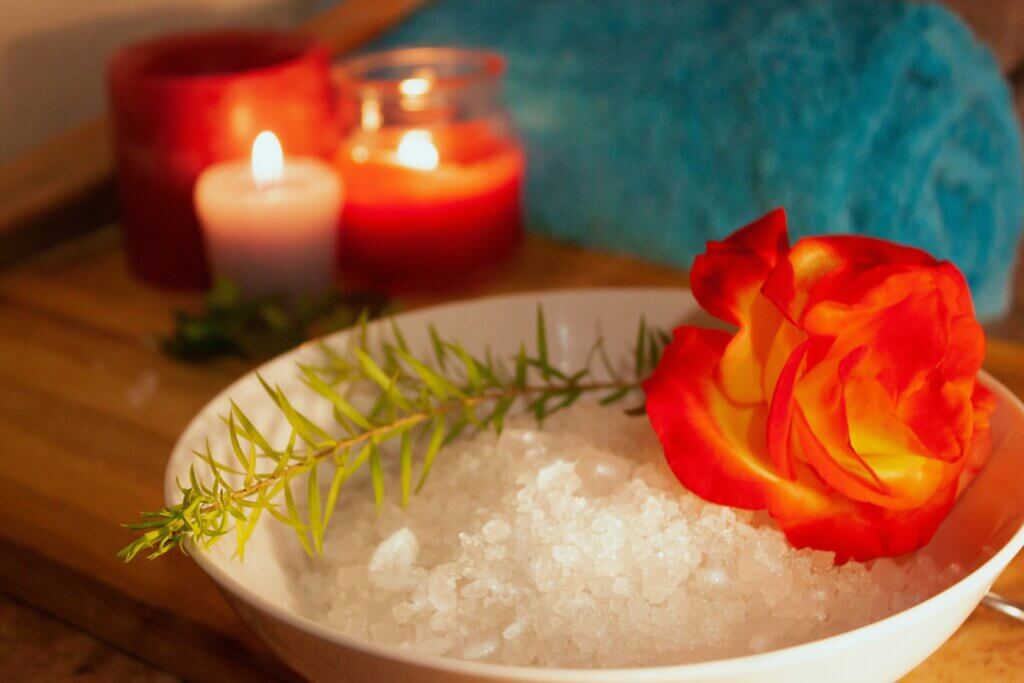
Alternatively, you can also make a bath salt from the needles: For example, mix 250 degrees natural salt with one or two handfuls of needles and possibly a few drops of essential oil. To release the essential oils from the needles better, it is advisable to crush them a little beforehand. Pour the mixture into a jar and leave to infuse in the dark for around two weeks. Once the bath salts are ready, add one to two tablespoons to the bath water.
Christmas tree upcycling from the living room to the garden
You can also use the Christmas tree in the garden. For example, as a feeding station for hungry birds: put up the tree and attach feeders, fat balls etc. to it – your feathered friends will thank you.
Or prepare a shelter for insects and other animals: Simply cut the trunk into pieces about the length of your arm and pile them up in a quiet corner. You can also use the branches of your Christmas tree to cover flower beds and frost-sensitive plants or turn them into mulch by chopping them up.
Of course, you can also compost the tree: Cut off the branches and chop up the trunk – this way the compost is better aerated. The following also applies in this case: only compost Christmas trees from organic forestry.
If you were annoyed by a slug infestation in summer, you should collect the needles, keep them dry and scatter them around endangered plants in spring. This is because slugs do not like rough surfaces.
Toys and snacking fun
Christmas trees are also a welcome change for many animals after Christmas. Sheep, goats, antelopes, deer, zebras and elephants see the trees not only as a toy, but also as a tasty treat.
Please note: Only use Christmas trees from organic forests that have been grown without the use of herbicides, fertilizers or pesticides. Wax residues, glitter sprays and artificial snow also have no place on the tree in these cases.
Creative ideas for Christmas tree upcycling
There are no limits to your imagination when it comes to recycling the Christmas tree. Turn branches into pretty wooden buttons, for example! First remove the bark from the branch, then saw off the required number of buttons. Sand the buttons to the desired shape using sandpaper and drill holes in the middle for sewing on. Then polish the buttons or rub them with plant oil. Pot and glass coasters can be made from thick branches or the trunk in a similar way.
The same applies to an insect hotel: simply cut off a piece of the trunk and drill holes of different sizes into it. Of course, the dried and untreated needles can also be used: Grind them into a fine powder, which can later be used to refine soups, salads and other dishes.
In a nutshell: The Christmas tree, if organic, is far too good to dispose of.
Related posts:
Compost and green manure – fit for 2026