
That first cup of coffee in the morning, a balmy summer evening, or a relaxing Sunday on the balcony—scents can define moments like almost nothing else. That’s exactly why more and more hobby gardeners are discovering the joys of fragrant flowers and plants. Instead of focusing solely on the colors or shapes of flowers, attention is shifting to plants that create a very special atmosphere with their scents. Which fragrant plants are suitable for balconies and patios, and how to turn them into a true scented garden.
The so-called “scented garden” trend originated in landscape design but has long since spread to balconies and patios as well. Instead of focusing exclusively on visual appeal, people today specifically choose plants that give off pleasant aromas and can enhance their sense of well-being.
Whether it’s lavender, scented geraniums, or rosemary—many plants are not only visually appealing but also create a Mediterranean vibe, relaxed summer evenings, and a very special atmosphere.
Fragrant Plants: Why Scents Affect Our Well-Being
It’s no coincidence that certain smells can trigger memories or influence our mood. Scents are processed directly in the brain and are closely linked to emotions and memories: The scent of lavender, for example, is often associated with relaxation and vacations, while citrus scents are considered refreshing and invigorating.
Especially in cities, where traffic noise and the hustle and bustle are a constant part of daily life, a scented garden can help make your time outdoors even more enjoyable.
The Most Popular Fragrant Plants for Sunny Balconies
If you have a balcony that gets plenty of sun, you have a wide variety of options when it comes to choosing plants.
Lavender
Lavender is one of the classic aromatic plants. Its purple flowers are not only decorative, but also give off their characteristic, soothing scent during the summer months. At the same time, lavender attracts bees and butterflies and is considered relatively easy to care for.
Rosemary
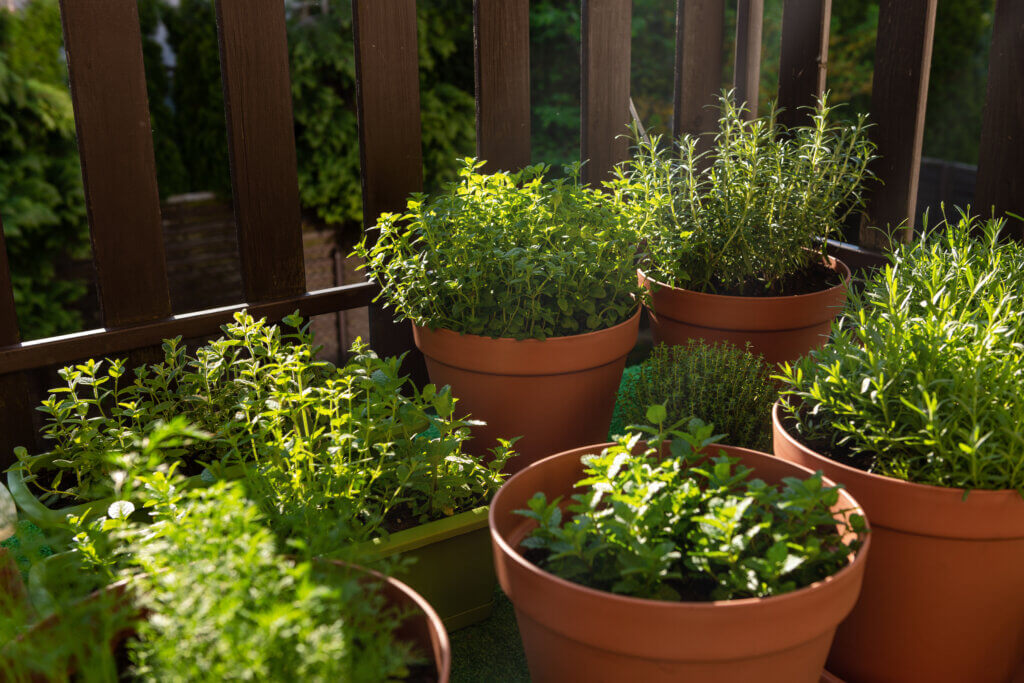
This Mediterranean culinary herb isn’t just a delight in the kitchen. Even a light touch on the needles is enough to release its aromatic scent. Rosemary thrives in sunny locations and can also handle the heat well.
Thyme
Thyme is also an excellent choice for scented gardens. The plant stays compact, is easy to care for, and gives off intense herbal aromas, especially on hot days.
Scented geraniums
Scented geraniums are currently making a comeback. Depending on the variety, their leaves evoke the scent of roses, lemons, mint, or even chocolate. What’s particularly fascinating is that the scent often unfolds with just a light breeze or a gentle touch.
Fragrant Plants for Shady Balconies
Even if you don’t have a south-facing balcony, you don’t have to go without a scented garden. After all, there’s a solution to every problem. For example:
Woodruff
Its distinctive spring fragrance makes woodruff a popular plant for shadier areas. It thrives especially well in partially shaded locations.
Scented Violets
The delicate flowers have a surprisingly intense, sweet fragrance and are perfect for smaller balconies.
Mint
Varieties of mint—and there are now plenty of them—thrive even in less sunny spots and give off a fresh, pleasant scent. In addition, the leaves can be used in beverages or desserts.
How to Create a Harmonious Scent Garden
When planning a scented garden, the rule is: less is often more. If you combine too many strongly scented plants, you quickly risk creating a cluttered overall look. Instead, it’s best to choose a main scent profile and complement it thoughtfully.
The following, for example, create a particularly harmonious effect:
- Lavender, rosemary, and thyme for a Mediterranean feel
- Mint, lemon verbena, and scented geraniums for fresh citrus notes
- Scented roses, jasmine, and sweet violets for romantic floral scents
Placement also plays an important role. Plants should be placed, if possible, where you spend a lot of time—for example, next to the seating area.
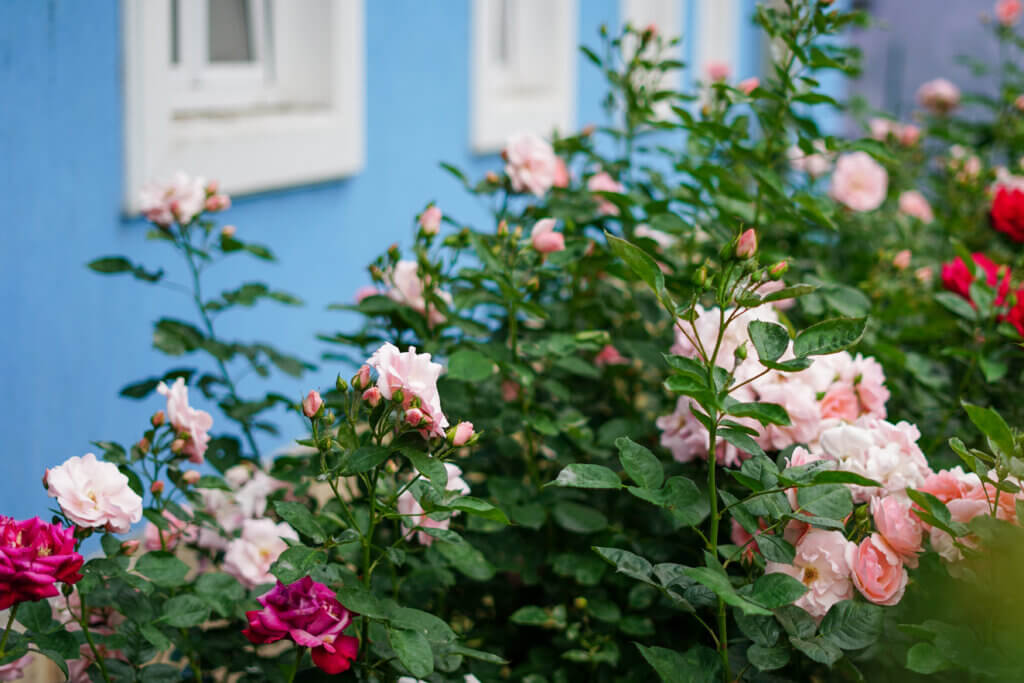
The Right Time for Fragrant Plants
Interestingly, many plants do not emit their scent with the same intensity throughout the day. Lavender and herbs smell particularly strong on hot summer days. Jasmine and some flowering plants, on the other hand, tend to release their scent mainly in the evening hours.
If you spend most of your time on the balcony after work, you can take advantage of this effect by choosing plants that release their scent just when you want to relax outside.
Fragrant Plants and Insect-Friendliness
Another advantage of many fragrant plants is that they make an important contribution to biodiversity. Lavender, sage, thyme, and oregano are among the most popular food sources for bees, bumblebees, and butterflies. Anyone who grows these plants on their balcony not only creates a pleasant space for themselves but also supports native pollinators—especially in densely built-up residential areas, even small balconies can serve as valuable refuges for insects.
Easy Care for a Fragrant Paradise
The good news: Many fragrant plants are considered easy to care for and require little maintenance.
The following are important:
- planters that are large enough
- well-drained soil
- Regular, but not excessive, watering
- A sunny to partially shaded location, depending on the plant species
Mediterranean herbs such as lavender and rosemary generally tolerate dry conditions better than waterlogged soil. If you take care of them, you’ll often be rewarded with blooms and pleasant scents all summer long.
Good to Know
- Lavender is one of the most popular fragrant plants for sunny balconies.
- Scented geraniums come in lemon, rose, or mint scents.
- Many plants release their aroma most intensely in the evening hours.
- Fragrant plants often attract bees and butterflies.
- Just a few plants are enough to transform a small balcony into a fragrant oasis of well-being.
Related posts:
Climate-Resilient Gardens: Hardy Plants for the Garden
Windowsill farming: fresh ingredients from the mini garden
Compost & green manure: Fit for 2026