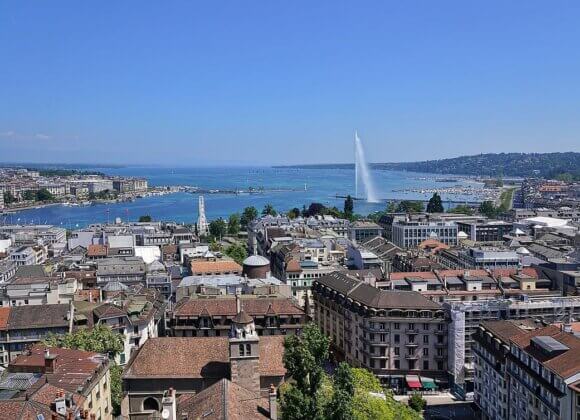
The port city is a blend of imperial and royal heritage, Venetian romanticism and modern Mediterranean serenity. Between the coffee house culture, neoclassical palaces and sweeping views over the Adriatic, a lifestyle unfolds that is as urban as it is poetic. Trieste is considered the “most Central European city in Italy” – a place where Viennese elegance and Italian sensuality combine to create an unmistakable blend.
Trieste has been the Habsburg monarchy’s gateway to the Adriatic since the 18th century – and quickly developed into one of the richest cities in Central Europe. Magnificent buildings such as the Teatro Verdi, the Caffè degli Specchi and the monumental town hall in Piazza Unità d’Italia, the largest city forum in Europe by the sea, bear witness to this today.
Architecturally, Trieste combines classicism, historicism and art nouveau – the city is like an open-air museum of imperial Austrian architecture. In recent years, architects such as Giovanni Damiani and Elisa Barbetta have provided new impetus: revitalization of old warehouses in the port district, conversion of warehouses into lofts, sustainable use of old industrial sites.
The Porto Vecchio district is particularly exciting: the former customs port area has been converted into a modern urban quarter since 2019 – with museums, studios and apartments, without losing its industrial character. Trieste is investing over 150 million euros in the conversion into a sustainable district that brings the sea back into the everyday lives of residents.
Living in diversity
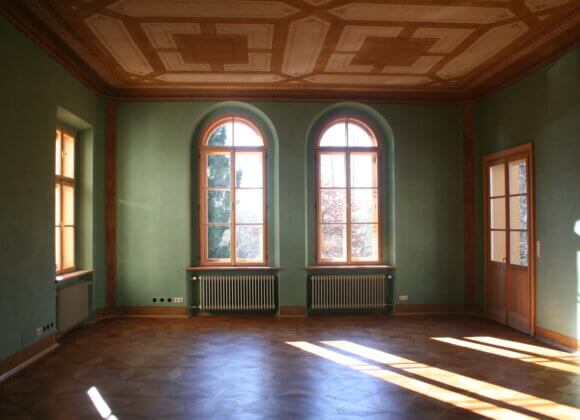
Living in Trieste is as diverse as the city itself. In the historic old apartments around the Grand Canal, you will find parquet floors, double doors and stucco ceilings – relics from imperial times, often combined with Italian design.
Many Triestines love the mix: family-owned antiques meet minimalist furniture, old chests of drawers meet lamps by Flos or Kartell. The younger generation moves into renovated lofts in the former harbor district or on the hills above the city, where they live in houses with large terraces, bright rooms and sea views.
Sustainability also plays a role here: shutters instead of air conditioning, natural stone, wood and linen. The Trieste style is elegant, understated and yet emotional – like an espresso by the sea in calm weather.
The 3 most architecturally beautiful buildings in Trieste
1st Piazza Unità d’Italia With an area of 12,000 m², it is one of the largest squares in Europe, built directly by the sea. Surrounded by palaces from the time of Maria Theresa, including the town hall with its majestic façade.
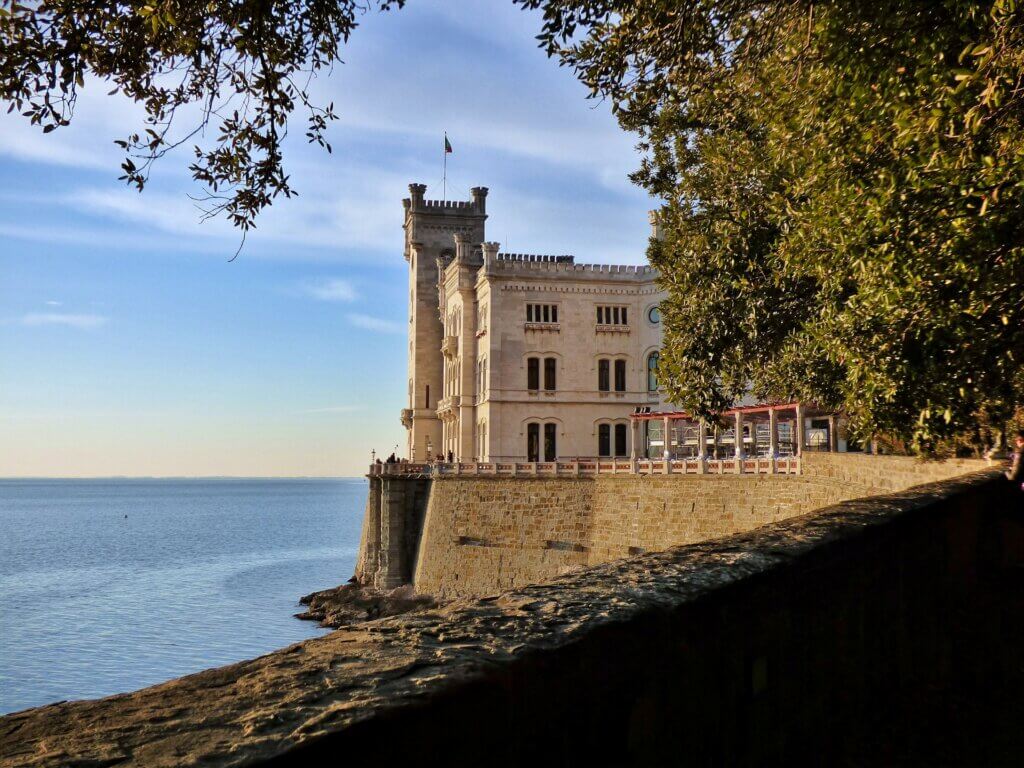
2nd Castello di Miramare Built 1856-1860 for Archduke Ferdinand Maximilian of Austria. White limestone, terraces with a view of the Adriatic, a park of 22 hectares. Today a museum and symbol of the city.
3rd Teatro Verdi A neoclassical jewel from the 18th century, built in the style of La Scala in Milan. Richly gilded inside, with 1,300 seats – Trieste’s musical heart.
The most popular photo motif in Trieste: Miramare Castle.
The most beautiful second-hand bookshops & flea markets
1st Libreria Antiquaria Umberto Saba
Via San Nicolò 30 Probably the most famous antiquarian bookshop in Italy, founded in 1919 by the writer Umberto Saba. Books, engravings, sheet music – a place that smells of history.
2nd Mercatino dell’Usato Trieste
Via Sistiana 52 An extensive market for vintage furniture, lighting, tableware and curiosities – from Art Nouveau to Bauhaus, ideal for collectors and interior design enthusiasts.
3. Antiqua Trieste
Once a year in spring, at the Porto Vecchio. Around 200 exhibitors present antique furniture, picture frames, porcelain and collector’s items – the most important antique event in north-east Italy.
Cuisine & pleasure in Trieste
Trieste’s cuisine is a reflection of its history: Viennese pastries (there is also a Café Sacher in the city), Venetian fish dishes and Slavic influences all come together on one menu. If you really want to understand the city, you should taste your way through its taverns and osterias.
1st Osteria Salvagente
Via dei Burlo 1 Authentic, maritime, unpretentious. Chef Paolo Bertossi serves mussels, gnocchi alla busara and freshly caught fish – all made with heart and hand.
2nd Trattoria Nero di Seppia
Via Cadorna 23 An institution for over 20 years: seafood in fine variations, homemade pasta, desserts to melt in your mouth. Special: the dessert tasting with five mini creations.
3rd Tavernetta al Molo (Grignano)
Riva Massimiliano e Carlotta 11 A few kilometers outside, right by the sea. Fishing port ambience, grilled sea bream, white wine from the Karst. Sunset included.
4th Trattoria Bell’Ariva
Santa Croce Mare Small terrace overlooking the cliffs, delicious calamari ripieni and pasta with bottarga. Also an insider tip from the locals.
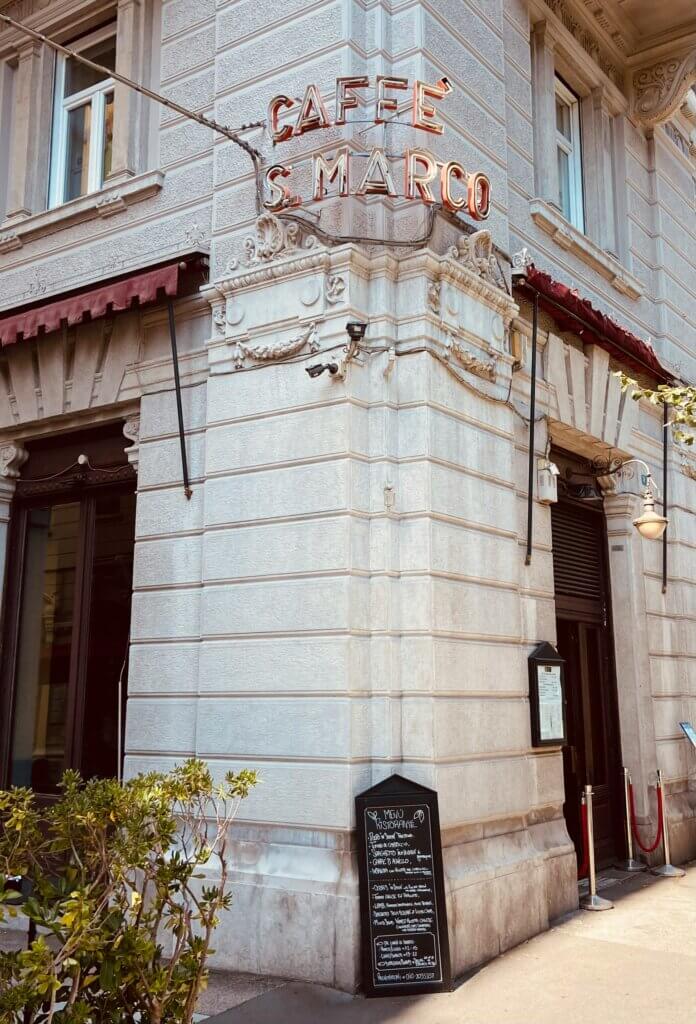
Coffee has long been of great importance in Trieste – after all, the city was the Habsburgs’ most important coffee port.
Trieste, the coffee city by the sea
But Trieste not only has a lot to offer in culinary terms, the black gold also dominates the daily life: As the most important coffee port of the Habsburgs and later of Italy, Trieste has developed its own espresso grammar, which sounds so natural in no other city: an espresso is called “nero”, a macchiato simply “capo”, and if you want it in a glass, you order “capo in b” – the “b” stands for bicchiere and is a little Triestine self-assertion against the rest of Italy. This terminology lives on to this day because coffee houses here have remained genuine social institutions: Places where newspapers rustle in the morning, business people stand at the counter at lunchtime and students hang over manuscripts in the afternoon. Trieste is therefore often described as Italy’s coffee capital – not just because of the great roasters, but because the coffee house ritual runs through the day like a quiet clock.
When the temperatures rise and coats, down jackets and woollen sweaters have a break, a seemingly banal but actually crucial question arises: where to put all the bulky winter textiles? Storing winter clothing correctly not only saves space, but also extends the life of high-quality items. Care is particularly important with cashmere, wool and functional …
It’s right in your field of vision, usually even gets the best light in the room – and yet is often used as a shelf for post, half-buried plants and things that don’t fit anywhere else: the windowsill. We’ll show you that there’s another way … Don’t cheat: What’s on your windowsill right now? Last …
March is more than just the beginning of spring. It is the moment between two technical seasons: The heating period is slowly coming to an end, the days are getting longer, many appliances have had an intensive winter – and this is the easiest time to avoid problems. Because the truth is: home technology is …
SIE WOLLENNICHTSMEHR VERPASSEN?
Unser kostenloser Newsletter liefert Ihnen wöchentlich die neuesten Artikel rund ums Wohnen & Leben.
SIE WOLLENNICHTSMEHR VERPASSEN?
Unser kostenloser Newsletter liefert Ihnen wöchentlich die neuesten Artikel rund ums Wohnen & Leben.
SIE WOLLEN
NICHTS MEHR VERPASSEN?
Unser kostenloser Newsletter liefert Ihnen wöchentlich die neuesten Artikel rund ums Wohnen & Leben.