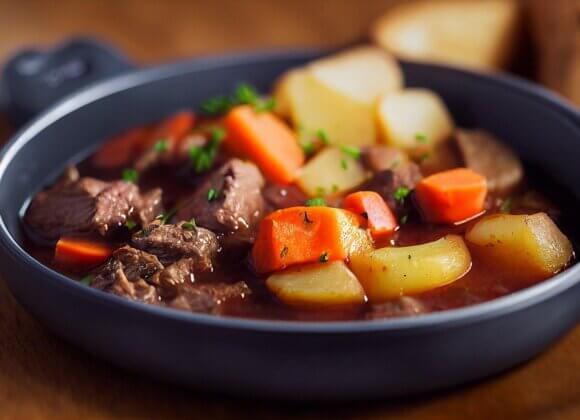
There are days when the world is very serious: Mathematics Day, Environment Day, Human Rights Day. And then there are these wonderfully pleasant holidays that remind us that life is not just about duties, but also about small, golden-brown moments. One of these is Toast Day.
Yes – toast actually has its own holiday. And that is far less absurd than it sounds at first. Because toast is not just bread that you toast briefly. Toast is a kitchen classic, an attempt at international understanding and, in truth, a kind of culinary joker: When time is short, when the fridge is half empty or when you simply crave something warm, crispy and reliable, toast is often the answer.
And because this is the case, toast is celebrated. In the UK, for example, there is the well-known National Toast Day, which takes place every year on the last Thursday in February – i.e. today. This day was launched in 2014 by the Tiptree World Bread Awards together with Brook Food. The aim: to honor toast as a traditional dish and show how much pleasure can be found in something so simple.
Toast is older than you think – and much more international than you realize
The idea of roasting bread is, of course, not a modern invention. Even in ancient times, bread was roasted near fireplaces – partly for practical reasons, partly because roasted aromas had an appeal even then.
The linguistic side route is also exciting: the word “toast” is not only connected to the roasting process, but also to the toast. In earlier times – and also in the Roman context – it was customary to add toasted bread to wine to make it milder. This eventually developed into the idea of “toasting” someone, i.e. celebrating someone. Toast is therefore not only crispy, but also a small piece of cultural history.
The great toast revolution: electricity, design – and a little patience
The real triumph of toast began when technology came into play. Because as soon as bread is no longer toasted randomly over a fire, but is planned, evenly and suitable for everyday use, toast becomes the standard.
An early milestone is the electric toaster, which became commercially popular in the USA around 1909/1910. The interesting thing is that these early toasters could often only toast one side. You had to turn the bread – and stick with it. Otherwise that was it for breakfast. So if you’ve ever complained about a modern toaster because it’s “too slow”, there was a time when toasting was a kind of sport.
1928: Toast would never have made a career without sliced bread
The second major breakthrough – and actually the decisive one – was not the toaster, but the bread itself. More precisely: sliced bread. On July 7, 1928, the Chillicothe Baking Company in Missouri sold pre-sliced bread by machine for the first time – made possible by the machine invented by Otto Frederick Rohwedder. And that changed everything: even slices, perfect for the toaster, ideal for sandwiches, uncomplicated in hotels, canteens and households.
This is the moment when toast became what we know today: an everyday classic with global potential.
Toast around the world: the most popular variations
Toast is popular all over the world – and at the same time different everywhere. While the classic butter and jam is often used in Europe, it is peanut butter and jelly in the USA, avocado toast in Australia, egg on toast in the UK and tomato and olive oil in Italy.
- Butter & jam – classics in Europe and especially in Great Britain
- Peanut Butter & Jelly – an iconic duo in the USA
- Grilled cheese / cheese toast – pure comfort food, known worldwide
- Avocado toast – a modern classic, originally popular in Australia
- Egg on toast – from fried to poached, the breakfast star
- Nutella – a childhood classic, especially in Europe
- Tomato & olive oil – Mediterranean lifestyle on toasted bread
Toast is therefore a bit like a white shirt: simple, but combinable – and quite luxurious in the right version.
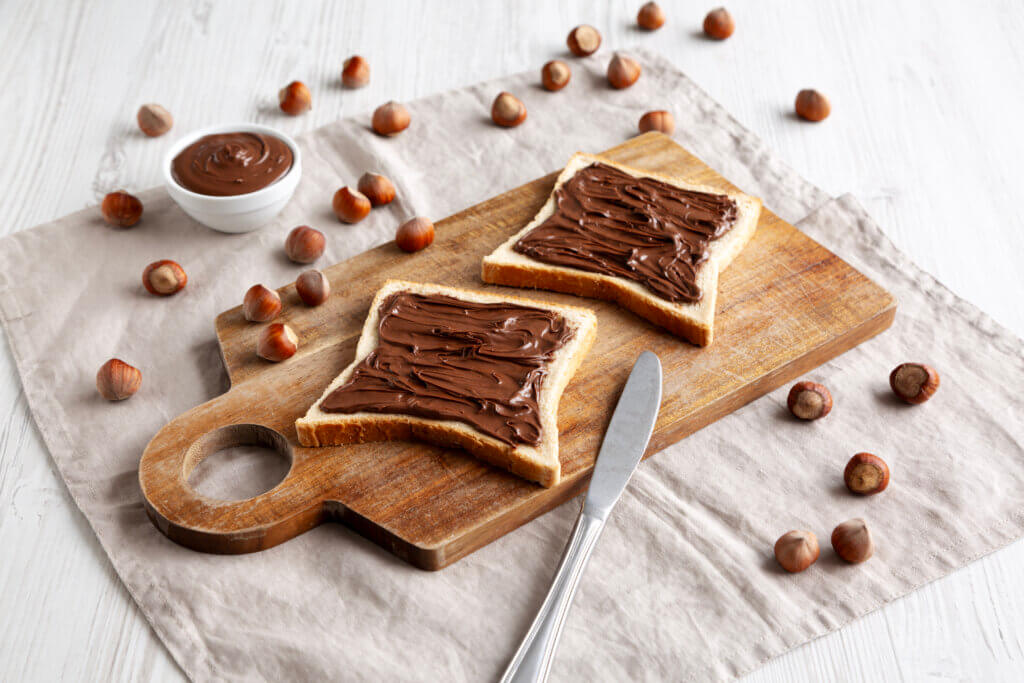
Which toaster for which toast – or would you prefer the pan?
The most important toasting question is not “Which toaster is the best?”, but rather: How do you prefer to toast? Because each method has its own strengths.
1) The slotted toaster*– for classic everyday use
Perfect if you want a crispy result quickly for topping afterwards. Ideal for toast, sandwich bread or thinner slices of sourdough (with wide slits).
Advantages: quick, even, uncomplicated
Disadvantages: Topping comes afterwards – cheese only melts to a limited extent
2) Plate or sandwich toaster*– if you want it to melt inside
This is the appliance for all those who see toast as a warm sandwich: crispy on the outside, creamy on the inside. Perfect for cheese toasts, club sandwiches and filled variations.
Advantages: melts excellently, presses everything together evenly
Disadvantages: too much pressure can dry out bread, filling runs out more quickly
3) The pan* with butter – the secret supreme discipline
When you fry toast in a pan, something important happens: You don’t just toast, you caramelize. Butter turns toast into a flavor miracle. The result is golden yellow, fragrant and much closer to a deli sandwich than a hotel breakfast.
Advantages: maximum taste, perfect control
Disadvantages: you have to stick with it
Which cheese goes well on toast – and what really doesn’t work at all?
Good toast cheese must be able to do three things: melt, taste and remain stable.
The best cheeses for toast
- Cheddar – strong, creamy, perfectly melting
- Gouda (young/medium-aged) – reliable, mild, all-rounder
- Emmental – pulls strings, harmonious
- Gruyère – nutty, noble, ideal with ham or pastrami
- Raclette cheese – for the “wow” melt
- Fontina – Italian melting star
What better not
- Mozzarella alone (too watery, toast becomes soft)
- very mature mountain cheese alone (often melts badly and becomes oily)
- Too much cheese (runs out, toast becomes uncontrollable)
The best trick, by the way, is mixing. A mild melter (Gouda) plus a flavored cheese (Cheddar or Gruyère) is almost always better than a single variety.
Avoid mistakes: The most common toasting pitfalls
Toast is quick – and that’s exactly why it often goes wrong. The classics:
- Too much heat: dark outside, cold inside
- Ingredients that are too moist without a barrier: undrained cornichons, tomatoes etc. quickly make toast soggy
- Cut the toast immediately: Cheese runs out – leave to rest for 30 seconds
- Cheese slices too thick: does not melt evenly
- Too much toasting: more bitterness, less enjoyment
The last point in particular is worth noting: very heavily browned starchy foods can contain more acrylamide – so the general rule is: golden yellow is better than dark brown.
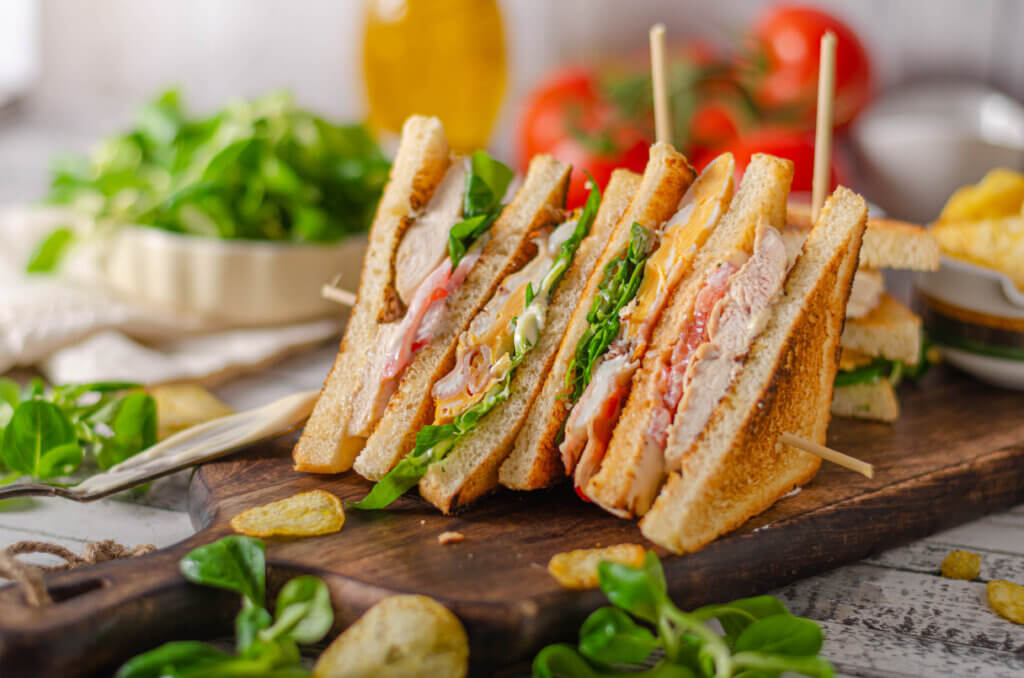
Which bread is the best?
That depends on what you have in mind:
- Toast/sandwich bread: fine-pored, ideal for standard toast
- Sourdough bread: strong, stable, carries a lot of topping
- Pain de mie: French classic, denser, nobler
- Brioche: perfect for sweet toast or French toast
As a rule of thumb, the richer the topping, the more stable the bread.
Is toast unhealthy?
Toast is neither the enemy of health nor a superfood. What matters is which type of bread you choose, what you put on it and how often toast is on your menu
Classic toast is often very finely ground and lower in fiber than whole grain bread. If you want toast, but healthier, toast works: Whole grain toast, sourdough bread, and combinations with protein and vegetables (egg, cheese, salmon, beans, avocado, tomatoes). This way, toast is not just a snack, but actually a small meal.
Four recipes for Toast Day
Viennese Grilled Cheese Deluxe (pan)
Ingredients for 2 toasts
- 4 slices of sourdough bread or high-quality sandwich bread
- 80 g cheddar
- 60 g Gruyère (alternatively Emmental)
- Butter
- 1 teaspoon Dijon mustard
- optional: pastrami or ham
Preparation
Grate the cheese and mix. Spread a thin layer of Dijon on the inside of the bread slices and spread the cheese in between. Butter the outsides. Fry in a pan over a medium heat for 3-4 minutes per side. Leave to rest briefly, cut diagonally.
Vegetarian: Avocado, egg and chili toast
Ingredients for 2 toasts
- 2 slices of sourdough bread
- 1 ripe avocado
- 2 eggs
- Lemon juice
- Salt, pepper, chili flakes
- optional: feta or parmesan cheese, cress
Preparation
Toast the bread. Mash the avocado and season with lemon, salt and pepper. Prepare the eggs as fried or poached eggs. Avocado on the bread, egg on top, chili on top – done.
Sweet: Brioche French toast with honey & berries
Ingredients for 2 servings
- 4 slices of brioche or toast
- 2 eggs
- 120 ml milk
- 1 teaspoon vanilla
- Butter
- Berries, honey or maple syrup
Preparation
Whisk together the eggs, milk and vanilla. Dip the bread in briefly. Fry in butter over a medium heat until golden brown. Serve with berries and honey.
MYHOME tip: Pastrami toast with honey mustard (frying pan)
Ingredients for 2 toasts
- 4 slices of white toast
- 140 g pastrami
- 1 medium white onion
- 2-3 gherkins
- Honey mustard
- Butter
Preparation
Cut the onion into approx. 3 mm thick rings and sauté in a little olive oil until soft. Cut the gherkins lengthways into thin slices. Place two slices of toast on top of each other, brush the outside with butter and fry in a pan until golden brown. Heat the pastrami briefly in a pan – do not fry. Unfold the toasts: cover one side with pastrami, onions and gherkins, spread the other generously with honey mustard. Fold closed, cut diagonally and enjoy.
*Disclaimer: Links marked with * are affiliate links. If a purchase is made through these links, MYHOME.AT may receive a commission. There are no additional costs for you.
Related posts:
Breakfast bowl: healthy ideas for starting the day
Cleaning your coffee machine: How to keep your espresso aromatic