What would Easter be without brightly colored Easter eggs? Around 60 million of them are sold every year, but not all of them are eaten straight away. Far too often, leftover Easter eggs end up in the bin – according to Greenpeace estimates, this amounts to around 14 to 15 million every year in Austria alone. Even though they would still be perfectly edible – we show you here how you can recycle your Easter eggs.
What is the shelf life of Easter eggs?
Easter eggs bought in grocery stores usually keep for several months. One reason for this is that the eggs are not quenched after cooking, which prevents hairline cracks in the shell. Secondly, the eggs are coated with a layer of varnish that seals the pores of the shell. This prevents germs from penetrating and also prevents moisture from escaping.
Incidentally, the best-before date is only a guide to shelf life. It provides information on how long the producer guarantees the quality, taste and nutritional value of the eggs if they are stored correctly. In other words: the best-before date is not a throw-away date! Easter eggs, and many other foods, are still edible after this date.
If home-cooked and dyed Easter eggs are kept at room temperature, they will usually keep for two weeks. If they are stored in the fridge, they will keep for up to four or five weeks. The prerequisite for this is that the eggs are not chilled. The rapid change in temperature can lead to fine hairline cracks in the shell, through which germs and bacteria can penetrate. If the shell is cracked or split, the eggs should be eaten as quickly as possible.
To be on the safe side, do the smell test after peeling. If the egg smells strange, you should dispose of it as soon as possible.
Creative ideas for recycling Easter eggs
As I said, Easter eggs are far too good to throw away. Especially when there are so many ways to use the Easter leftovers simply, quickly and, above all, creatively. How about a sandwich topped with a sliced hard-boiled egg, sprinkled with chives and a little salt? Leftover Easter eggs work well as a salad topping or hidden in wraps and sandwiches. Not forgetting classics such as ice cream salad, eggs in mustard sauce, egg spread and stuffed eggs, whether traditional or slightly modified. You can also turn the hard-boiled eggs into Scotch eggs or hide them in a spinach pie, a fake rabbit or a Hungarian lasagne. Easter eggs come into their own in a layered salad, the filling of a hunter’s roll or croissant and as a vinaigrette for a green salad. We have selected five creative recipes for you:
Recycling Easter eggs: 5 recipes
Spread with eggs and tomatoes
Ingredients:
4 hard-boiled eggs
2 spring onions
2-3 tomatoes (depending on size)
approx. 2 tbsp crème fraiche
Parsley or basil to taste
Salt, pepper
Preparation:
Peel the eggs and onion, finely chop the egg whites and onion. Mash the egg yolks with a fork and mix with the crème fraîche. Add the egg whites, onion and finely chopped tomatoes, add the herbs and season to taste.
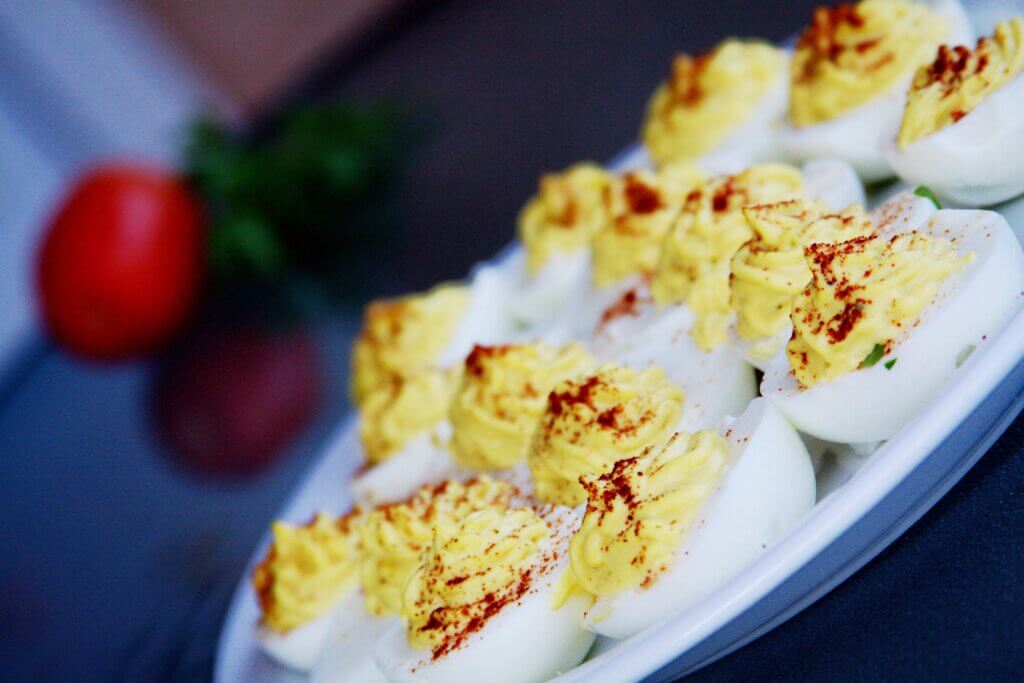
Stuffed eggs with anchovies
It doesn’t always have to be mustard. Eggs can be filled with a wide variety of fillings, from tuna to avocado to anchovy (paste).
Ingredients:
6 hard-boiled eggs
100 g soft butter
2 tsp anchovy paste
1 clove of garlic, chopped
Salt, pepper, lemon juice
Preparation:
Peel and halve the eggs. Place the yolks in a bowl, mix with the butter and anchovy paste, add the garlic clove and season with salt, pepper and lemon juice.
Eggs in mustard sauce
Ingredients:
1 onion
Salt, pepper, sugar if necessary
2-3 tbsp mustard (depending on taste)
Chives or parsley
Preparation
Finely chop the onion.
Melt the butter, sauté the onion, then add the flour and sauté briefly while stirring. Add the soup and stir well with a whisk so that there are no lumps.
Then add the milk and stir well again. Bring the sauce to the boil briefly, then reduce the heat again.
Stir in the mustard, season with salt, pepper and a little sugar if necessary.
Pour the sauce into plates, place the peeled and halved eggs in the sauce and sprinkle with chives or parsley. Serve with bread or boiled potatoes.

False hare
Ingredients:
900g minced meat (half beef, half pork)
1 onion
200g butter
Parsley
1 tbsp mustard
2 rolls
2-3 hard-boiled eggs
2 eggs (raw)
1/8 l milk
100g smoked bacon cubes
5 pickled gherkins
¼ liter sour cream
1 lemon
1 teaspoon capers
Salt, pepper, marjoram
Preparation:
Mix the minced meat with the bread rolls soaked in milk and the two raw eggs, season with salt, pepper and marjoram.
Sauté the finely chopped onion and parsley briefly in butter and add.
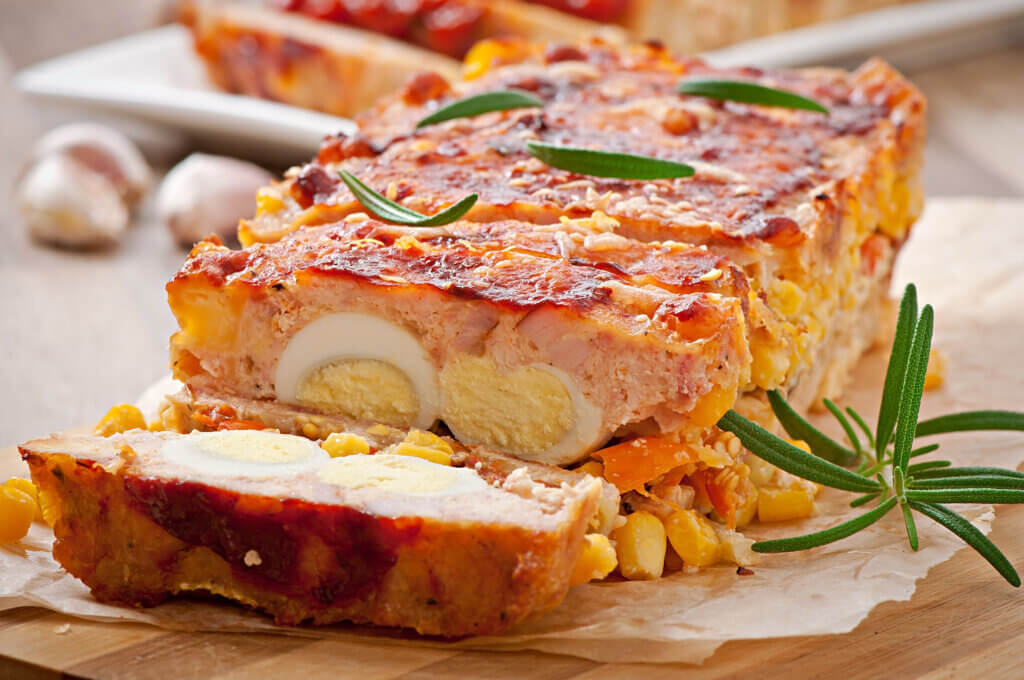
Spread the meat mixture out on the table, cover with strips of bacon, pickled gherkins and the hard-boiled eggs, roll up.
Heat a little oil in a pan, fry the fake rabbit and roast in a preheated oven at 180 °C top/bottom heat for 30 to 40 minutes, depending on the size.
For the sauce, mix the sour cream with a little lemon juice, mustard and chopped capers and serve.
Vinaigrette with hard-boiled eggs
Ingredients:
2 eggs
8 tbsp olive oil
2 tablespoons each of herbs, mustard and vinegar
Salt, pepper
Preparation:
Boil the eggs, peel and chop finely. Mix the vinegar, mustard, salt and pepper, add the oil and eggs – done.
And two more tips for recycling Easter eggs:
#1: A blue-green discoloration between the egg white and yolk in a boiled egg does not mean that the egg is old. Rather, it is an indication that the egg has been cooked for too long. The egg can therefore be eaten without hesitation.
#2: Hard eggs can generally be frozen, but freezing is not the best solution. This is because the egg white in particular does not like the low temperatures and becomes tough after thawing.
Related posts:
Food trend: one-pot recipes to fall in love with
When the holidays keep cooking – leftovers deluxe
The taste of summer: deliciously light feta recipes