If you live in a city apartment, in the attic or in a new build without a chimney connection, you don’t have to do without a fire. Modern bioethanol and electric fireplaces create a real ambience, are safer than ever and are becoming architectural highlights in the living room. Mateusz Bialik from Fire & Flame explains the trends.
The need for a homely atmosphere is unbroken, but traditional wood-burning stoves are no longer feasible in many places. At the same time, there is a growing urban clientele that deliberately avoids wood, whether for reasons of comfort, lack of storage space or fine dust issues. Bioethanol and electric fireplaces close this gap and bring a real fire experience into rooms that were previously out of the question. Mateusz Bialik from “Fire & Flame” shows where the industry is heading – technically, aesthetically and emotionally.
Who are the typical customers for bioethanol or electric fireplaces – those without a chimney connection or people who deliberately want to do without wood?
Our customers are made up of both groups. Many live in rented apartments, attics or modern new builds where a traditional chimney connection is not available or has been shut down. For them, a bioethanol or electric fireplace is the only way to bring a source of fire into the living space – without a permit, without interfering with the fabric of the building and without a chimney. At the same time, the number of people who love a fiery atmosphere but want to do without wood because they want less fine dust, no storage space or simply no hassle with ash and chimney sweeps is growing. Restaurants and hotels are also turning to bioethanol and electric because they can plan flexibly and the decorative flames can be easily integrated into the lobby, spa or bar, even in places where a real wood fire would not be permitted.
Your company specializes in bioethanol. How can modern fireplace replacement systems capture the atmosphere of a real fire? What role does design play?
Bioethanol fireplaces produce real fire, with real flames, warmth and a natural play of flames. The atmosphere comes amazingly close to a classic fireplace, only without the wood crackling or smoke. The design is crucial, because every detail influences whether the fireplace looks authentic or merely decorative. Frameless built-in fireplaces or long fire lines make the flames appear to float out of the wall and create a modern, minimalist look. The choice of material – steel, glass, stone or wood decor – determines how harmoniously the fireplace blends into the room.
High-quality ceramic wood, which is visually almost indistinguishable from real firewood and gives the fireplace depth and a familiar, warm look, is particularly atmospheric. The result is a design object that simultaneously displays real fire and blends organically into the interior.
How have bioethanol and electric fires developed over the last ten years, especially in terms of safety?
The development was enormous. The introduction of the European safety standard DIN EN 16647 has set standards for bioethanol fireplaces in particular. It defines minimum distances, stability, filling quantities, overfill protection, leakage safety requirements and clear operating specifications. Modern fireplaces are now designed in such a way that no ethanol can escape in an uncontrolled manner, even in the event of a fall or operating error – something that was by no means a matter of course ten years ago.
At the same time, new combustion technologies with ceramic sponges or capillary systems have ensured that the ethanol is bound and does not stand freely in the burner. As a result, the fire ignites more quietly, in a more controlled and predictable manner, and the flame pattern has also become more even and stable.
How sustainable are bioethanol fireplaces – in terms of fuel origin, emissions and energy efficiency, for example?
Bioethanol is obtained from plant-based raw materials such as maize, sugar cane or grain residues and can be almost CO₂-neutral depending on production. The quality of the fuel is particularly important. Premium ethanol such as our Flamestuff is highly pure distilled and therefore virtually odorless, burns quietly and cleanly and produces a clear, bright flame. As no flue draught is required, all the heat generated remains in the room, which increases efficiency.
At the same time, bioethanol fireplaces are suitable as an additional heating and mood element, not as a fully-fledged main heating system. Indoors, the most important thing is that combustion produces no ash, no soot and considerably less fine dust than a classic wood fire, but regular ventilation is still advisable because it is an open flame.
What are the risks of improper use and what should you look out for?
As with any open fire, there are risks, but these can be easily controlled with high-quality appliances and correct handling. For example, refilling while the burner is still hot is critical, as is keeping too close to combustible materials or using inferior fuels. It is important to only use certified, tested appliances, create stable installation conditions, only use recommended bioethanol, never refill hot burners and take into account the size of the room and ventilation options. Children and pets should never be left alone with an open flame. If you follow these principles, you will enjoy a very safe fire solution.
How maintenance-intensive are modern fireplace replacement systems compared to traditional wood-burning stoves?
They are much easier to clean. A bioethanol fireplace does not produce ash, soot or sooty glass, so only occasional dusting and light cleaning of the combustion chamber are necessary. Depending on the system, it may make sense to replace the ceramic inserts after prolonged use. A wood-burning stove, on the other hand, requires regular emptying of ash, glass cleaning, chimney sweep appointments and the handling of wood storage and transportation. Everyday life with a fireplace replacement system is therefore much less complicated.
What is the price range for high-quality models and what factors determine the price?
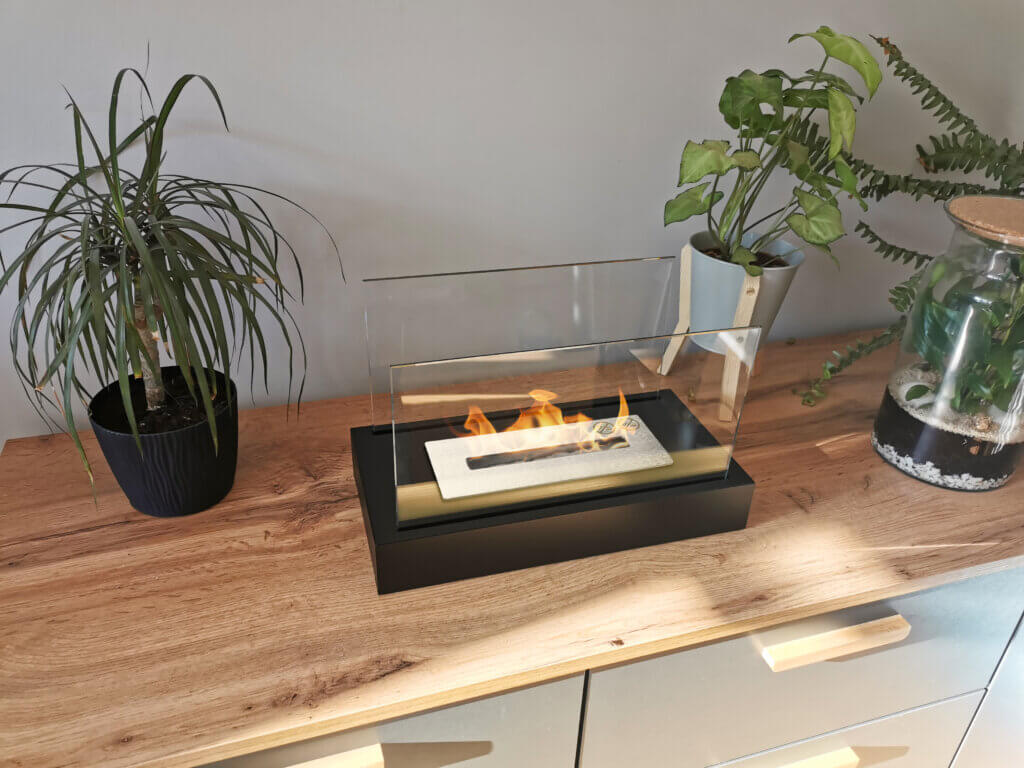
The price range is wide and depends heavily on size, technology and design. Small tabletop fires start at around fifty to two hundred euros, wall-mounted or free-standing fires are usually between two hundred and five hundred euros, while high-quality built-in fires – often custom-made – cost between around a thousand and five thousand euros. The decisive factors are the combustion technology, material quality, design and installation method.
How can fireplace replacement systems be integrated into minimalist or urban home design without appearing artificial?
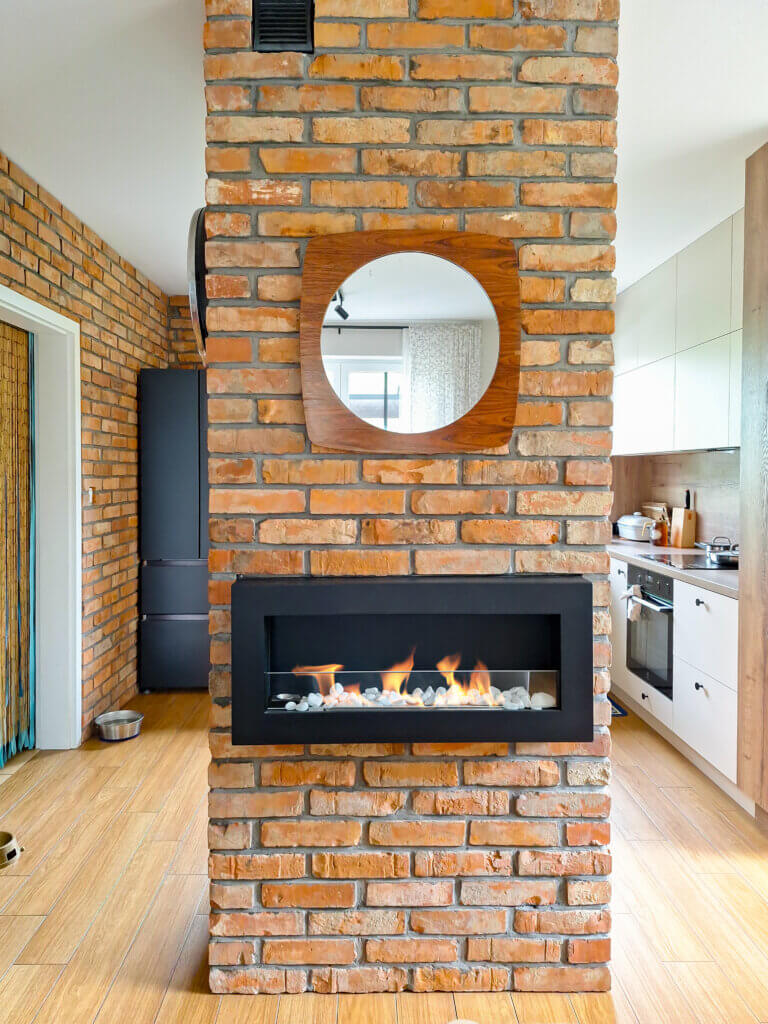
Our fireplaces are deliberately designed to look like an architectural element rather than a superimposed object. Fire lines can be integrated into drywalls, lowboards, TV walls or room dividers, blending elegantly with the interior design. Powder-coated steel and glass harmonize perfectly with urban lofts and modern living concepts.
As no chimney connection is required, the shapes remain slim and light, which supports particularly minimalist rooms. Depending on the model, the fireplace can be designed as a striking eye-catcher or as a discreet horizontal band of fire. Fire is seen less as a heating appliance and more as an atmospheric lighting and ambience element.
Where is the development heading – will we see even more realistic flame images or hybrid solutions?
The focus is clearly on greater safety, greater comfort and an even calmer, more elegant-looking flame pattern. Since bioethanol produces real fire, it is less about simulation and more about refinement: natural, controlled, aesthetically high-quality flames that blend harmoniously into the architecture.
Fire is regarded as the primal element of human security. Can a fireplace replacement really replicate this emotional effect?
Yes, and we feel this every day with our customers. A bioethanol fireplace creates a real, living fire with warm light, delicate reflections and a natural flicker that immediately creates an intimate, cozy atmosphere. If the fireplace is deliberately designed as a place to sit down, switch off and be together, it can capture the emotional effect of a traditional wood fire very well – with the advantage that this fire is now possible almost anywhere, even in a fourth-floor city apartment without a chimney connection.
Our expert
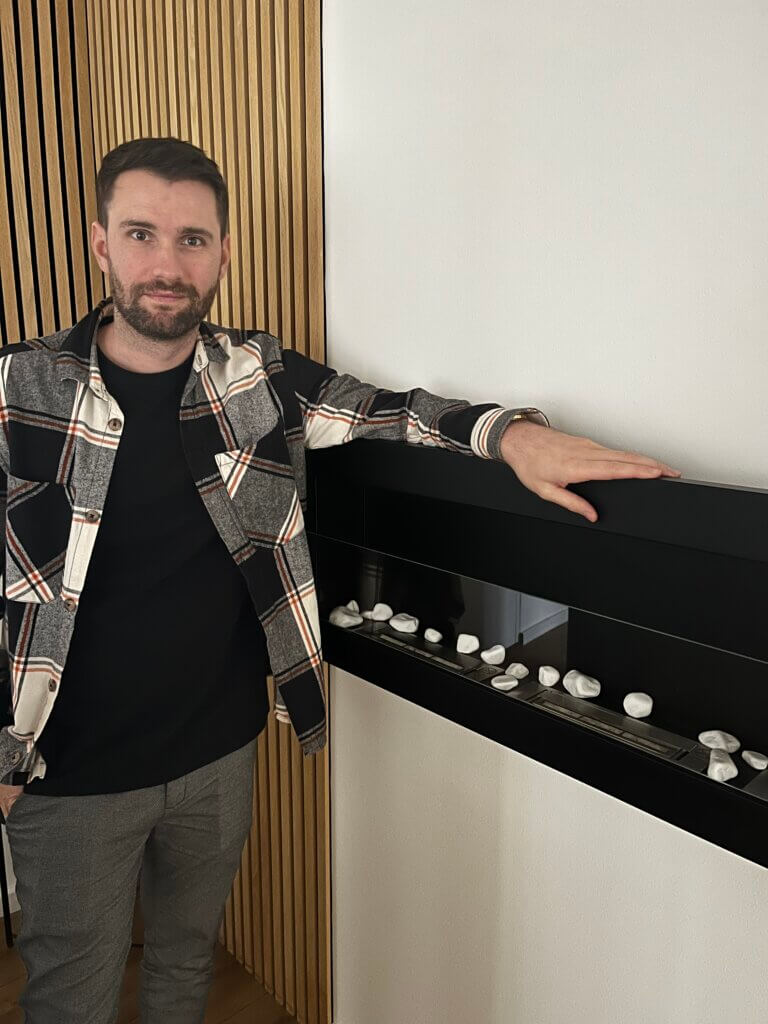
Mateusz Bialik is the Managing Director of Fire & Flame, based in Mistelbach. The company strives to be the leading provider of environmentally friendly fireplaces that prove that real fire and ecological responsibility are not a contradiction in terms.
To the website: https://www.fire-flame.at/
Related posts:
Tips for a cozy home in winter