
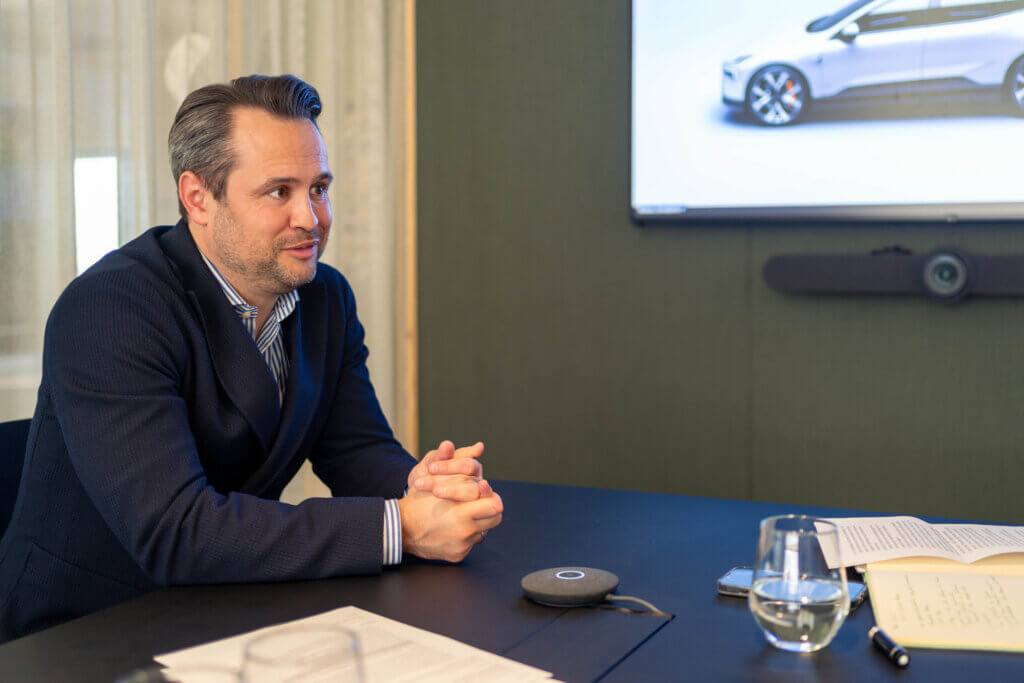
How does a man live for whom design, functionality and sustainability are not opposites, but principles? Matthias Schabetsberger, Managing Director of Polestar Austria since September 2025, has been working at the interface of aesthetics, technology and brand identity for years. He has been with Polestar since 2020, and his previous positions were also shaped by the automotive industry.
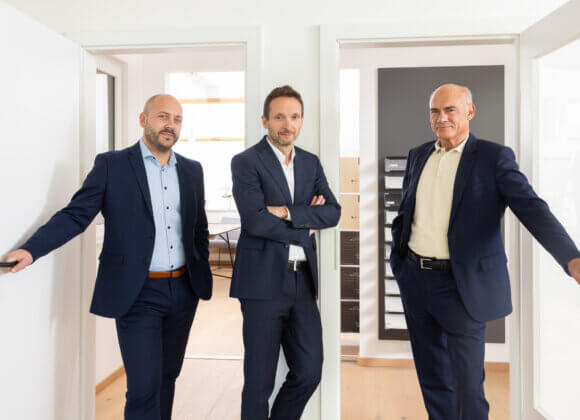
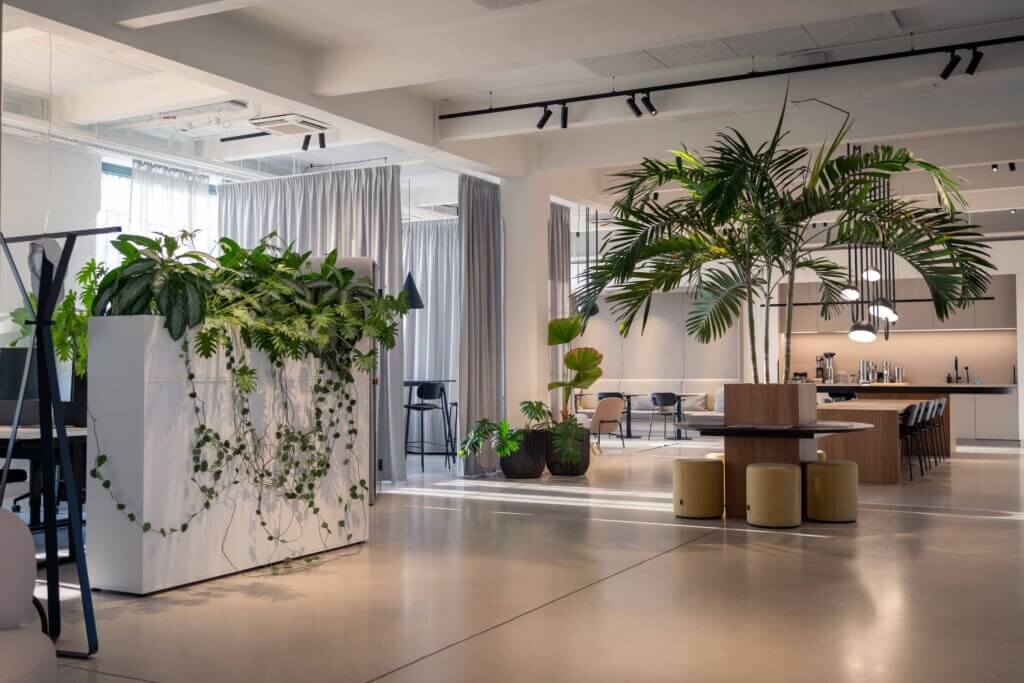
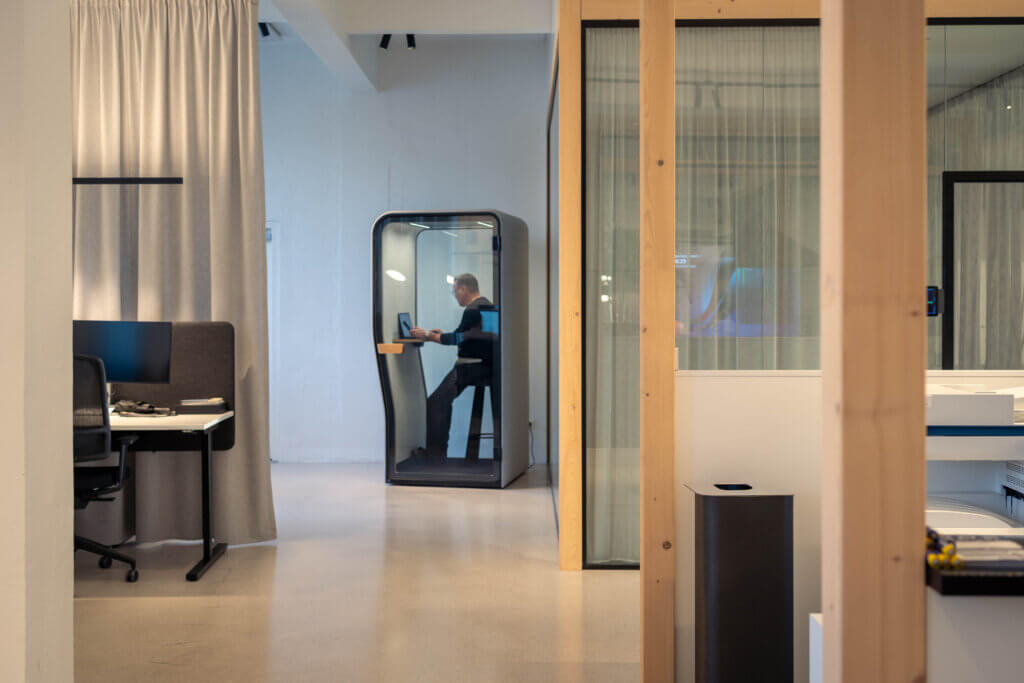
We meet the native Viennese at the company’s Austrian headquarters in the Austrian capital: a former gas meter factory whose brick shell has been preserved, while a radically open spatial concept has been created inside. Four floors, gutted and rethought, four different companies. The Polestar office was designed by the renowned BWM team of architects and there are no traditional offices, not even for the boss – instead, the focus is on working at eye level, clear lines and a minimalist design language.
Parallels to Schabetsberger’s private life are no coincidence. As we speak in one of the three meeting rooms, his own house is being built in the suburbs of Vienna – planned over 18 months and designed to last for decades. A place that should not only be functional, but one thing above all: coherent. And one that also does justice to his everyday life: with two dogs that need exercise and a life that has deliberately shifted to the countryside. Get out the door, start running, switch off – it is precisely this rhythm that characterizes the way Schabetsberger thinks about living.
Mr. Schabetsberger, you work in an industry in which design, materials and lines play an enormous role. Your office has a very sophisticated architectural design. Is this standard also reflected in your private living style?
Yes, definitely. Alongside performance and sustainability, design is one of our three strategic pillars, and this aspiration naturally also characterizes the private sphere. A clear design language, clean lines and a well thought-out choice of materials are very important to me. In my private life, the practical benefits are perhaps even more important because you are planning a home for many years, but this approach is clearly reflected in our house construction.
If you had to compare your home to a vehicle, would it be a sporty all-rounder, a minimalist electric runabout or a luxurious long-distance car?
I would say: a sporty all-rounder with a minimalist design. When you build a house for several decades, it has to support different phases of life and fulfill many functional requirements. At the same time, this minimalist, calm design is very important to me. I don’t want an obtrusive design, but something that is clear, timeless and coherent.
Polestar stands for Scandinavian clarity and reduction. Are these principles also reflected in your home – for example in the color scheme, the materials or the furnishings?
Definitely. Minimalism suits me personally. For me, less is more. We consciously focus on clear structures, neutral colors and natural materials. Wood is particularly important to us, especially in the main living area. At the same time, we pay a lot of attention to where the materials come from and how they are processed. So it’s not just about the look, but also about sustainability.
A car is often referred to as a “second living room”. How important is the feeling of security and atmosphere to you personally – both in the vehicle and in your own four walls?
Very important. A room – whether in a vehicle or at home – must be designed in such a way that you feel comfortable. That’s why the open-plan living, kitchen and dining area is central to our house. It’s a meeting place where you can sit with friends, spend time with your family or simply enjoy a quiet evening for yourself. For me, atmosphere is created by openness, light, materials and the feeling of really being able to arrive.
People who work a lot with design often develop a highly trained eye. Does this make furnishing easier – or, on the contrary, more difficult?
I would say rather easier. You probably look at things differently and question things more – that may get on some people’s nerves (laughs), but I see it as an advantage. I’ve also lived in four different countries over the course of my career and got to know many different living situations. These experiences help enormously because you develop a better feeling for what works in the long term and what suits you.
Is there furniture, materials or designers that you particularly appreciate – similar to the way you develop a preference for certain brands or design languages in cars?
I wouldn’t emphasize a particular piece of furniture or a particular designer. In the end, it’s the interplay that is decisive for me. There is also no one piece of furniture that has accompanied me over the years – it’s more about pictures and photographs.
Many premium cars today rely heavily on sustainability and new materials. Does this topic also play a role in your own home?
Yes, very much so. Sustainability was an important issue for our company right from the start. This applies not only to the materials and their origin, but also to the technical equipment. For example, we rely on a PV system, an air heat pump and intelligent control options via an app. At the same time, we consciously try to use as few plastic materials as possible. For my wife and I, sustainability is simply part and parcel of good design.
What is the most important room in a home for you personally – the living room, the kitchen or perhaps somewhere else entirely?
The most important thing for me is definitely the open-plan living area. That’s where life takes place – whether with guests, with family or simply in quiet moments for yourself. At the same time, there is a second area that is very important to me personally: a deliberately separate home office and guest area at the other end of the property. This retreat is essential for me – I can concentrate on my work here without feeling like I’m “at home”. And it’s also a good place to accommodate visitors.
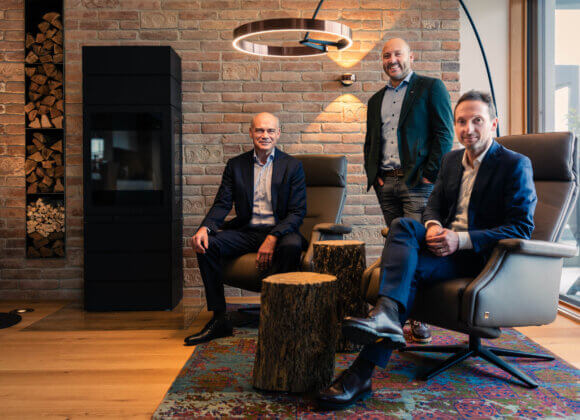
For me, a fireplace is an emotional element. I associate it with arrival, peace and well-being.
When you come home after a long day at work: What does a home have to offer so that you can really switch off?
Above all, it has to be a place of retreat. We are both very busy at work, so it was important for us to create a home where you can really relax. For me, generosity, openness and lots of light play a major role. At the same time, there is also a very clear emotional element for me: the fireplace. I grew up with one and naturally wanted to have one again in my new house. I simply associate it strongly with arriving, peace and well-being.
You can recognize a good car by the balance between technology and emotion. Would you say that good living also needs precisely this balance?
Yes, absolutely. A home must be functional, but it must also be emotionally appealing. It should look good, suit your own style and at the same time support your everyday life in a meaningful way. Of course, good cost management also plays a role in the private sphere. But I do believe that you should only make limited compromises when it comes to functionality – the balance between utility, aesthetics and feeling is crucial.
Final question: Is there a detail in your home – perhaps a piece of furniture, a picture or a lamp – that is particularly close to your heart?
As we haven’t moved in yet, it’s perhaps still a little difficult to say. But two things I’m particularly looking forward to are a more spacious bathroom with an appropriately sized walk-in shower and personal items such as pictures, photographs and memorabilia. Because I’ve lived in different countries, it’s often these things that really give a home character.
All photos: Sybille Sierlinger
Related posts:
@MYHOME: A visit with Daunenspiel founder Sofia Vrecar