
Winter is the season of the great return: you come home like a walking weather log. Slush on your soles, wetness on the hem of your coat, a scarf that is somehow always too long and gloves that take on a life of their own. The vestibule of all places, often the smallest room anyway, now has to do a great job: it is an airlock, drying station, checkroom, shoe depot and dirt trap all in one. If you don’t tidy it up in time, you’ll lose it after the third day of snow at the latest. The good news: a few clever pieces of furniture, a few inconspicuous helpers and a clear winter system not only create order in the entrance hall – they also visually enlarge the room.
How do I keep the vestibule tidy in winter?
Winter organization begins less with new furniture than with a simple routine that applies every day. Three minutes when you get home saves an hour of chaos management at the weekend. The best way to do this is to mentally divide the entrance hall into three zones. The dirt zone is right by the door: snow and grit can land there briefly without immediately counting as “mess”. This is followed by a small dry and transition zone. This is the place where shoes and jackets are allowed to arrive first – lay them down, drain and dry. Only when they are dry do they move to the third zone, the organization zone. Everything has its fixed place here, and it is here that the anteroom remains visually calm.
A practical winter trick is the “1-day rule”. Everything that is in the transition zone today must be put in the wardrobe, on the hanger or in the box by tomorrow at the latest. This means that temporary items really do remain temporary – and don’t become permanent.
What helps against dirt & moisture in the entrance area?
A doormat is rarely enough in winter. The floor needs several layers of protection to separate coarse and fine dirt. The ideal solution is a robust outdoor mat that traps snow and grit right outside the door. Inside, an absorbent inner mat does the rest. The best addition is a flat drip tray or storage tray for shoes. It reliably keeps slush and salt where it belongs and prevents condensation from soaking into wood or joints. A tray with a rim of two to three centimetres is worth its weight in gold here, because it really collects the water instead of just “decorating” it. If you have a cloth or brush within easy reach, you can quickly wipe salt residue off your soles before it leaves white marks on the floor or skirting boards. And yes: it takes seconds – but they make a big difference overall.
Which furniture and helpers keep the entrance hall tidy?
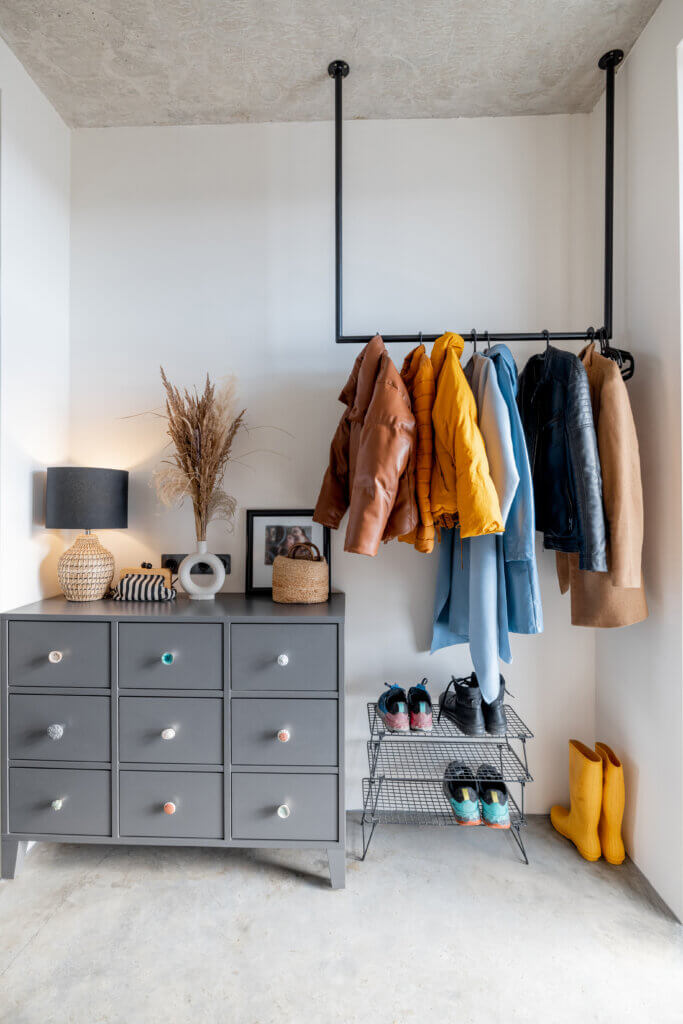
Winter is peak season for storage space, but in the entrance hall it’s not mass that counts, but function per centimeter. Closed fronts immediately calm the room. A shoe cabinet with tilting drawers or flat pull-outs is particularly practical when there is little depth. As a rule of thumb, two to three really active pairs of winter shoes per person should be kept within easy reach, with the rest moving upwards into the wardrobe compartment or a cellar box as the seasons change. This means you see less in everyday life – and find more.
For jackets, a coat rack panel or a simple hook rail in two heights prevents the typical winter problem of the “avalanche of hooks”. An upper row holds coats and long jackets, while a lower row is intended for children or favorite items that are in daily use. Count on three to four hooks per person – then the items will hang really loosely, can dry and won’t look like a pile of textiles.
A bench with storage space is very helpful. It makes it easier to put on boots and at the same time stores hoods, scarves and gloves behind a flap or in baskets. A narrow console or shelf works wonders to complement this. If keys, cell phone, mail and dog leash end up there in one or two trays, the surface automatically remains quiet – instead of becoming a storage space for everything.
Little helpers round off the system. Wall pockets or hanging bags for accessories, labeled boxes (“scarves”, “hoods”, “children’s things”), an umbrella stand with drip tray or a magnetic strip for notepads prevent piles of paper and searches. These details are quiet, but they help to keep things tidy in everyday life.
How do you dry shoes & clothes in winter to save space?
Drying needs air – not surface area. Wet winter items seem harmless until they become musty after two days. Shoes should therefore never dry directly on the floor. Place them on a drip tray or grid so that air can get in from below. If you remove the inner soles, the drying time is almost halved. Newspaper or shoe trees absorb moisture and stabilize the shape at the same time. If you want to avoid odor, put a small bag of baking soda or a small shoe deodorant inside – it costs little but does a lot.
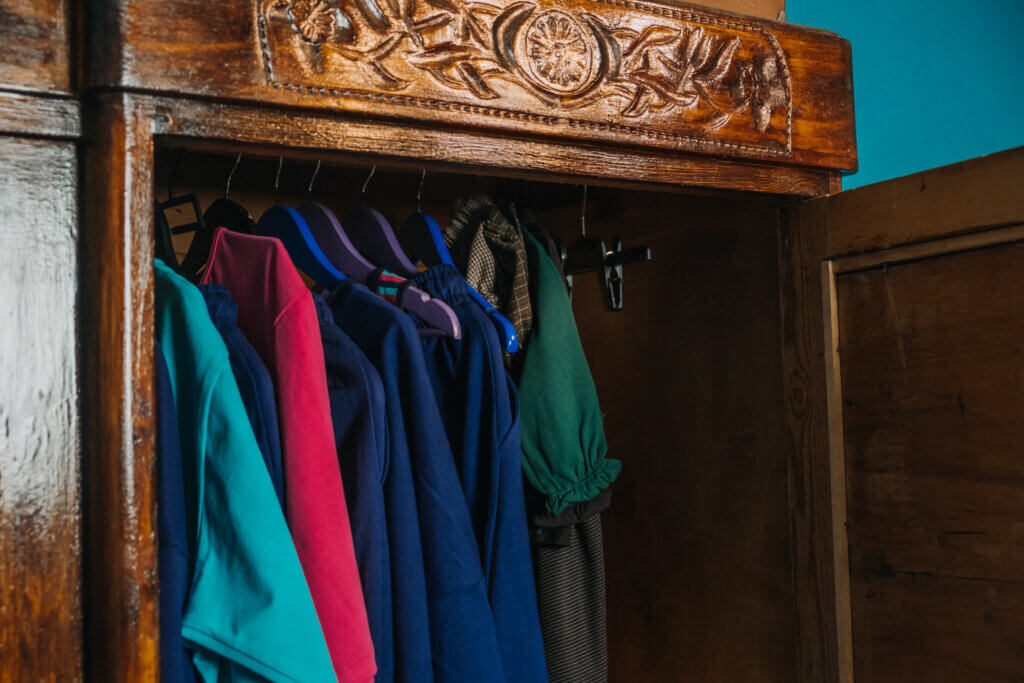
A defined “wet hook” near the door is helpful for jackets. A dripping jacket should not go straight into the box because it will soak everything else. It can air out on an extra hook. Even more elegant – and particularly ingenious in small anterooms – are pull-out wall dryers or folding drying rails. This turns 20 centimeters of wall into a drying station that then disappears again. Coats are best dried on sturdy hangers because the shoulders remain ventilated and the material does not warp.
How do I functionally furnish a small anteroom in winter?
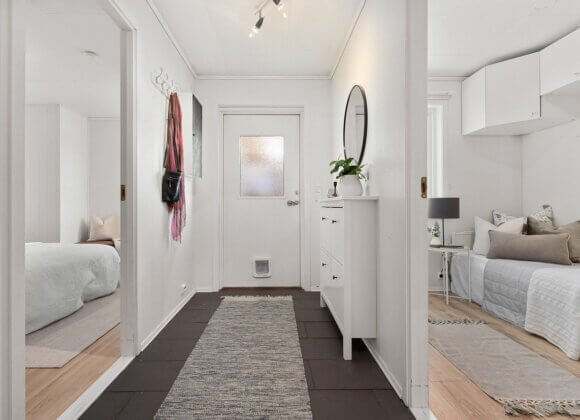
Small vestibules quickly collapse in winter because the floor fills up too quickly. So the rule is: don’t close them off, but build upwards. Narrow, high furniture works better than low, wide furniture. A slim wardrobe or a shallow shoe cabinet with wall hooks above it keeps the room tidy without overwhelming it. Vertical lines even stretch it visually.
Everything that works should hang or stand on the wall: Hook rails, wall shelves, folding dryers or hanging bags use space that would otherwise remain empty. This makes the floor appear freer and the room appear larger. A clear material and color line is also important. Light-colored fronts reflect light and visually take weight out of the room. Too many different materials make small entrances look restless – and restlessness always looks like disorder.
Light also plays an underestimated role. A well-lit entrance hall automatically looks tidier. Even an indirect LED strip above the hook panel or a mirror that distributes light can make the whole room appear clearer and tidier.
And finally, seasonal thinking pays off. What you need in winter can be at the front. What doesn’t come back until the summer goes away. Seasonal boxes at the top of the cupboard or in the cellar prevent the front room from playing storage space all year round – and this is exactly the point where small spaces finally work.
As you can see: A tidy entrance hall in winter is not a question of square meters, but of routine and clever furnishings. If dirt has its own zone, moisture is allowed to dry in a controlled manner and every item has a fixed place, the entrance area remains a calm, inviting start to the home even on gray snowy days.
Related posts: