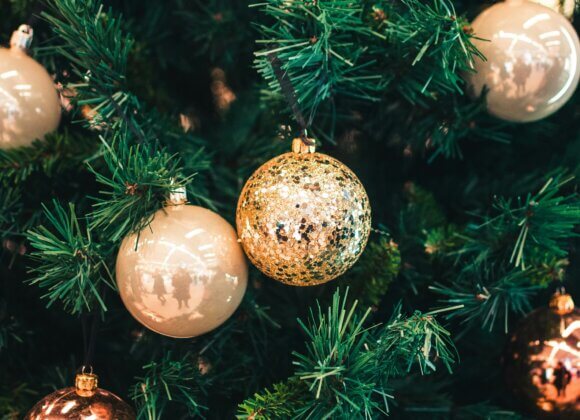

This year, almost three million Christmas trees, beautifully decorated and brightly lit, will once again create a festive atmosphere at Christmas. With a little care, they will stay fresh long after Christmas Eve.
For most people, Christmas without a Christmas tree is like summer without sunshine. Festively decorated and illuminated, the tree is a real eye-catcher during the Christmas holidays. However, this is only true if the tree doesn’t lose needles when it is trimmed or shortly afterwards. But with the right care, you can create the best conditions for enjoying a fresh Christmas tree for a long time.
How do you choose a long-lasting Christmas tree?
You probably know the saying “The later the evening, the more beautiful the guests”. This could also be applied to the Christmas tree: The later it is cut, the longer it will last. One indication of this is the cut surface: the lighter it is, the fresher the tree. Another indication of freshness is shiny needles and a fine fragrance.
Speaking of needles: run your hand lightly over the branches – if a lot of needles fall off, this could be a sign that the tree was pruned a long time ago.
Which tree species lasts the longest?
Nordmann firs and blue spruces are the two tree species that last the longest. Both generally cope relatively well with the dry indoor air and therefore only lose their needles late, if at all. This is one of the reasons why these are the two most popular Christmas tree species among Austrians, with the Nordmann fir taking the lead. It is characterized not only by its longevity, but also by its straight growth and shiny needles. The fact that they are also soft makes decorating easier.
How should the Christmas tree be stored?
Before the Christmas tree is dressed up in the warmth, it should be stored in a cool, shady place protected from the wind. And in an upright position. A cool stairwell, garage or unheated cellar, for example, are suitable temporary quarters. Don’t forget to put the tree in a bucket of water – as long as it can’t freeze. Opinions differ as to whether the net should be left on during temporary storage or not. However, practice shows that it is easier to transport a tree in the net to its final destination than without it. However, to ensure that the branches can hang properly, you should remove the net a few hours before decorating.

Don’t forget to water…
Did you know that a pruned tree can absorb up to two liters of water per day? That’s why your Christmas tree will also appreciate regular watering after it has been set up – after all, this helps it to stay fresh for longer. You should therefore dispense with the classic Christmas tree cross and opt for a tree stand with a water reservoir. To prevent water loss in warm weather, it is also advisable to regularly spray the tree with fresh water and air it regularly.
Where should you not put up a Christmas tree?
Avoid locations near heat sources such as radiators, tiled stoves or sunny windows – this accelerates the drying out process. You should also avoid being close to flammable materials and objects, especially if the tree is decorated with real candles.
How do you care for a living tree?
Two things are important to ensure that living trees live up to their name even after the holidays: firstly, the soil must be kept evenly moist and waterlogging must be avoided. Secondly, the tree must be acclimatized not only before but also after the festivities. This means that you should not place it in the cold garden or on the balcony immediately after taking down the decorations, but first acclimatize it to cooler temperatures. And don’t forget to water the tree even then!
Related posts:
Christmas: Bringing joy with books
So your Christmas lights don’t become a power guzzler
Proper care: How the amaryllis blooms every year